


PPH Pipe Fittings for Continuous Duty Industrial Pipelines
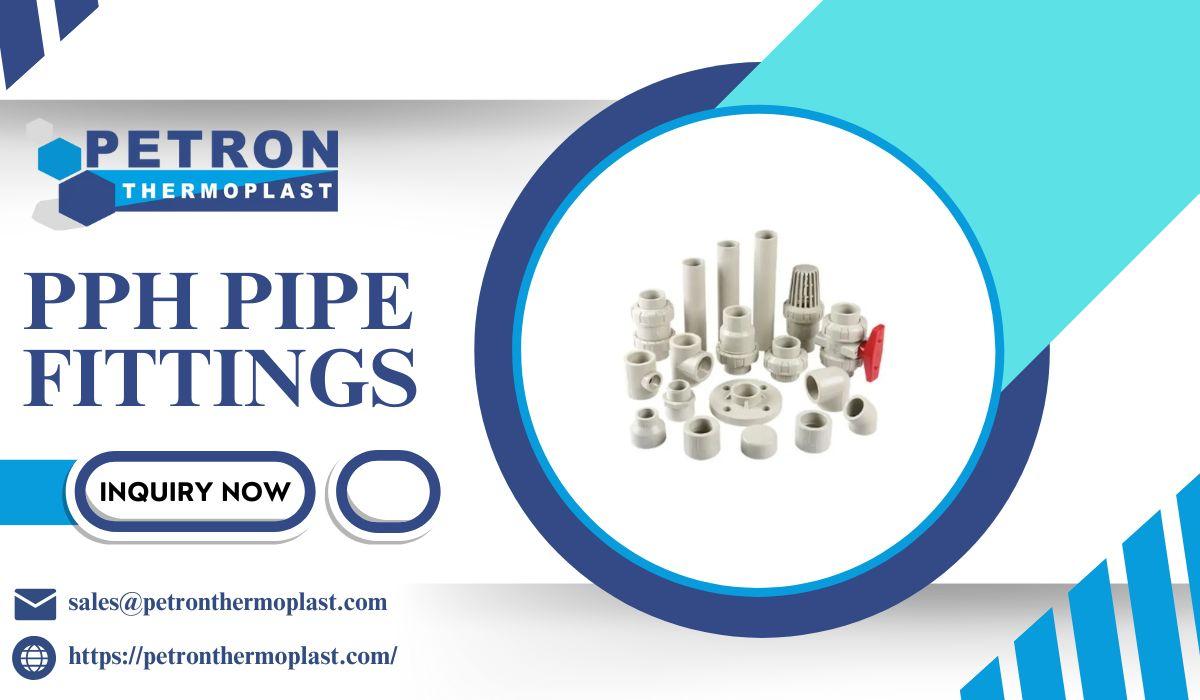
In modern process industries, pipelines are expected to operate continuously under demanding conditions such as high temperatures, chemical exposure, and fluctuating pressures. Any failure in the piping system can lead to costly downtime, safety risks, and production losses. This is why industries increasingly rely on PPH pipe fittings for long-term, uninterrupted operations.
As a leading manufacturer and supplier, Petron Thermoplast provides high-performance PPH (Polypropylene Homopolymer) pipe fittings engineered for continuous duty industrial pipelines. Designed for durability, chemical resistance, and structural stability, these fittings play a critical role in ensuring smooth and reliable fluid handling.
This blog explores the features, advantages, applications, and long-term value of PPH pipe fittings in continuous industrial operations.
Understanding PPH Pipe Fittings and Their Industrial Significance
PPH (Polypropylene Homopolymer) is a thermoplastic material known for its high rigidity, excellent chemical resistance, and thermal stability. When used in pipe fittings, PPH delivers superior performance in demanding industrial environments where pipelines must operate continuously.
PPH pipe fittings are manufactured through precision molding and fabrication processes to ensure leak-proof joints, uniform wall thickness, and long-term reliability. They are commonly used with PPH pipes to create complete piping networks for fluid transfer, chemical processing, and utility systems.
Key Characteristics of PPH Pipe Fittings
- High resistance to acids, alkalis, and solvents
- Excellent thermal stability for elevated temperatures
- High mechanical strength and rigidity
- Lightweight yet durable construction
- Smooth internal surface for low friction losses
- Long operational lifespan
These properties make PPH fittings ideal for continuous duty pipelines that cannot afford frequent maintenance or shutdowns.
Why Continuous Duty Pipelines Need High-Performance Fittings?
In industries such as chemicals, pharmaceuticals, power generation, and water treatment, pipelines often operate 24/7. These systems transport critical fluids that must flow without interruption.
Challenges in Continuous Duty Pipelines
- Constant exposure to aggressive chemicals
- High operating temperatures
- Internal pressure fluctuations
- Mechanical vibrations
- Long-term material fatigue
- Risk of leakage or corrosion
Traditional materials like metal or low-grade plastics may degrade over time, leading to cracks, corrosion, or joint failures. PPH pipe fittings overcome these challenges by offering consistent performance under harsh operating conditions.
Advantages of PPH Pipe Fittings for Continuous Operations
- Superior Chemical Resistance
PPH fittings resist a wide range of corrosive substances, including sulfuric acid, hydrochloric acid, sodium hydroxide, and various solvents. This makes them ideal for chemical processing and electroplating industries.
- High Thermal Stability
PPH materials can withstand elevated operating temperatures, making them suitable for hot fluid transfer and continuous thermal cycling without deformation.
- Long Service Life
Due to their resistance to corrosion, scaling, and chemical attack, PPH fittings maintain structural integrity for decades with minimal degradation.
- Leak-Proof Performance
Precision manufacturing ensures tight tolerances and smooth joint surfaces, reducing the risk of leaks in high-pressure or continuous-flow systems.
- Low Maintenance Requirements
PPH systems require minimal inspection and maintenance, helping industries reduce operational costs and downtime.
- Lightweight and Easy Installation
Compared to metal piping, PPH fittings are lightweight, simplifying transportation, handling, and installation in large industrial facilities.
Manufacturing Quality: Ensuring Reliability in Continuous Duty Systems
The reliability of PPH pipe fittings depends largely on manufacturing precision and quality control. Reputable suppliers follow strict production standards to ensure consistent performance.
Advanced Manufacturing Techniques
- Injection molding for uniform structure
- CNC machining for customized fittings
- Butt fusion and electrofusion compatibility
- Controlled cooling processes to prevent internal stress
Quality Testing Procedures
Each batch of fittings undergoes rigorous testing, including:
- Dimensional accuracy checks
- Pressure and leakage tests
- Chemical compatibility verification
- Impact and tensile strength analysis
- Visual and surface inspection
These measures ensure that every fitting performs reliably in continuous industrial environments.
Applications of PPH Pipe Fittings in Continuous Duty Industries
PPH pipe fittings are widely used across multiple sectors where uninterrupted operation is essential.
Chemical Processing Industry
For acids, alkalis, solvents, and intermediates in continuous production lines.
Pharmaceutical Manufacturing
For purified water, chemical solutions, and process fluids requiring contamination-free handling.
Water and Wastewater Treatment
For dosing systems, filtration units, and continuous water transfer lines.
Power and Energy Sector
For cooling water, chemical additives, and effluent handling systems.
Fertilizer and Agrochemical Plants
For handling aggressive chemicals and nutrient solutions.
Electroplating and Surface Treatment
For acid baths, rinsing lines, and waste treatment systems.
In all these industries, PPH fittings ensure stable performance even under constant load.
Customization for Industrial Pipeline Projects
Every industrial plant has unique operational requirements. A professional supplier offers customized PPH pipe fittings to match specific project needs.
Customization Options Include:
- Wide diameter and pressure ranges
- Special chemical-resistant grades
- Reinforced wall thickness
- UV-stabilized outdoor variants
- Flanged, threaded, and welded connections
- Prefabricated piping assemblies
Customized solutions help industries optimize flow efficiency, safety, and system longevity.
Installation and Best Practices for Continuous Duty Systems
Proper installation plays a crucial role in the long-term performance of PPH pipe fittings.
Recommended Installation Practices
- Use compatible fusion or welding techniques
- Ensure proper pipe alignment
- Maintain clean joint surfaces
- Follow recommended heating and cooling times
- Avoid mechanical stress at joints
- Conduct pressure testing after installation
When installed correctly, PPH systems deliver reliable service with minimal risk of failure.
Cost Efficiency and Lifecycle Benefits
While initial material selection is important, long-term operational costs are equally critical.
Lifecycle Advantages of PPH Fittings
- Reduced maintenance expenses
- Lower replacement frequency
- Minimal corrosion-related repairs
- Lower energy loss due to smooth flow
- Reduced downtime and production losses
Over the lifespan of an industrial plant, PPH pipe fittings offer substantial cost savings compared to traditional materials.
Sustainability and Environmental Responsibility
PPH pipe fittings support sustainable industrial practices by reducing material waste and extending system life.
- Long service life minimizes replacements
- Low leakage risk prevents environmental contamination
- Recyclable thermoplastic material
- Reduced maintenance-related emissions
- Compatibility with eco-friendly manufacturing processes
These benefits align with global environmental and regulatory expectations.
Why Choose Petron Thermoplast for PPH Pipe Fittings?
With extensive experience in thermoplastic piping systems, Petron Thermoplast delivers high-quality PPH pipe fittings for continuous duty applications worldwide.
Key Strengths
- Modern manufacturing facilities
- Skilled engineering and quality teams
- Strict quality assurance systems
- Custom fabrication capabilities
- Proven domestic and export experience
- Strong technical and after-sales support
These strengths enable the company to serve large-scale industrial projects with confidence and consistency.
Conclusion
In industries where pipelines operate non-stop, reliability is not optional—it is essential. PPH pipe fittings provide the strength, chemical resistance, and durability required for continuous duty industrial pipelines.
With their long service life, low maintenance needs, and excellent performance under harsh conditions, PPH fittings have become the preferred choice for modern process industries. By partnering with an experienced and trusted supplier like Petron Thermoplast, industrial clients can ensure operational stability, safety, and long-term value.
If your project demands dependable piping solutions for uninterrupted performance, PPH pipe fittings are the smart investment for sustainable industrial success.
Categorie
Leggi tutto
Nhà cái BL555 là một trong những nền tảng giải trí trực tuyến uy tín, chất lượng cao và đang thu hút đông đảo người chơi tại thị trường châu Á. Với định hướng phát triển bền vững, BL555 luôn chú trọng nâng cao trải nghiệm người dùng, đảm bảo tính minh bạch, an toàn và...

Хильда представляет собой уникального бойца, сочетающего в себе функции полу-танка и бойца с высоким мобильным потенциалом. Ее основные особенности — это способность быстро перемещаться по карте, наносить урон и контролировать противников, а также отсутствие необходимости в мане. Для усиления выживаемости рекомендуется использовать эмблемы, связанные с танками: например, стойкость,...

Digital money is changing how we handle our finances every day. People want simple tools that help them spend, save, and invest with confidence. The same thing is happening in the vaping scene where convenience and easy access matter. Devices like the kado bar 10000 show how quick tech shifts can shape what customers expect. Finance in 2025 is moving in a similar way. Convenience,...

Khelo yaar For a long time, Ludo has been dismissed as a game of dice that is purely based on luck. You roll a number, then move your dice, and then hope for the best - that's the way most people view it. But by 2026, online platforms such as Khelo yaar have completely flipped this perception. If you think Kheloyar Ludo is all an endless roll of dice then you're playing the wrong game. The...

Brooklyn's weather is famous for destroying buildings that aren't ready for the seasonal shift in temperature. You might think you can delay a New Roof Installation Brooklyn, but the reality of mold and structural decay says otherwise. Every day you wait is a day closer to a catastrophic leak that could force your tenants out and leave you with an empty, damaged building. High-grade Brooklyn...
