


Revenue Based Loan: Structured Funding Options and Repayment Strategies
You can get growth capital without giving up equity or committing to fixed monthly payments. Revenue based loan let you repay a lender with a fixed percentage of your gross revenue until a set total is repaid, so your payments shrink when sales dip and grow when sales climb.
If your business has predictable recurring sales but you want to avoid dilution, a revenue-based loan can fund growth while keeping control in your hands.
This article explains how those loans work, who typically qualifies, and the trade-offs—so you can decide whether flexible, revenue-tied repayment fits your plans.
Understanding Revenue Based Loans
Revenue-based loans let you borrow capital in exchange for paying a fixed percentage of your gross revenue until you repay a predetermined multiple of the advance. Payments rise and fall with sales, and lenders often set a repayment cap expressed as a factor (for example, 1.3x–3x the funded amount).
How Revenue Based Loans Work?
You receive a lump sum or credit line and agree to remit a set percentage of your gross revenue—commonly 3%–10%—on each pay period until you reach the repayment cap. Lenders calculate the cap as a multiple of the principal (the “repayment factor”), so if you borrow $100,000 at a 1.5x factor, you repay $150,000 in total.
Repayments adjust automatically with revenue, so slower months reduce payment amounts and fast months accelerate repayment. Providers often require minimum monthly payments or a maximum term (e.g., 24–48 months) to limit the repayment window.
Key contract elements to review:
- Percentage of revenue taken per period
- Repayment factor (total owed relative to principal)
- Payment frequency and lookback period
- Any fixed minimums or early-payment terms
Eligibility Requirements for Revenue Based Loans
Lenders focus on revenue history and consistency rather than credit score alone. You typically need 6–24 months of verifiable gross revenue, with minimum monthly or annual revenue thresholds (often $10,000+/month or $100,000+/year depending on the lender).
Other common requirements:
- Business type: recurring-revenue models (SaaS, e-commerce, subscription services) qualify most easily.
- Bank statements and payment processor records to verify cash flow.
- Business age and growth trend; steady or rising revenue improves terms.
- Personal or business credit may be reviewed; stronger credit can lower fees.
You may face stricter criteria if your revenue is seasonal or highly volatile. Some lenders request collateral, personal guarantees, or higher repayment factors for higher risk profiles.
Key Features of Revenue Based Loans
Flexible payments: payments scale with gross sales rather than fixed principal+interest, reducing strain during slow periods. This makes these loans suitable when cash flow fluctuates.
No equity dilution: you retain ownership since lenders take a revenue share instead of equity. That avoids investor control but can cost more over time if revenue grows rapidly.
Transparent repayment cap: the total owed is set upfront as a multiple of the advance, so you know the maximum amount you’ll pay. However, effective APRs can be high compared with traditional loans for long repayment windows.
Common trade-offs:
- Faster repayment during growth can be expensive relative to fixed-rate debt.
- Providers charge fees and set repayment factors instead of interest rates.
- Contracts often include covenants on revenue reporting and payment timing.
Advantages and Considerations
Revenue-based loans let you access capital without selling equity and adjust repayment to how your sales actually perform. Expect faster funding than many equity rounds, predictable payment mechanics tied to a fixed revenue share, and trade-offs around total cost and cash-flow volatility.
Benefits for Small Businesses
You keep full ownership and control because repayments come from a percentage of your revenue rather than equity. That suits founders who want growth capital but don’t want investor board seats or dilution.
Payments scale with sales, so slower months reduce your outflow and faster months increase it; this built-in flexibility helps manage uneven cash flow. Lenders often approve based on revenue trends and unit economics, so businesses with recurring revenues, clear margins, and predictable growth patterns qualify more easily.
Underwriting can be faster than a VC raise and less documentation-heavy than large bank loans. Use proceeds for marketing, inventory, or product development without changing your cap table.
Potential Risks and Drawbacks
The total repayment can exceed what you’d pay on a fixed-rate loan if your revenue grows quickly; the payback multiple is usually set upfront and is non-negotiable later. That makes RBF expensive for fast-scaling companies.
Because payments are a percentage of gross revenue, your operating cash available for payroll, marketing, or supplier payments will fall when sales dip or when the revenue share is high. Seasonal businesses may face prolonged repayment periods and strained margins.
Covenants and reporting requirements vary: some providers require daily or weekly remittance reporting, and unsecured business loans often come with fewer collateral obligations but may carry higher rates; fees or prepayment penalties can apply. Verify effective interest-equivalent costs and ask for modeled scenarios at different growth rates.
Comparing Revenue Based Loans to Traditional Financing
Debt: Traditional term loans have fixed monthly payments and predictable interest but can pressure cash flow during slow periods. Term loans typically require collateral, personal guarantees, or stronger credit scores; RBF centers on revenue performance instead.
Equity: Equity financing gives capital without mandatory repayments but dilutes ownership and may introduce governance obligations. RBF avoids dilution, so you retain upside, but you also forgo investor networks and strategic guidance that VCs provide.
Hybrid fit: Choose RBF if you need non-dilutive capital, have steady revenue, and accept potentially higher long-term cost in exchange for cash-flow-aligned payments. Opt for a term loan or equity if you need lower total cost, longer runway, or strategic partners.
الأقسام
إقرأ المزيد
Der neu veröffentlichte Trailer zu „Antike Münze und ein Paar Augen“ gewährt einen dunklen Einblick in die verborgene Welt eines neuen Königreichs in Genshin Impact. Dieses Land, bekannt als das Land der Diebe, birgt ein gefährliches Geheimnis: Hier können Abenteurer entweder einen verführerischen Handel eingehen oder alles verlieren – sogar...

Mathematics is one of the most crucial subjects for students in 11th and 12th standard, especially for board exams and competitive exams like JEE or NEET. Pune, being an educational hub, offers numerous options for Math Coaching Classes in Pune. Choosing the right coaching ensures professional coaching, structured learning, and effective board exam preparation. Among the top institutes,...

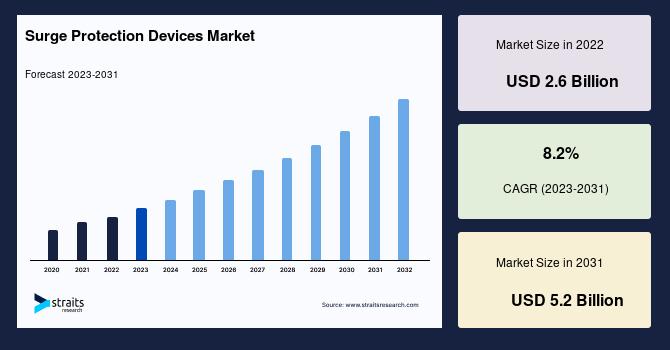
Surge Protection Devices Market Overview A new report titled “Global Surge Protection Devices Market Professional Report 2025-2033” has been added by Straits Research to its repository of research reports. The report analyzes and estimates the market on a global, regional, and country level. The report offers data from previous years along with an in-depth analysis from 2025 to 2033...
"Europe Gaming Steering Wheels Market Summary According to the latest report published by Data Bridge Market Research, the Europe Gaming Steering Wheels Market The Europe gaming steering wheels market size was valued at USD 425.31 million in 2025 and is expected to reach USD 769.90 million by 2033, at a CAGR of 7.70% during the forecast period With a full...
Planning a trip to the holy city of Mathura? Finding the right place to stay can make your journey more relaxing and memorable. If you are searching for the best Hotels in Mathura, Hotel in Mathura, or looking for Hotel Room Booking in Mathura, Hotel Pragati Palace is an excellent choice for families, couples, business travelers, and pilgrims. Conveniently located near major temples and...
