


Micro Boring Bar Buying Guide for CNC Tool Users | Selection Tips
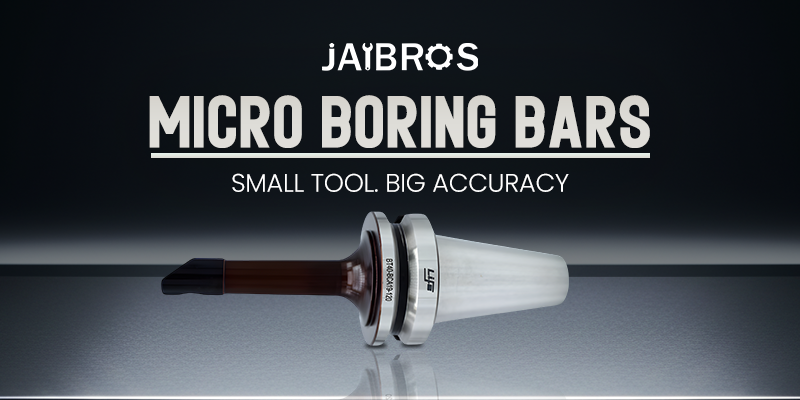
Read this micro boring bar buying guide for CNC tool users. Learn how to choose the right tool, compare micro boring heads, VMC compatibility, and cost factors.
Complete Micro Boring Bar Buying Guide for CNC Machining Applications
CNC Machining has strict requirements for internal diameter tolerances in some industries, such as aerospace, medical components, mould-making, and fine-mechanical engineering. Boring of very small diameters requires special tools due to the low tolerance for error and the high vibration likely to occur during machining. Therefore, selecting the correct micro boring tool is not only a tool choice; it is a process decision that directly impacts the accuracy of the finished part, the time spent machining, and the total manufacturing cost. Consequently, buyers and CNC machinists must consider several technical factors before purchasing tools for micro-bore operations.
Micro boring operations are used to enlarge and finish pre-drilled holes to specified tolerances. Drilling is the process of making an actual hole, whereas boring is a method of correcting the size of a pre-drilled hole, as well as its roundness and alignment. If the micro boring tool is too slender or insufficiently long, the resulting machining will exhibit problems such as chatter, taper, and poor surface finish. Making an informed purchasing decision for these tools will help eliminate many of these problems and provide a stable platform for machining components.
Why Tool Selection Matters More in Micro Boring
Small-diameter internal machining poses a higher deflection risk than larger bores. Cutting forces may be light, but the tool cross-section is also very small. That imbalance makes rigidity the top priority. A high-quality micro bar is engineered with a strong shank material, precise geometry, and a stable cutting-edge preparation to maintain dimensional control during operation.
CNC users should understand that tool performance depends not only on diameter rating but also on shank construction, material grade, and holder compatibility. Purchasing based only on size and price often leads to underperformance. Buying decisions should be based on total machining conditions rather than catalogue dimensions alone.
Choosing the Right Tool Material
Material is one of the first criteria for purchase. Most precision small-bore tools are made from solid carbide because carbide offers higher stiffness and wear resistance than high-speed steel. Greater stiffness directly improves bore accuracy. Fine-grain carbide grades are especially suitable because they balance edge strength with fracture resistance.
For difficult materials such as hardened steels or high-temperature alloys, coated carbide performs even better. Coatings reduce friction and heat at the cutting edge, extending tool life. When evaluating a micro boring, CNC users should review carbide grade, grain structure, and coating compatibility with their work materials.
Fixed Tools Versus Adjustable Systems
Buyers must also decide between fixed boring tools and adjustable systems. Fixed tools are simpler and typically more rigid, making them suitable for production runs where the bore size remains constant. They are easy to set and repeatable across batches.
Adjustable micro-boring heads are preferred when fine-diameter correction is required. These systems allow micron-level adjustment without changing the tool body. They are widely used in tool rooms, prototype work, and high-precision batch manufacturing. Micro boring heads cost more and require careful setup, but they offer greater flexibility than fixed tools.
Machine Compatibility and Holder Requirements
Before purchasing, CNC users should verify compatibility between the machine and the holder. Most small-hole operations are performed on vertical machining centres, and holder precision becomes critical. A vmc boring bar setup must maintain low runout because spindle error directly transfers to the bore wall.
Hydraulic and shrink-fit holders usually provide better concentricity than standard collets. Buyers should confirm shank tolerance, holder type, and recommended clamping method before ordering. Even a premium boring bar will not perform correctly if mounted in a low-precision holder. The tool and holder should be treated as a matched system rather than separate purchases.
Understanding Geometry and Cutting Behaviour
Cutting geometry strongly influences performance. Edge sharpness, rake angle, and clearance angle must match the workpiece material. Softer materials benefit from sharper edges, while harder materials require stronger edge preparation. Geometry also affects chip flow, a major concern in micro-boring because chips have limited exit space.
During the buying evaluation, users should review the manufacturer's geometry recommendations for steel, stainless steel, aluminium, and hardened alloys. A properly designed micro boring bar will include chip-friendly geometry that enables smooth chip evacuation and a stable cutting action in narrow bores.
Role of Coatings in Tool Buying Decisions
Coatings are not optional extras in modern CNC environments; they are performance multipliers. Good coatings reduce friction, control heat, and slow wear. Since small-diameter tools cannot absorb much heat, coating quality matters even more.
Different coatings suit different materials. Heat-resistant coatings are ideal for steels and superalloys, while low-friction coatings work well in non-ferrous materials. Buyers comparing tool options should include coating type in their decision checklist rather than focusing only on base material.
Evaluating Cost and Long-Term Value
Price comparison is common during tool procurement, and many buyers search for micro boring bar prices on VMCs before making a decision. However, purchase price alone is not a reliable indicator of value. Tool life, bore consistency, and rejection reduction determine the real return on investment.
A cheaper tool that wears quickly or causes size variation increases production cost through scrap and downtime. A more durable boring bar often delivers better economics over time. Buyers should consider expected tool life, supplier support, spare availability, and reconditioning options when comparing offers.
Matching Tool Choice to Application
Different CNC applications require different boring characteristics. Medical and electronics parts demand ultra-fine finishes and tight tolerance control. Aerospace components may involve deeper bores in tough materials where vibration resistance is critical. Mould and die work often involves hardened steels, which increase wear.
Buying decisions should consider bore depth, diameter range, material type, tolerance band, and batch size. When application needs are clearly defined, selecting the correct bar becomes more straightforward and results become more predictable.
Set Up Factors Buyers Should Plan For
Tool buying should also consider the setup reality inside the shop. Projection length should be minimised to improve stiffness. Machines should have verified spindle accuracy. The manufacturer's recommended parameter ranges should match the shop’s machining capability.
Coolant delivery also matters. Through-coolant compatibility can improve chip evacuation and temperature control. A properly planned vmc boring bar setup, combined with the right cutting parameters, ensures the purchased tool performs as expected in real production.
Common Buying Mistakes to Avoid
Many CNC users make purchasing mistakes by focusing only on the diameter range and ignoring rigidity, coating, and holder compatibility. Others choose adjustable systems when fixed tools would be more stable for their production type. Some underestimate chip-removal requirements and select an incorrect geometry.
Another frequent error is selecting purely on price without evaluating lifecycle performance. Avoiding these mistakes leads to more reliable boring operations and better cost control.
FAQs
Q. What is micro boring in CNC machining used for?
Micro boring is used to accurately enlarge and finish very small internal holes that require tight tolerances and a smooth surface finish.
Q. When should adjustable micro boring heads be purchased instead of fixed tools?
They are best suited for applications that require frequent fine adjustment of bore sizes or for prototypes and precision batch jobs.
Q. Why is carbide preferred for small-diameter boring tools?
Carbide provides higher rigidity and wear resistance, which improves dimensional accuracy and tool life.
Q. How important is holder precision in small hole boring?
Holder precision is critical because runout directly affects bore size and finish in small-diameter machining.
Q. Should buying decisions be based mainly on price?
No, the total value should include tool life, consistency, and production reliability, not just purchase cost.
Conclusion
Buying precision boring tools for CNC work requires balancing rigidity, material quality, geometric suitability, coating performance, and holder compatibility. Careful evaluation of application needs and machine conditions leads to better purchasing decisions and more stable machining results. When CNC users select tooling based on total performance rather than catalogue size alone, internal boring quality improves and production risk decreases.
Jaibros is an industrial cutting tool supplier focused on CNC and VMC machining solutions, offering precision boring, milling, and speciality cutting tools to support accurate, efficient manufacturing across multiple industries.
Categorias
Leia Mais
"Licensed Sports Merchandise Market Summary: According to the latest report published by Data Bridge Market Research, the Licensed Sports Merchandise Market The global licensed sports merchandise market size was valued at USD 37.03 billion in 2024 and is expected to reach USD 55.42 billion by 2032, at a CAGR of 5.17% during the forecast period For...

If you want to take a Mobile Repairing Course in Delhi, visit our ABC Mobile Institute of Technology training center. Your technical knowledge and skills will develop as a result of our coaching. The ABCMIT training centre thoroughly understands this course. This course has a lot of potential in the future. We are completely committed to your job placement. If you wish to understand more about...
To activate the promo code, start by visiting the official 1xBet website or downloading the mobile app, which in 2026 includes advanced features like biometric login for security and speed. Click the "Registration" button at the top, then choose your method: one-click for instant setup, phone for SMS verification, email for a full profile with name and password, or social networks like Google,...

" According to the latest report published by Data Bridge Market Research, the Metal Recycling Market The global metal recycling market size was valued at USD 891.69 Billion in 2024 and is expected to reach USD 1,307.42 million by 2032, at a CAGR of 4.9% during the forecast period Winning Metal Recycling Market research report is a persuaded solution...

Family disputes often involve important personal decisions that can affect relationships, finances, and future responsibilities. Whether the matter relates to divorce, child custody, maintenance, or guardianship, understanding how family court procedures work in the UAE can help individuals approach the legal process with greater confidence. While court proceedings may appear complex, knowing...
