Why Every Mechanic Needs a Feeler Gauge in Their Toolbox
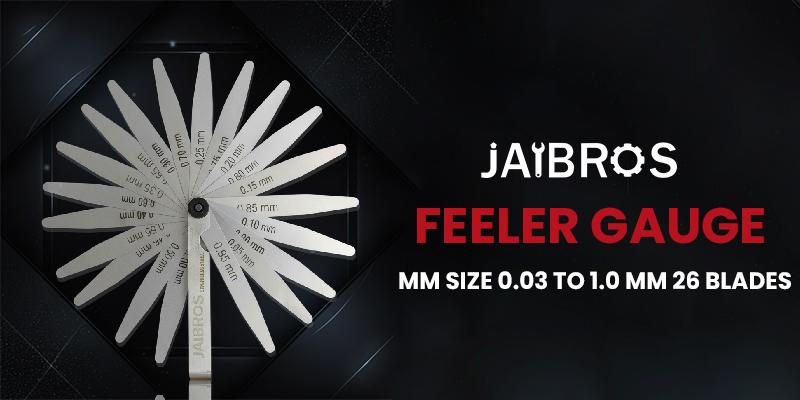
Learn why every mechanic needs a feeler gauge in their toolbox. Explore sizes in mm, least count, price, and its role in accurate gap measurement.
The Value of a Feeler Gauge in Mechanical Tasks
Precision is everything in mechanical work. Whether you’re tuning an engine, setting valve clearance, or aligning machine components, even the smallest gap can affect performance. That’s why a feeler gauge remains one of the most essential tools in any mechanic’s toolbox. Simple in design yet powerful in application, this thin-blade measuring tool plays a critical role in ensuring accuracy, safety, and efficiency.
In this blog, we’ll explore why this tool is indispensable, how it improves mechanical work, and what you should know before buying one.
What Is a Feeler Gauge?
A feeler gauge is a precision measuring instrument made up of a set of thin metal blades, each with a specific thickness. These blades are used to measure small gaps or clearances between two components. Each blade is marked with its thickness, allowing mechanics to select the correct one for the required measurement.
The tool is commonly used in automotive repair, industrial machinery maintenance, engineering workshops, and even DIY mechanical tasks. Despite the availability of digital measuring instruments, this traditional tool remains highly reliable and cost-effective.
The Importance of Accurate Gap Measurement
In mechanical systems, proper clearance between parts ensures smooth operation. Too tight, and components may wear out quickly or overheat. Too loose, and performance can suffer due to vibration, noise, or inefficiency.
For example:
-
Valve clearance in engines must be precise.
-
Spark plug gaps affect ignition efficiency.
-
Bearing clearances determine smooth rotation.
-
Machine alignments impact product quality.
A feeler gauge allows mechanics to measure these tiny spaces accurately, often down to fractions of a millimetre.
Understanding Feeler Gauge Sizes in mm
Most professional workshops use feeler gauge sizes in mm because metric measurements offer high precision. These sizes typically range from 0.02 mm to 1.00 mm or more, depending on the set.
Some sets also include imperial measurements (inches), but metric is widely preferred in modern automotive and industrial applications.
When selecting blades, mechanics often combine multiple blades to achieve the exact thickness required. This flexibility makes the tool extremely versatile.
What Is Feeler Gauge Least Count?
The term feeler gauge least count refers to the smallest measurement increment available in a set. For example, if the thinnest blade in a set measures 0.02 mm, then 0.02 mm is its least count.
A smaller least count means greater precision. For engine tuning and high-performance machinery, a finer least count is especially important because even slight deviations can impact performance.
Understanding the least count helps mechanics choose the right tool for sensitive tasks where exact measurements are critical.
Why Every Mechanic Should Have This Tool
1. Ensures Engine Efficiency
Proper valve clearance is crucial for engine performance. When adjusting tappets or rocker arms, a feeler gauge ensures the gap meets manufacturer specifications. Incorrect clearance can lead to:
-
Reduced fuel efficiency
-
Excessive engine noise
-
Valve damage
Using accurate measurement tools prevents costly repairs and improves overall vehicle performance.
2. Essential for Spark Plug Adjustment
Spark plugs require precise gap settings for proper ignition. Even minor deviations can affect combustion efficiency. A feeler gauge helps ensure the spark plug gap matches the recommended specification, improving:
-
Smooth engine starting
-
Better fuel combustion
-
Reduced emissions
This simple step can significantly impact vehicle reliability.
3. Improve Machinery Maintenance
In industrial environments, machine downtime can be expensive. Accurate clearance measurement ensures components operate smoothly without friction or misalignment.
Maintenance technicians rely on a feeler gauge to check tolerances in:
-
Pumps
-
Compressors
-
Gear assemblies
-
Industrial motors
Regular checks extend equipment life and reduce unexpected breakdowns.
4. Cost-Effective and Durable
When comparing tools, many mechanics consider the feeler gauge price to be extremely reasonable. Despite its precision capabilities, it remains one of the most affordable measuring tools available.
High-quality sets made from hardened steel resist corrosion and wear, making them durable for long-term use. Given its lifespan and importance, the investment is minimal compared to the value it provides.
5. Easy to Use and Portable
Unlike bulky digital equipment, a feeler gauge is compact and easy to carry. It fits neatly into a pocket or toolbox drawer. There’s no need for batteries, calibration software, or complicated setup procedures.
This simplicity makes it ideal for both professional mechanics and beginners.
Using a Feeler Gauge Correctly
To get accurate results, follow these basic steps:
-
Clean the surfaces you’re measuring.
-
Select the blade that matches the required thickness.
-
Insert it gently into the gap.
-
The blade should slide with slight resistance—not too tight, not too loose.
-
If needed, combine blades to reach the desired thickness.
Always refer to a feeler gauge size chart provided by the manufacturer to confirm measurements and avoid errors.
Choosing the Right Set
Before buying, consider:
-
Measurement range (metric or imperial)
-
Blade material quality
-
Number of blades
-
Protective coating
-
Storage case durability
Professionals working with high-precision machinery may require sets with finer increments, while general automotive tasks may not demand ultra-fine tolerances.
Reviewing the feeler gauge size chart before purchasing helps ensure the selected set meets your application requirements.
Common Mistakes to Avoid
Even though this tool is simple, mistakes can happen:
-
Using a dirty or bent blade
-
Forcing the blade into a tight gap
-
Ignoring manufacturer specifications
-
Not checking for blade wear
Proper handling and storage will maintain accuracy and extend tool life.
Why It Remains Relevant in the Digital Age
With the rise of digital callipers and laser measurement tools, some may question whether traditional tools are still necessary. The answer is yes.
A feeler gauge offers:
-
Immediate manual feedback
-
No dependence on power sources
-
High reliability
-
Excellent durability
For measuring narrow gaps where digital tools may not fit, it remains unattached.
FAQs
1. What is the main use of a feeler gauge?
It is primarily used to measure small gaps or clearances between mechanical components to ensure proper alignment and performance.
2. How do I read feeler gauge sizes in mm?
Each blade is marked with its thickness in millimeters. Select the blade matching the required measurement and insert it into the gap to check the fit.
3. What does feeler gauge least count mean?
It refers to the smallest thickness measurement available in the set. A smaller least count allows for more precise measurements.
4. How much does a feeler gauge price typically range?
The cost depends on quality, brand, and blade count. Basic sets are affordable, while professional-grade sets with finer increments may cost more.
5. Can I combine blades for exact measurements?
Yes, multiple blades can be stacked together to achieve a specific thickness if a single blade does not match the required clearance.
Conclusion
Precision separates good mechanics from great ones. Having reliable tools ensures accuracy, safety, and professional results. From adjusting spark plugs to maintaining industrial machinery, a feeler gauge plays a vital role in daily mechanical tasks. Affordable, durable, and highly precise, it is a must-have tool for every mechanic’s toolbox.
About Jaibros
Jaibros is a trusted name in industrial tools and precision instruments, offering high-quality measuring solutions for professionals and workshops. With a commitment to durability, accuracy, and customer satisfaction, Jaibros provides reliable tools designed to meet modern engineering standards. Whether you are a mechanic, technician, or industrial professional, Jaibros delivers products you can depend on.
Catégories
Lire la suite
The global railway telematics market is set to experience substantial growth over the next decade, driven by increasing digitalization of rail infrastructure and the growing need for real-time monitoring and operational efficiency. According to the latest analysis by Future Market Insights (FMI), the market is projected to expand significantly between 2026 and 2036, supported by rising...

Uganda Safari Journeys That Inspire True ExplorationUganda safari journeys provide travelers with inspiring opportunities to explore untouched wilderness uganda lifestyle culture and rich biodiversity. From vibrant landscapes to diverse wildlife, every trip delivers unique experiences. Visitors enjoy peaceful environments and exciting adventures, making Uganda an exceptional destination...

Get updated and reliable Workday-Pro-HCM-Core Dumps from HelloDumps. Prepare effectively with expert-verified study materials designed to help you pass your Workday-Pro-HCM-Core certification exam on the first attempt. Workday-Pro-HCM-Core Exam Dumps to Achieve Outstanding Results on Your First Attempt HelloDumps offers highly effective Workday-Pro-HCM-Core exam dumps that perfectly...

"Future of Executive Summary Europe Long Read Sequencing Market: Size and Share Dynamics Data Bridge Market Research analyses that the long read sequencing market, which was USD 515.64 million in 2022, would be up to USD 2514.06 million by 2030 and is expected to undergo a CAGR of 21.9% during the forecast period 2023-2030 The Europe Long Read Sequencing Market report offers an analytical...
Facing an urgent need for cash can be overwhelming, especially when time is limited. Imagine a scenario where your electricity suddenly cuts out, your laptop’s battery is nearly dead, and your bank account shows no funds, all just an hour before an important appointment. In such moments, leveraging your smartphone and the internet can be a lifesaver. For instance, identifying unused gift...