Scalable EdTech Solutions Building Future Global Classrooms

The learning crisis isn't an "unfortunate reality". It’s a massive failure of distribution. UNESCO reports that more than 258 million children worldwide are out of school, yet we still treat edtech as a side project rather than as critical infrastructure.
In 2026, a classroom is just a node in a global network. If that node can't handle high-concurrency or goes dark the moment 5G drops, it’s useless. We’ve been through one pandemic that affected 90% of students due to a lack of resources; imagine what would happen if we got another?
Building scalable edtech solutions requires moving beyond "web design" into systems engineering. It requires navigating the challenges and finding the “sweet spot” that works not only in 2026 but also beyond.
Why edtech platform architecture matters in 2026?
The edtech market is projected to reach $289 billion by 2030. Here's what's driving it:
-
The infrastructure play: Cloud elasticity for the 8:00 AM million-student surge.
-
The intelligence gap: A billion inference engines solving what a billion tutors can't.
-
National resilience: Digital-first education as economic and national security infrastructure.
The following are some of the popular global classroom technology solutions:
|
The Solution |
Technical “why” |
The Human Impact |
|
LMS orchestration |
API-first architecture |
Frees teachers from hours of data entry |
|
Edge AI platforms |
On-device inference |
Sub-second feedback anywhere |
|
Low-latency collab |
WebRTC + sync state |
Students feel like they're in the same room |
|
IoT integration |
Hardware-software loops |
Turns static classrooms into data-rich environments |
|
Mobile-native (ARM) |
ARM-optimized code |
Reaches the smartphone-only majority |
Education technology scalability challenges: What’s holding it back?
Before we talk architecture, let's name the challenges. They're the reason 73% of EdTech platforms fail to expand beyond their pilot markets (McKinsey, 2023).
Challenge 1: The 8:01 am spike
A million students hit "Start" simultaneously when the bell rings.
Now imagine if your auto-scaling takes 90 seconds to spin up new pods, you've lost the first 10 minutes of instruction.
The fix:
-
Pre-warming strategies: Schedule infrastructure scaling 15 minutes before peak hours, based on historical patterns rather than reactive metrics.
-
Kubernetes HPA with custom metrics: Scale based on request queue depth, not just CPU. A server at 60% CPU can still be drowning.
-
CDN-backed static assets: Offload everything that doesn't need dynamic rendering. Your login page shouldn't hit your origin servers 10,000 times a second.
Challenge 2: The last-mile connectivity gap
You tested your platform in San Francisco and found it’s working beautifully on fiber. But in rural Indonesia, it's loading over 2G with 400ms latency.
Now, if your bundle size exceeds 5MB, it’ll ask students to wait longer than their attention span. If your app requires constant revalidation, it's dead on arrival.
The fix:
-
Offline-first architecture: Service workers, local storage, and IndexedDB. The app should load and function even when the network doesn't.
-
Progressive bundling: Ship critical JS first; lazy-load everything else. Students see a working interface in under 3 seconds, or they're gone.
-
Adaptive bitrate for video: It’s no longer optional. If you're streaming lectures, meet the connection where it is, not where you wish it were.
Challenge 3: The device fragmentation trap
You might have built an AI-powered education system for Chrome on macOS. But your users might be on Tecno, Xiaomi, or Samsung A-series phones running Android 11 with 2GB of RAM.
If your rendering engine assumes WebGL, half your classroom sees a white screen. If your React bundle isn't optimized for low-power ARM chips, you're draining batteries in 45 minutes.
The fix:
-
Mobile-first rendering: Test on real devices under $150. If it doesn't run there, it doesn't ship.
-
Progressive enhancement: Build the core experience in HTML/CSS that works everywhere. Layer JavaScript on top like a luxury, not a requirement.
-
ARM64 builds: If you're shipping native components, compile for the chips students actually hold, not just Intel Macs.
How to build one: Strategies for scaling digital learning platforms worldwide
Here are the engineering best practices for developing education SaaS platforms:
1. Invest in multi-cloud infrastructure
-
Develop for portability across AWS, Azure, and Google Cloud.
-
Use Kubernetes for container orchestration.
-
Avoid vendor lock-in and on-premise single points of failure.
Why it matters in 2026?
In the 2026 landscape, cloud-based edtech platforms are the baseline. As institutions migrate to the cloud, these distributed systems will serve as the backbone of the global knowledge economy.
2. Architect for geopolitical localization
-
Implement i18n frameworks for localized content and regional data residency.
-
Avoid one-size-fits-all; modular localization and edge caching win.
Why it matters in 2026?
As the digital world becomes more fragmented, the need for sovereign, flexible solutions will increase. Mastering regional adaptability will drive your platform's adoption and market penetration.
3. Mobile-first and edge-first design
-
Prioritize mobile-native UX with service workers for offline functionality.
-
Don't create "accessibility debt" by optimizing for desktop first.
Why it matters in 2026?
With mobile devices now the primary compute node for global learners, mobile optimization is a non-negotiable technical requirement.
4. Hardened data security and regulatory compliance
-
Implement zero-trust architectures and adhere to GDPR/CCPA standards.
-
Utilize automated SOC2 auditing and regular penetration testing to secure your student data lakes.
-
Do not trade security for speed to market, as a single data breach in an educational environment can cause irreparable brand damage and massive legal liability.
Why it matters in 2026?
Data sovereignty is the top concern for edtech leaders. Compliance is no longer a "feature,” but the foundation of user trust and federal-level integration.
5. Integrate generative AI for hyper-personalization
-
Deploy small language models (SLMs) to provide real-time, personalized feedback.
-
Use RAG (Retrieval-Augmented Generation) to ensure your AI content is grounded in verified educational curricula.
-
Avoid generic, static content loops, as static UX fails to capture the engagement data needed to improve student outcomes.
Why it matters in 2026?
As AI becomes the core engine of the edtech stack, it will be the primary driver of learning efficiency and institutional ROI.
Organizations like Unified Infotech have become reference architectures for this transition. With deep expertise in custom eLearning software development services and cloud-native development, they help build multi-cloud EdTech platforms that handle million-student concurrency while keeping latency under 100ms.
What’s next: Global trends shaping the education industry
-
Agentic AI: Systems that don't just "talk" but actually manage the student’s schedule and resource needs autonomously.
-
Spatial computing: Moving from 2D screens to 3D historical "Digital Twins" where history is experienced, not read.
-
Verifiable credentials: Using blockchain (not for crypto, but for proof) to ensure a degree can be verified in seconds by any employer.
-
Satellite-driven scale: With Starlink and 5G saturation, the "Digital Divide" is officially a solvable engineering problem.
-
Biometric feedback: Using non-invasive IoT to see when a student is frustrated or bored, and adjusting the difficulty in real-time.
Ending note on digital transformation in education
The "global classroom" is a massive distributed system. If you want to lead in this space, stop thinking like a content creator and start thinking like a systems architect. Focus on the cloud, protect the data, and build scalable EdTech solutions for the phone in a student's pocket.
The 8:01 AM spike, last-mile connectivity, and device fragmentation aren't theoretical problems. They're the difference between a platform that scales and one that stalls. If you solve for those, you won’t just develop software, but an infrastructure for the next generation of learners.
Categorías
Read More
Looking for your dream home in Pune? Welcome to Godrej Aqua Vista, a premium residential project nestled in the heart of Keshav Nagar, Pune. Crafted by the trusted brand Godrej Properties, this magnificent enclave is designed to deliver not just homes but an elevated lifestyle that blends modern aesthetics with natural serenity. If you’re looking for a property for sale in Pune that...

Vision is one of the most valuable senses, allowing us to navigate the world, communicate effectively, work productively, and enjoy everyday experiences. Yet many people take their eye health for granted until they begin experiencing symptoms such as eye strain, dryness, irritation, blurred vision, or changes in visual clarity. In today's digital environment, where screens dominate both...

As seniors age, managing medications becomes increasingly important for maintaining health and independence. Families in Katy often seek reliable solutions that ensure their loved ones receive the right medications at the right time. With the support of Assisted Living with 24-Hour Care, seniors can benefit from professional oversight that minimizes risks and promotes overall well-being. 1. The...

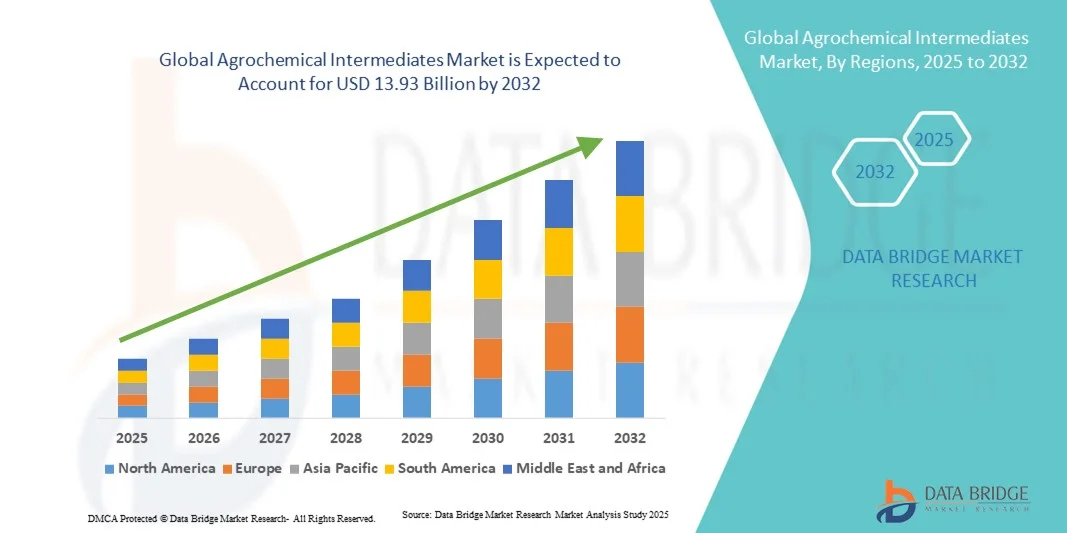
"Agrochemical Intermediates Market Summary: According to the latest report published by Data Bridge Market Research, the Agrochemical Intermediates Market The global agrochemical intermediates market size was valued at USD 7.75 billion in 2024 and is expected to reach USD 13.93 billion by 2032, at a CAGR of 7.60% during the forecast period This...
Tensions between India and Pakistan have coincided with a sharp rise in online censorship across the region.\n\nOn May 8, 2025, India issued executive orders asking X to block more than 8,000 accounts inside the country.\n\nX said the requests target a mix of high-profile users and international news organizations.\n\nThe company’s global government affairs team called the demands...