


Udyam Registration & 45-Day Payment Rule: Section 43B(h) Guide
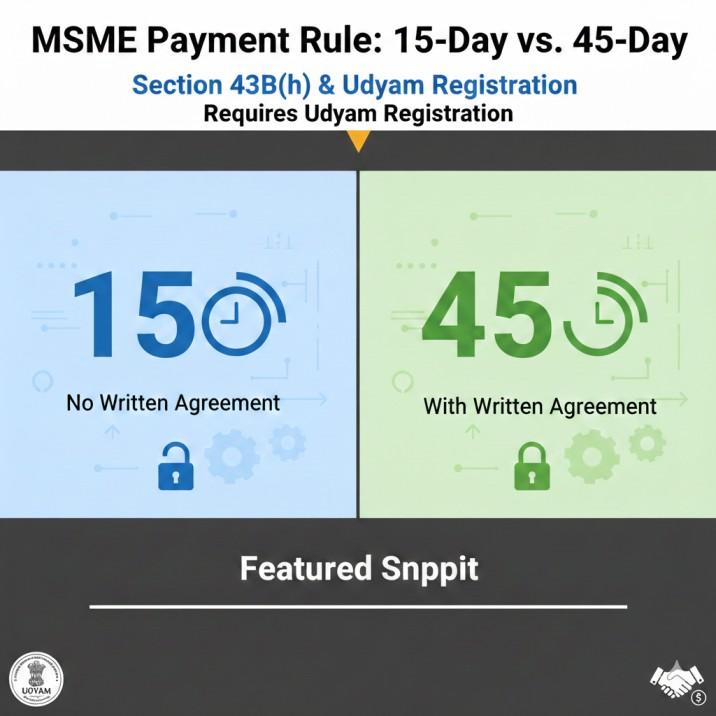
One of the most common problems MSMEs business owners often face is related to their cash flow. Having a good cash flow is very important for small businesses in India. However, the Indian Government comes with the 45-Day Payment Rule. This rule acts as a legal insurance policy against clients who don't clear their dues within time. In this blog I will walk you through what is the 45 day rule and how udyam registration protects your business from delayed payment.
Understanding the 15/45 Rule
The law (Section 15 of the MSMED Act) is very specific about when you should get paid. The deadline depends on whether you have a written agreement with your buyer:
|
Scenario |
Maximum Credit Period |
|
No Written Agreement |
15 Days (from the date of delivery/acceptance) |
|
Written Agreement Exists |
Agreed Period, but cannot exceed 45 Days |
Crucial Note: Even if your contract says "Payment in 90 days," the law overrides it. Any agreement for more than 45 days is legally void, and the 45-day limit still applies.
How Udyam Registration Protects You
Without a valid Udyam Registration, these protections are essentially invisible to you. Here’s how the registration transforms your business:
1. The "Income Tax" Pressure (Section 43B(h))
As of 2024-2026, the government has linked MSME payments to the buyer's tax benefits. If a buyer doesn't pay a registered Micro or Small enterprise within the 15/45-day window, they cannot claim that expense as a deduction in their income tax for that year. So because of that they buyer pays their dues within the given time to avoid higher taxes
2. Mandatory Penal Interest
If the payment is delayed, the buyer is legally obligated to pay you penal interest.
-
The Rate: 3 times the Bank Rate notified by the RBI (compounded monthly).
-
The Catch for Buyers: This interest is "non-deductible," meaning they can't even use this penalty payment to reduce their taxes.
3. Access to MSME Samadhaan (The "Recovery" Portal)
Registered businesses can file a complaint on the MSME Samadhaan portal.
-
Once filed, the case goes to the MSE Facilitation Council (MSEFC).
-
The Council has the power to act as an arbitrator and issue a binding order to the buyer to pay the principal plus interest.
3 Things to Mention on Every Invoice
To make this protection work, your invoices should be your first line of defense. Add these details:
-
Your Udyam Registration Number.
-
A "Delayed Payment" Clause: "Payment to be made within 45 days. Delayed payments attract penal interest at 3 times the RBI bank rate as per MSMED Act, 2006."
-
MSME Category: State clearly if you are a "Micro" or "Small" enterprise.
If you already registered your business with Udyam Registration but misplaced your udyam certificate or forgot udyam number and want to recover your udyam certificate without complex navigation of the official Udyam Portal. Visit Udyog Register Portal and recover your certificate with expert guidance.
Conclusion: Don't Let Your Cash Flow Get Stuck
In India where liquidity and cash flow can make or break any business the 45-day payment rule is a lifeline for small businesses. If your business have an udyam registration the buyer is legally bound to clear their dues within the given time
By simply registering and mentioning your Udyam ID on your invoices, you gain:
· Tax-backed leverage against late-paying buyers.
· Mandatory penal interest that protects your margins.
· Legal recourse through the MSME Samadhaan portal.
Categorii
Citeste mai mult
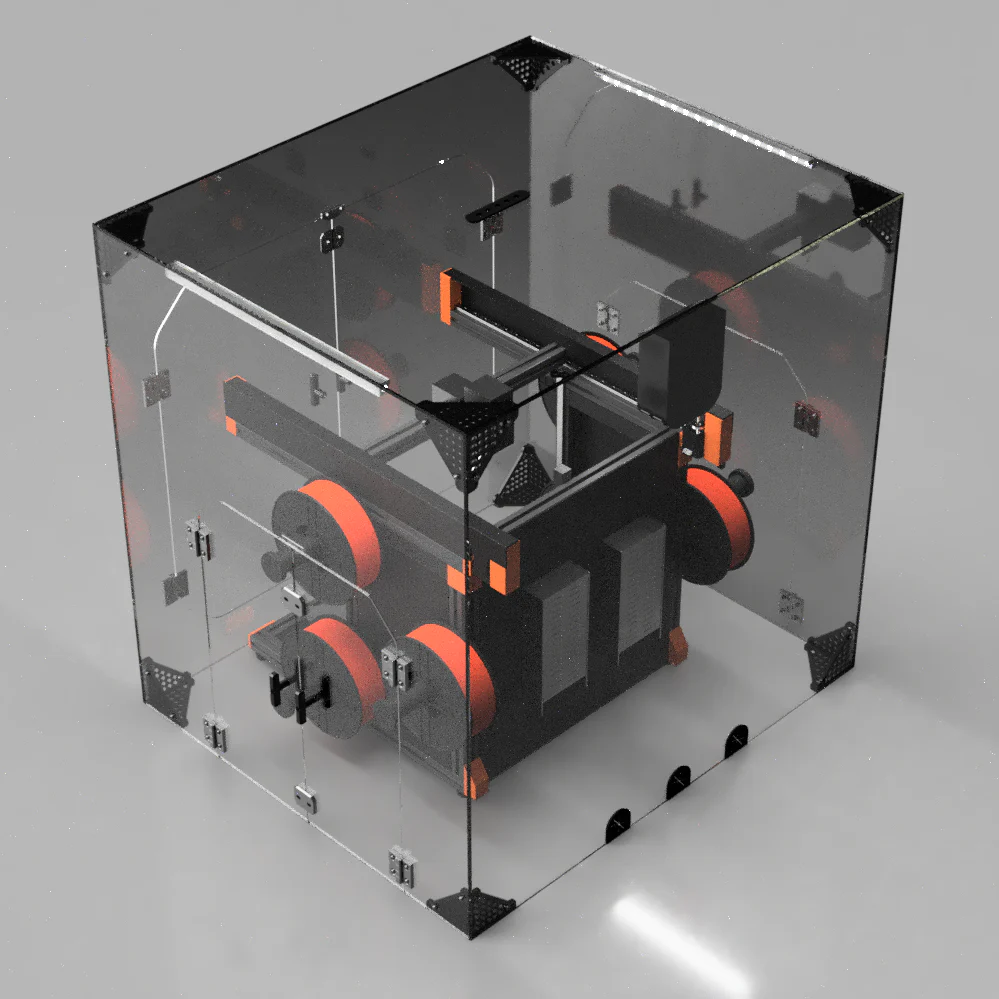
When it comes to 3D printing, achieving high-quality, consistent results requires more than just a powerful printer—it also demands the right environment. The Prusa XL Enclosure provides an ideal solution for controlling the factors that can affect your prints, such as temperature fluctuations and drafts. But with different options available, how do you choose the right enclosure for your...
Market Trends Shaping Executive Summary Middle East and Africa Antenna Market Size and Share Data Bridge Market Research analyses that the antenna market is expected to reach USD 3,731.56 million by 2030, which is USD 2,171.80 million in 2022, at a CAGR of 7.00% during the forecast period. The Middle East and Africa Antenna Market report puts light on the change in the market...

Nightcashpayment is an agency where you can hire independent girls and meet them at your place or in a hotel room. If you don't have a place we will arrange it for you. You can meet nice, model-like girls and have a nice time with them in private. Our girls will make sure that you enjoy every inch of their body. To know more about our call girls in Kochi, please follow the link...

"Comprehensive Outlook on Executive Summary Pharmacogenetics Testing in Psychiatry/Depression Market Size and Share CAGR Value The global pharmacogenetics testing in psychiatry/depression market size was valued at USD 1.34 billion in 2024 and is expected to reach USD 2.97 billion by 2032, at a CAGR of 10.4% during the forecast period The insights...
A new growth forecast report titled Mobile Virtual Network Operator (MVNO) Market Share, Size, Trends, & Industry Analysis Report By Operational Model (Reseller, Service Provider, and Full MVNO); By Service Type; By Subscriber; By Region; Segment Forecast, 2025 - 2034 introduced by Polaris Market Research represents conclusive data on the overall market. It majorly targets to...