


Choosing Between a Solid Carbide Drill and an Indexable Drill
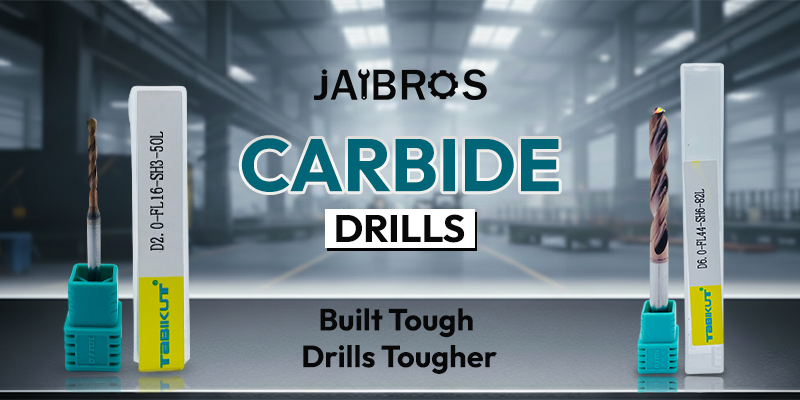
Learn the key differences, benefits, cost comparison, and how to choose the right drilling solution for your machining needs.
Solid Carbide Drill vs Indexable Drill: Key Differences & Buying Guide
Selecting the right drilling tool is a critical decision in machining and manufacturing. The choice directly affects hole accuracy, tool life, production speed, and overall cost efficiency. Among modern cutting tools, solid carbide and indexable drills are widely used for precision and high-performance drilling. Understanding the differences between these two options helps manufacturers choose the right solution for their specific applications.
Understanding Modern Drilling Tools
Advanced drilling tools are designed to handle tough materials, tight tolerances, and high cutting speeds. A carbide drill is preferred in many industries due to its strength, heat resistance, and ability to maintain sharp cutting edges. However, not all drilling operations require the same tool design.
Solid carbide and indexable drills differ in construction, cost, flexibility, and performance. Choosing between them depends on factors such as material hardness, production volume, machine capability, and budget.
What Is a Solid Carbide Drill?
A solid carbide drill is manufactured from a single piece of carbide material. This monolithic structure provides excellent rigidity, making it ideal for high-speed and high-precision drilling operations. Solid carbide tools are commonly used in CNC machining where accuracy and surface finish are critical.
Because of their hardness, solid carbide drill tools can cut through materials like stainless steel, hardened steel, cast iron, and high-temperature alloys with ease. They are often preferred when tight tolerances and consistent hole quality are required.
What Is an Indexable Drill?
Indexable drills use replaceable cutting inserts mounted on a steel tool body. Instead of replacing the entire tool when the cutting edge wears out, only the inserts are changed. This design makes indexable drills cost-effective for large-scale production.
Indexable drilling systems are especially useful in high-volume manufacturing where downtime must be minimised. They offer flexibility by allowing different insert geometries to be used for different materials.
Key Differences Between Solid Carbide and Indexable Drills
Tool Construction and Strength
Solid carbide tools offer higher rigidity due to their single-piece construction. This rigidity helps reduce vibration and improve hole accuracy. Indexable drills, while strong, rely on insert seating and clamping, which can introduce slight variations in stability.
Cutting Performance
A solid-carbide drilldelivers superior cutting performance at high speeds. It provides smooth chip evacuation and excellent surface finish. Indexable drills perform well in rough drilling operations and are effective for larger hole diameters, but may not always match the surface quality of solid carbide tools.
Cost Considerations
Solid carbide drills have a higher initial cost, especially when purchasing a full set. However, they offer longer tool life and consistent performance. Indexable drills have a higher upfront holder cost but lower ongoing expenses because only the inserts need replacement. This makes them attractive for long production runs.
Application Flexibility
Indexable drills offer greater flexibility in production environments where different materials are machined frequently. Inserts can be changed quickly to suit various cutting conditions. Solid carbide tools are more application-specific but deliver unmatched precision.
When to Choose a Solid Carbide Drill
You should choose a solid carbide drill when:
-
High precision and tight tolerances are required
-
Surface finish quality is critical
-
Machining hard or abrasive materials
-
Running high-speed CNC operations
-
Producing small to medium batch sizes
A single carbide drill bit can deliver consistent results across long machining cycles, making it ideal for precision manufacturing.
When to Choose an Indexable Drill
Indexable drills are a better choice when:
-
Producing large volumes of parts
-
Drilling larger diameter holes
-
Minimising tool replacement downtime
-
Controlling tooling costs in mass production
For manufacturers monitoring carbide drill bit prices closely, indexable systems provide long-term savings by reducing replacement costs.
Productivity and Tool Life Comparison
Tool life plays a major role in productivity. Solid carbide tools generally last longer in precision drilling but must be replaced or re-sharpened when worn. Indexable drills allow quick insert changes, keeping machines running with minimal interruption.
Many manufacturers use both systems together—solid carbide drills for finishing operations and indexable drills for roughing and bulk material removal.
Choosing the Right Tool for Your Operation
The decision between solid carbide and indexable drills should be based on:
-
Material type and hardness
-
Required hole accuracy
-
Production volume
-
Machine rigidity and spindle speed
-
Tooling budget
A carbide drill selected with the right geometry and coating can significantly improve machining efficiency and reduce operational costs.
Future Trends in Drilling Technology
Modern carbide drills are evolving with advanced coatings, optimized flute designs, and improved chip evacuation. These innovations allow faster cutting speeds and longer tool life. Indexable systems are also improving with better insert materials and precision clamping mechanisms.
As manufacturing demands increase, selecting the right drilling solution becomes even more important for maintaining competitiveness.
FAQs
1. What is the main advantage of a solid carbide drill?
Solid carbide drills offer high rigidity, excellent precision, and superior surface finish, making them ideal for high-accuracy machining.
2. Are indexable drills suitable for CNC machines?
Yes, indexable drills are widely used in CNC machining, especially for high-volume production and larger hole diameters.
3. Which tool is more cost-effective in the long run?
Indexable drills are often more cost-effective for mass production, while solid carbide drills provide better value in precision-focused operations.
4. Can carbide drills be used on hardened steel?
Yes, carbide drills are highly effective for drilling hardened steel and other difficult-to-machine materials.
5. How do I choose between solid and indexable drilling tools?
Consider factors such as material, accuracy requirements, production volume, and tooling budget before making a decision.
Conclusion
Choosing between solid carbide and indexable drills depends on your machining goals, production scale, and performance expectations. Both tools offer unique advantages, and the right choice can significantly impact productivity and cost efficiency. A well-selected carbide drill ensures precision, reliability, and long-term machining success.
About Jaibros:
Jaibros is a trusted supplier of high-quality cutting tools designed for precision and durability. With a strong focus on performance and reliability, Jaibros provides advanced drilling solutions to meet the evolving needs of modern manufacturing.
Categories
Read More
A new growth forecast report titled Digital Art Authentication Blockchain Platforms Market Size, Share, Trends, Industry Analysis Report: By Technology Type [Non-Fungible Tokens (NFTs), Smart Contracts, and Others], Application, Platform Type, End User, and Region (North America, Europe, Asia Pacific, Latin America, and Middle East & Africa) – Market Forecast,...

Introduction In this rapidly developing online game world, it is very essential to have a reliable and safe game platform now. A Betbhai9 ID enables customers to enjoy the full entertainment experience of online sports betting, casino games, and live cricket betting. For beginners and experts alike, Betbhai9 is a reliable and smooth platform that comes with powerful features and...
"Tankless Water Heater Market Summary: According to the latest report published by Data Bridge Market Research, the Tankless Water Heater Market The global tankless water heater market size was valued at USD 4.52 billion in 2024 and is expected to reach USD 7.00 billion by 2032, at a CAGR of 5.62% during the forecast period Tankless Water Heater...
Fenbendazole is a broad-spectrum antiparasitic medication widely used in veterinary medicine to treat intestinal worms in animals. In recent years, it has gained attention online as a potential alternative treatment for Cancer in humans. This growing interest has sparked curiosity and debate, but it is important to separate scientific evidence from anecdotal claims. What Is Fenbendazole?...

The Solar Sales and Design Software Market is experiencing significant growth as the global renewable energy sector continues to expand rapidly. Solar sales and design software solutions help installers, engineering companies, and energy consultants streamline project planning, proposal generation, system design, customer management, and financial analysis. According to The insight Partners,...