


How Linux-Based Industrial IoT Gateways Enable Secure and Compliant Data Handling
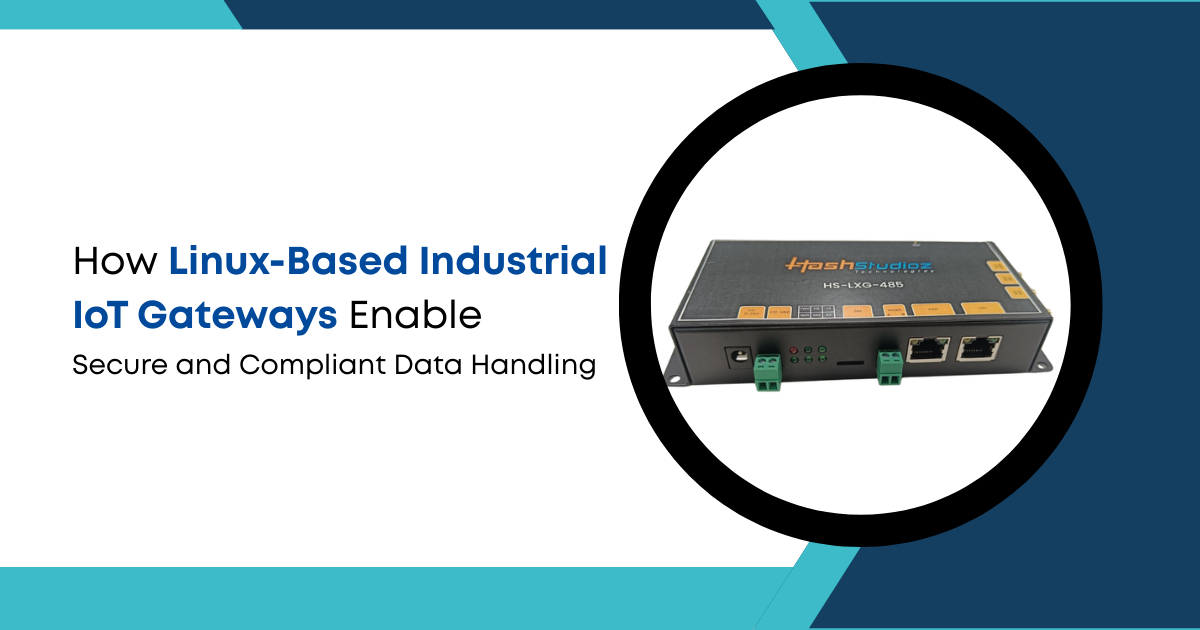
Industrial systems generate vast amounts of operational data every second. Sensors monitor temperature, vibration, pressure, and energy usage. Controllers execute automated tasks across factories, utilities, and transport systems. Organizations must collect this data securely and process it according to strict regulatory rules.
A Linux-Based Industrial IoT Gateway plays a central role in this architecture. It connects field devices to enterprise systems while protecting sensitive operational data. This article explains, from a technical perspective, how a Linux IoT Gateway enables secure and compliant data handling in industrial environments.
The Role of an Industrial IoT Gateway
An industrial IoT gateway acts as a bridge between operational technology (OT) and information technology (IT). It collects data from machines and sensors, processes it locally, and transmits it to cloud or on-premise platforms.
Core Functions of a Gateway
A Linux IoT Gateway typically performs the following tasks:
-
Data acquisition from PLCs, RTUs, and sensors
-
Protocol conversion between legacy and modern systems
-
Edge processing and filtering
-
Secure data transmission
-
Device authentication and access control
-
Remote management and updates
Without a gateway, field devices would need direct internet access. That approach increases risk and complexity. The gateway reduces exposure by acting as a controlled access point.
Why Linux Is Preferred for Industrial IoT Gateways
Linux has become a dominant operating system in embedded and industrial systems. Several technical reasons explain this preference.
1. Open Architecture
Linux offers full control over kernel configuration and system services. Engineers can remove unnecessary components and reduce the attack surface.
2. Strong Security Model
Linux supports:
-
Mandatory Access Control through SELinux or AppArmor
-
Role-based permissions
-
Secure boot mechanisms
-
Kernel-level isolation
3. Long-Term Support
Industrial deployments often last 10 to 15 years. Long-term support (LTS) Linux distributions provide security updates over extended periods.
4. Market Adoption
Industry reports estimate that over 70% of embedded industrial devices use Linux-based systems. The global industrial IoT market is projected to exceed $1.1 trillion by 2028, growing at over 20% CAGR. Gateways form a critical segment of this growth.
Security Requirements in Industrial Environments
Industrial networks face increasing cyber threats. According to cybersecurity reports, manufacturing was the most targeted industry for cyberattacks in 2023, accounting for nearly 25% of global incidents.
Industrial environments require security at multiple layers:
-
Device security
-
Network security
-
Application security
-
Data security
-
Physical security
A Linux-Based Industrial IoT Gateway integrates controls across all these layers.
Secure Data Acquisition at the Edge
Data security begins at the point of collection.
1. Device Authentication
Gateways verify device identity before data exchange. This process uses:
-
X.509 certificates
-
Pre-shared keys
-
Hardware-backed cryptographic modules
Authentication prevents unauthorized devices from injecting false data.
2. Encrypted Communication
Industrial gateways use protocols such as:
-
TLS 1.2 or TLS 1.3
-
HTTPS
-
Secure MQTT
Encryption protects data in transit from interception.
3. Secure Boot
Secure boot ensures the gateway loads only trusted firmware. It verifies digital signatures during startup. If verification fails, the system blocks execution.
This mechanism prevents malware persistence at the firmware level.
Data Integrity and Tamper Protection
Data integrity ensures that no one modifies data during transmission.
Linux IoT Gateway devices use:
-
SHA-256 hashing
-
Message authentication codes
-
Digital signatures
These mechanisms confirm that received data matches the original source.
Some industrial gateways include Trusted Platform Modules (TPMs). A TPM stores cryptographic keys securely and prevents extraction during physical attacks.
Studies show that more than 60% of industrial hardware vendors now integrate hardware security modules in new gateway designs.
Network Segmentation and Isolation
Industrial networks must separate IT and OT traffic. A Linux-Based Industrial IoT Gateway enforces this separation.
1. Firewall Configuration
Linux supports advanced firewall frameworks such as iptables and nftables. Engineers configure strict traffic rules:
-
Allow only specific IP addresses
-
Block unauthorized ports
-
Limit outbound connections
2. Virtual Network Interfaces
Gateways create separate interfaces for OT and IT traffic. This segmentation prevents lateral movement during an attack.
3. Container Isolation
Modern Linux gateways often use container technology such as Docker or Podman. Containers isolate applications at the process level.
Compliance With Industrial Standards
Security alone does not guarantee regulatory compliance. Many industries follow formal standards.
1. IEC 62443
IEC 62443 defines cybersecurity requirements for industrial automation systems. It specifies:
-
Access control policies
-
Secure communication
-
Risk assessment procedures
-
Patch management practices
A properly configured Linux IoT Gateway can meet these requirements.
2. ISO 27001 Alignment
Organizations handling sensitive data follow ISO 27001 guidelines. Gateways support compliance by:
-
Maintaining audit logs
-
Enforcing encryption
-
Providing access tracking
3. Data Protection Regulations
Some industries must comply with regional data protection laws. Gateways help enforce:
-
Data minimization
-
Secure storage
-
Controlled access
Audit trails stored on the gateway support compliance verification.
Secure Remote Management
Industrial gateways often operate in remote or harsh environments. Engineers require secure remote access.
1. VPN Integration
Linux supports secure VPN protocols such as:
-
OpenVPN
-
IPsec
-
WireGuard
These protocols protect remote connections from interception.
2. Role-Based Access Control
Administrators define user roles with specific privileges. For example:
-
Operator: view data only
-
Engineer: modify configurations
-
Admin: full system control
Granular permissions reduce insider threats.
3. Over-The-Air Updates
Remote firmware updates keep gateways secure. Updates are signed and verified before installation.
Organizations that implement regular patching reduce vulnerability exposure by up to 40%, according to cybersecurity studies.
Edge Processing and Data Minimization
Sending raw data to the cloud increases bandwidth usage and risk exposure.
A Linux-Based Industrial IoT Gateway performs local processing to reduce this burden.
1. Data Filtering
Gateways filter redundant or low-value data. Only meaningful events get transmitted.
2. Local Analytics
Gateways run lightweight analytics engines. Examples include:
-
Threshold detection
-
Predictive maintenance algorithms
-
Anomaly detection models
By processing data locally, organizations reduce latency and network load.
Research indicates that edge processing can lower cloud data transmission by up to 50%.
Real-World Industrial Use Cases
1. Smart Manufacturing
Factories deploy Linux IoT Gateway devices to connect CNC machines and robotic arms. Gateways collect performance metrics and detect faults early.
Secure transmission ensures intellectual property remains protected.
2. Energy and Utilities
Power substations use gateways to collect grid data. Secure communication prevents manipulation of voltage or load information.
Energy infrastructure faces high cyber risk. In 2022, energy ranked among the top five targeted sectors globally.
3. Oil and Gas
Remote drilling sites rely on rugged Linux gateways. These gateways support cellular or satellite communication.
Secure design protects operational data from interception in remote regions.
Hardware-Level Security Integration
Software security alone does not provide complete protection.
Industrial Linux gateways integrate hardware features such as:
-
TPM chips
-
Secure key storage
-
Encrypted storage partitions
-
Intrusion detection switches
Encrypted file systems protect stored logs and configuration files.
If physical tampering occurs, the system can trigger alerts or disable access.
Lifecycle Security Management
Industrial deployments require long operational life. Security must remain active throughout this lifecycle.
1. Continuous Monitoring
Gateways generate logs for:
-
Login attempts
-
Configuration changes
-
Network activity
Security teams analyze these logs to detect anomalies.
2. Patch Management
Vulnerabilities appear regularly in software components. Structured update policies ensure rapid response.
3. End-of-Life Planning
Organizations should plan hardware replacement before support ends. Unsupported systems create compliance risks.
Benefits of Using a Linux IoT Gateway
A Linux IoT Gateway provides measurable advantages:
-
Reduced attack surface through modular design
-
Compliance with international standards
-
Strong encryption and authentication support
-
Scalable deployment across thousands of nodes
-
Integration with cloud and on-premise systems
Future Trends in Secure Industrial Gateways
The next generation of Linux-Based Industrial IoT Gateway systems will include:
-
AI-based anomaly detection at the edge
-
Zero-trust network architectures
-
Secure hardware enclaves
-
Automated compliance reporting
As industrial systems grow more connected, security and compliance requirements will become stricter.
Organizations that deploy secure Linux gateways today build a foundation for long-term operational safety.
Conclusion
Industrial digital transformation depends on secure and compliant data handling. A Linux-Based Industrial IoT Gateway provides the technical framework required to achieve this goal.
Linux offers flexibility, strong security controls, and long-term support. When properly configured, a Linux IoT Gateway protects data from collection to transmission and storage.
Industrial environments demand reliability, auditability, and resilience. Linux-based gateways meet these demands through layered security, hardware integration, and strict access control.
As cyber threats increase and regulatory pressure grows, secure gateway design will remain essential for industrial success.
Категории
Больше
Visit Our Website - https://sharmacosmoclinic.com/ Contact us - 9810622372 Scars can develop due to acne, injuries, burns, surgeries, or skin infections, often affecting both appearance and self-confidence. While some scars fade over time, many require professional treatment to achieve noticeable improvement. At Sharma Cosmo Clinic, we offer advanced scar removal treatments designed to reduce...

Healthcare buyers in the USA can secure regulated access through kamagra oral jelly wholesale channels, ensuring compliance with FDA import standards. Within the first 50 words, the emphasis on structured procurement highlights transparency for hospitals and distributors. Kamagra Oral Jelly Wholesale for USA Buyers Oddway International, an international pharmaceutical distribution company,...

Gold detectors have become a powerful solution for individuals who want to explore hidden treasures and uncover valuable gold deposits. From hobbyists searching for small nuggets to professionals working in mineral-rich landscapes, gold detectors provide the accuracy and efficiency needed for successful prospecting. With continuous improvements in detection technology, modern devices...

Discover why UAE enterprises rely on advanced, reliable cybersecurity services. VRS Technologies LLC offers Cyber Security Solutions Dubai. Call at 055-2093531 for cyber security services across the UAE. Visit us: https://www.vrstech.com/blog/why-uae-businesses-choose-vrs-technologies-for-cybersecurity/

Single-Pole Rocker Switch Market, valued at a robust USD 678.9 million in 2024, is on a trajectory of significant expansion, projected to reach USD 1,230 million by 2032. This growth, representing a compound annual growth rate (CAGR) of 9.01%, is detailed in a comprehensive new report published by Semiconductor Insight. The study highlights the critical role of these fundamental electrical...
