Offshore Bookkeeping Services for Accounting Firms- A Strategic Solution for Scalable Growth:
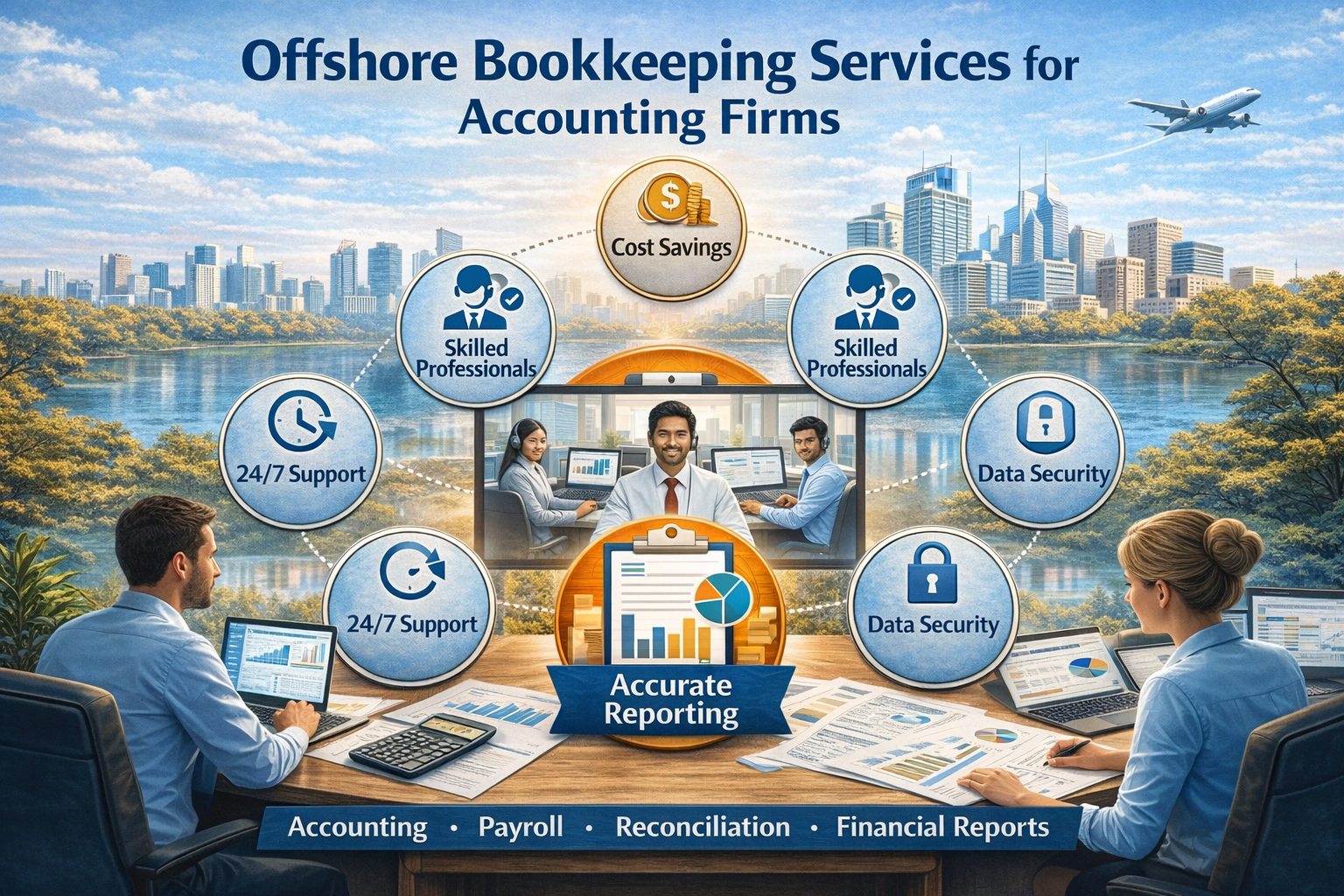
In today’s competitive financial landscape, accounting firms are constantly under pressure to deliver accurate financial reporting, maintain compliance, and manage increasing client workloads while controlling operational costs. As firms expand their client base, managing bookkeeping tasks internally often becomes time-consuming and expensive.
This is where offshore bookkeeping services for accounting firms have emerged as a powerful operational strategy. By outsourcing bookkeeping functions to skilled offshore professionals, accounting firms can improve efficiency, reduce overhead expenses, and focus on high-value advisory services.
What Are Offshore Bookkeeping Services?
Offshore bookkeeping services refer to delegating routine financial and accounting tasks to qualified bookkeeping professionals located in another country. These remote teams work as an extension of your accounting firm, handling daily financial operations while maintaining accuracy, confidentiality, and compliance with international accounting standards.
Typical offshore bookkeeping services include:
-
Accounts payable and receivable management
-
Bank and credit card reconciliation
-
General ledger maintenance
-
Financial statement preparation
-
Payroll bookkeeping support
-
Month-end and year-end closing
-
Expense tracking and reporting
Instead of hiring additional in-house staff, accounting firms gain access to experienced professionals who work remotely using secure cloud-based accounting platforms.
Why Accounting Firms Are Choosing Offshore Bookkeeping
1. Significant Cost Savings
Hiring and training in-house bookkeeping staff involves salaries, benefits, infrastructure costs, and ongoing administrative expenses. Offshore bookkeeping allows accounting firms to reduce operational costs by up to 40–60% while maintaining service quality.
Lower costs enable firms to improve profitability without increasing client fees.
2. Access to Skilled Accounting Professionals
Offshore bookkeeping providers employ trained accountants experienced in platforms such as:
-
QuickBooks
-
Xero
-
NetSuite
-
Sage
-
FreshBooks
These professionals are familiar with U.S. accounting practices, GAAP standards, and industry-specific bookkeeping requirements, ensuring consistent financial accuracy.
3. Improved Scalability During Peak Seasons
Tax season and financial reporting periods often create workload bottlenecks for accounting firms. Offshore bookkeeping teams provide flexible scaling options, allowing firms to increase or decrease resources based on demand.
This eliminates hiring pressures during peak workloads while maintaining timely client deliverables.
Key Benefits of Offshore Bookkeeping Services for Accounting Firms
✅ Enhanced Operational Efficiency
Delegating repetitive bookkeeping tasks frees internal teams to focus on advisory services, tax planning, and client relationship management. This shift enhances overall productivity and service value.
✅ Faster Turnaround Time
With global time zone advantages, offshore teams can work while your local office is closed. This results in quicker report preparation and faster financial updates for clients.
✅ Focus on Core Advisory Services
Modern accounting firms are evolving beyond compliance work into strategic advisory roles. Offshore bookkeeping enables partners and senior accountants to concentrate on consulting, forecasting, and financial strategy rather than routine data entry.
✅ Data Security and Compliance
Reliable offshore bookkeeping providers implement:
1.Secure cloud access
2.Encrypted data transfer
3.NDA agreements
4.Controlled system permissions
These measures ensure sensitive financial data remains protected at all times.
How Offshore Bookkeeping Supports Firm Growth
Accounting firms aiming to expand often encounter operational limitations due to staffing and cost constraints. Offshore bookkeeping eliminates these barriers by creating a scalable operational model.
Firms can:
-
Onboard more clients without increasing overhead
-
Expand service offerings
-
Improve profit margins
-
Maintain consistent service delivery
-
Operate efficiently across multiple time zones
By optimizing backend operations, accounting firms position themselves for long-term growth and competitive advantage.
Industries Served Through Offshore Bookkeeping
Offshore bookkeeping services support accounting firms serving diverse industries such as:
-
Small and medium-sized businesses
-
Startups and technology firms
-
Real estate companies
-
E-commerce businesses
-
Healthcare practices
-
Professional service firms
Offshore teams adapt workflows based on industry-specific financial reporting needs.
Best Practices for Implementing Offshore Bookkeeping
To maximize the benefits of offshore bookkeeping services, accounting firms should follow structured implementation practices:
✔ Choose an Experienced Offshore Partner
Select providers with proven experience supporting accounting firms and CPA practices.
✔ Use Cloud-Based Accounting Systems
Cloud platforms enable seamless collaboration, real-time updates, and secure document sharing.
✔ Establish Clear Communication Channels
Regular meetings, workflow documentation, and reporting structures ensure smooth collaboration.
✔ Define Standard Operating Procedures (SOPs)
Well-defined processes improve accuracy, consistency, and accountability across teams.
The Future of Accounting Firms with Offshore Support
The accounting industry is rapidly shifting toward digital transformation and advisory-driven services. Offshore bookkeeping plays a critical role in this evolution by allowing firms to operate lean while delivering premium services.
As automation and cloud accounting continue to grow, offshore teams integrate seamlessly with technology-driven workflows, helping accounting firms remain competitive in an increasingly global marketplace.
Conclusion
Offshore bookkeeping services for accounting firms are no longer just a cost-saving option—they are a strategic growth enabler. By outsourcing routine bookkeeping functions to experienced offshore professionals, accounting firms can enhance efficiency, improve scalability, and focus on delivering high-value financial advisory services.
Firms that adopt offshore bookkeeping gain the flexibility needed to manage growing client demands while maintaining accuracy, compliance, and profitability. In an industry where efficiency and expertise define success, offshore bookkeeping has become an essential component of sustainable accounting firm growth.
Catégories
Lire la suite
Human-Crafted Career Documents Designed to Help Professionals Secure Interviews Faster Sydney’s employment market continues to evolve at pace. With major industries spanning finance, healthcare, construction, technology, education, and professional services, the competition for skilled roles remains high. Employers expect applications that are concise, achievement-focused, and...

Dealing with a hornet nest near your home can be stressful and dangerous. Learn how professional pest experts safely remove these aggressive insects and help prevent future infestations. The Problem: When Hornets Get Too Close for Comfort Few pests inspire fear like hornets. Their loud buzz, large size, and painful sting make them one of the most intimidating insects to find around your home....

Polaris Market Research has published a brand-new report titled Vertical Farming Market Size, Share, Trends, Industry Analysis Report, By Growth Mechanism (Aeroponics, Hydroponics, and Aquaponics), Structure, Components, Crops, and Region (North America, Europe, Asia Pacific, Latin America, and Middle East & Africa) – Market Forecast, 2025–2034 that includes extensive...

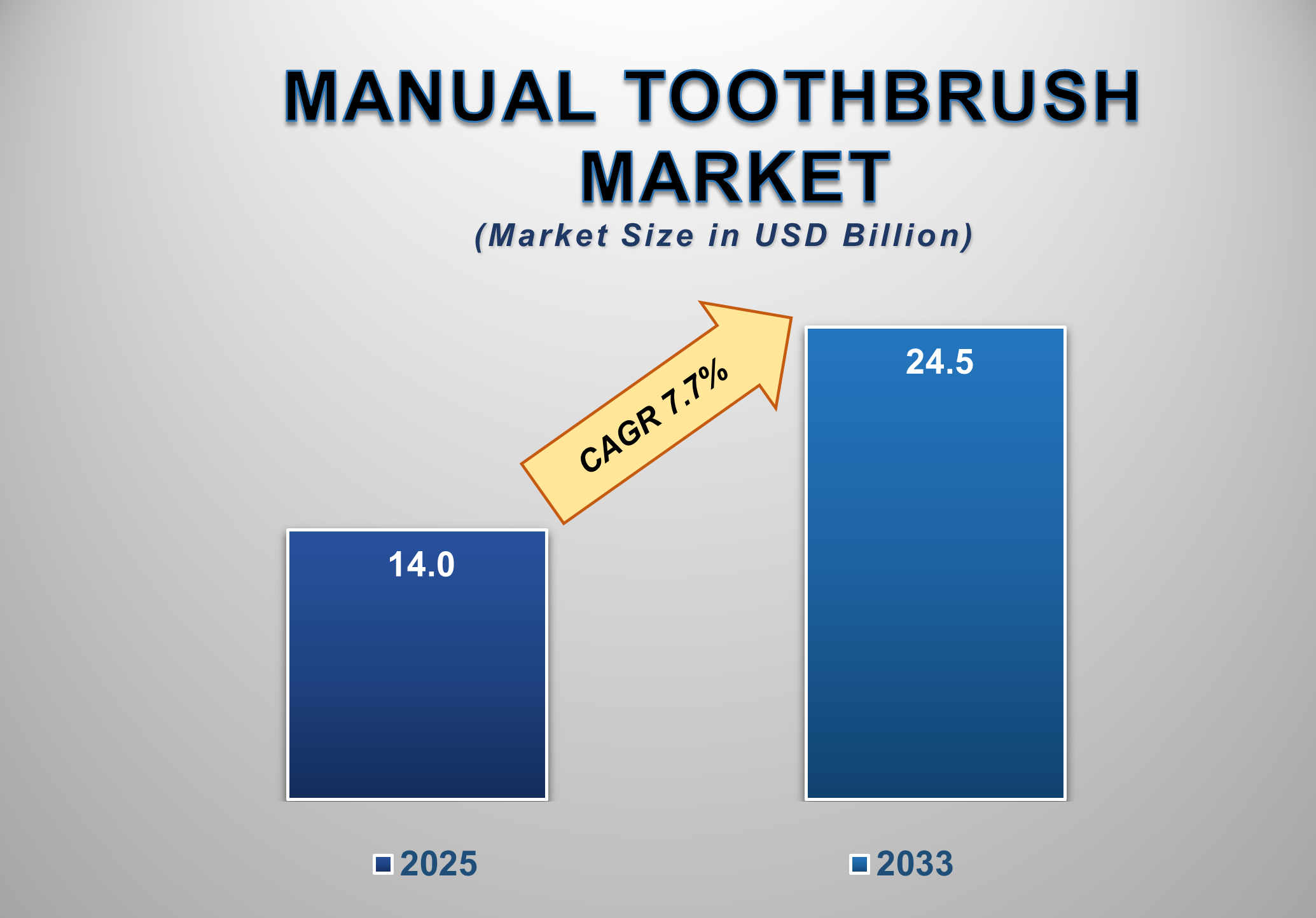
The manual toothbrush market continues to play an essential role in global oral hygiene despite the growing popularity of electric toothbrushes. Manual toothbrushes remain widely used due to their affordability, easy availability, and convenience. Increasing awareness about oral health, rising dental care routines, and improved product innovations are supporting the steady growth of...
Season 12 Overview Season 12: Slaughter is nearly upon us, and the Maxroll team is thrilled to unveil our comprehensive Season 12 compendium. This extensive guide includes the latest updates on leveling strategies and endgame builds, featuring the brand-new uniques and legendary aspects. Additionally, you'll find refreshed and detailed resource posts to help you navigate the season. We're just...