


How to Use a Feeler Gauge Correctly for Perfect Clearance
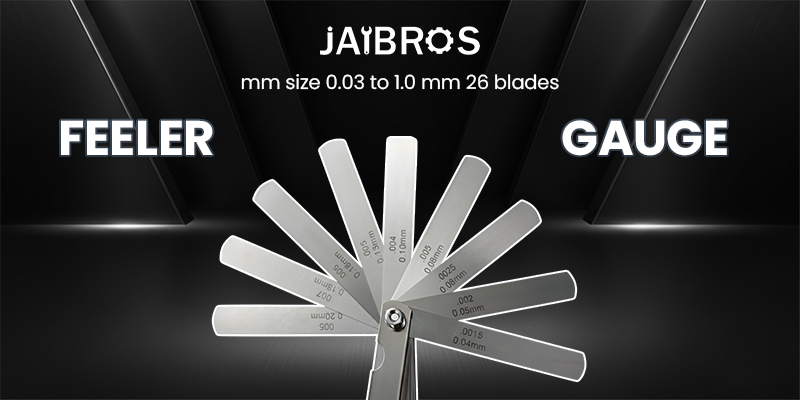
Discover why a feeler gauge is essential for checking engine and machine clearances. Easy explanation of uses, types, and selection tips..
What Is a Feeler Gauge?
A feeler gauge is a thin measuring tool made of small metal blades. Each blade has a specific thickness. These blades are usually made of hardened steel or stainless steel and are marked with their thickness value in millimeters (mm) or inches.
When you want to measure the gap between two parts, you insert the blade into the space. If the blade fits smoothly without force, that thickness is equal to the gap size. If it does not fit, you try a thinner blade. This simple method gives very accurate measurement of clearances.
This tool is mainly used in automotive engines, industrial machines, pumps, compressors, and precision mechanical assemblies.
Why Accurate Gap Measurement Is Important
In machines, many parts move very close to each other. For example:
-
Engine valve and rocker arm
-
Spark plug electrode gap
-
Bearing clearances
-
Gear spacing
If the gap is too tight, parts may rub and create heat. If the gap is too loose, it can cause vibration and noise. Using a feeler gauge helps maintain the correct clearance and improves machine life.
Proper measurement also reduces maintenance cost and prevents sudden breakdowns.
Types Available in the Market
There are different types available based on design and size.
Standard Blade Type
This is the most common type. It contains multiple thin blades connected at one end with a screw. You can open one blade at a time and use it for measurement.
Feeler Gauge Set
A feeler gauge set usually contains 10 to 32 blades of different thicknesses. Some sets include both metric and inch measurements. These sets are useful in workshops where different machines require different gap sizes.
Metric Feeler Gauge
A metric feeler gauge is marked only in millimeters. It is commonly used in countries that follow the metric system. In India, most technicians prefer metric measurement because machine manuals usually mention clearance in mm.
Tapered Type
This type has blades that become thinner towards the end. It is useful when measuring narrow and hard-to-reach spaces.
Feeler Gauge Big Size
A feeler gauge big size version has longer blades. It is used when the measuring area is deep inside a machine where normal short blades cannot reach.
Feeler Gauge mm Size and Thickness Range
Thickness is the most important part of this tool. The blades usually range from 0.02 mm to 1.00 mm or more. Some industrial models may go up to 2 mm.
Common mm sizes include:
-
0.05 mm
-
0.10 mm
-
0.20 mm
-
0.30 mm
-
0.50 mm
When choosing feeler gauge mm size, always check the machine manual or technical drawing. Using the wrong thickness can lead to incorrect adjustment.
Common Applications
This measuring tool is used in many industries. Some common applications are:
Automobile Industry
It is used to check valve clearance in bikes and cars. It also helps measure spark plug gaps and piston ring clearance.
Industrial Machines
In factories, it is used to measure gaps in pumps, compressors, and CNC machines.
Electrical Work
Technicians use it to set contact breaker points and relay gaps.
Engineering and Fabrication
It helps check flatness and alignment between two metal surfaces.
Because of its simple design and accurate result, this tool is considered essential in every mechanical workshop.
How to Use It Correctly
Using this tool is very easy, but proper method is important.
-
Clean the surface properly before measurement.
-
Select the blade according to expected gap size.
-
Insert the blade gently between the parts.
-
Do not force it. It should slide with slight resistance.
-
If loose, try a thicker blade.
-
If tight, try a thinner blade.
Correct usage ensures accurate measurement and avoids damage to blades.
How to Choose the Right One
Before you buy feeler gauge, consider the following points:
-
Measurement System: Choose metric or inch according to your need.
-
Number of Blades: More blades mean more measurement options.
-
Material Quality: Stainless steel blades resist rust and last longer.
-
Blade Length: For deep spaces, select longer blades.
-
Marking Quality: Thickness marking should be clear and easy to read.
If you work in a professional workshop, investing in a high-quality feeler gauge set is better because it covers a wide range of measurements.
Maintenance and Storage Tips
Like any precision tool, proper care is important.
-
Always wipe blades after use.
-
Apply light oil to prevent rust.
-
Keep it in a dry box.
-
Do not bend blades forcefully.
-
Tighten the holding screw properly after use.
Good maintenance increases accuracy and tool life.
Advantages of Using This Tool
There are many benefits of using this simple measuring instrument:
-
Very affordable
-
Easy to carry
-
No power required
-
Highly accurate for small gaps
-
Long service life
Because of these advantages, it is widely used from small garages to large industries.
Safety Tips While Using
Even though it looks simple, safety matters.
-
Do not use damaged or bent blades.
-
Avoid sharp edges contact with skin.
-
Never use it as a cutting or scraping tool.
-
Keep away from children.
Following these small precautions ensures safe operation.
Conclusion
Measuring small gaps is very important in mechanical and industrial work. A feeler gauge is a simple but powerful tool that helps maintain correct clearance in machines. Whether you are adjusting engine valves, checking spark plug gaps, or measuring industrial components, this tool provides accurate and reliable results.
Before selecting one, always check thickness range, blade length, and measurement type. With proper care and correct usage, it can serve for many years without losing accuracy. This makes it an essential tool for technicians, mechanics, and engineers who want precise and professional results.
Where Can You Get Quality Workshop Tools?
Jaibros is a reliable place for workshop and industrial tool needs because it focuses on quality, accuracy, and practical use. The platform offers a wide range of measuring and machining tools that are suitable for daily workshop work, inspection tasks, and training use. Products are clearly listed with proper details, making it easier for users to choose the right tool for their requirement. Jaibros is known for supporting machinists, technicians, and industries by providing tools that help improve measurement accuracy and work efficiency without confusion.
Frequently Asked Questions (FAQs)
1. What is a feeler gauge used for?
A feeler gauge is used to measure small gaps or clearances between two parts in machines and engines.
2. What is the common thickness range available?
Most sets range from 0.02 mm to 1.00 mm, depending on the model.
3. Can it be used in car engine maintenance?
Yes, it is commonly used to check valve clearance and spark plug gaps in vehicles.
4. How do I maintain this tool?
Clean it after use, apply light oil, and store it in a dry place to prevent rust.
5. Is metric measurement better than inch type?
Metric type is preferred in India because most machine manuals use millimeter measurements.
Категории
Больше
Confidence isn’t something you switch on—it’s something you build into your daily routine. Chandal Essentials is designed with that idea in mind, offering clothing that supports how you move, how you feel, and how you present yourself every day. The foundation of confidence starts with comfort. Chandal Essentials uses soft, breathable fabrics that feel natural against...

EA FC 26’s Career Mode has long been a fan-favorite feature, offering players the opportunity to FC 26 Coins take control of a football club and guide it to glory. Whether you’re starting with a giant like Manchester City or challenging yourself with a smaller club in a lower division, Career Mode allows for an in-depth, rewarding experience in building a top-tier football club...

Facing geo-blocks while traveling? Accessing 'A Suitable Boy' internationally requires a VPN. This BBC One miniseries, based on Vikram Seth's acclaimed novel, premieres Sunday, July 26th at 9 PM BST (4 PM EST / 1 PM PST). Follow Lata's coming-of-age journey in post-partition India. Regional restrictions lock this drama to UK viewers only. Bypass these limits securely with a Virtual Private...

Data Bridge Market Research analyses that the hypotonic drinks was valued at 5.39 billion in 2021 and is expected to reach the value of USD 10.51 billion by 2029, at a CAGR of 8.70% during the forecast period. The global business landscape is undergoing a transformation, with industries increasingly leaning on deep research and actionable insights to make strategic decisions. One segment seeing...

𝐖𝐡𝐚𝐭 𝐢𝐬 𝐑𝐞𝐬𝐮𝐬𝐜𝐢𝐭𝐚𝐭𝐢𝐨𝐧 𝐃𝐞𝐯𝐢𝐜𝐞𝐬 𝐌𝐚𝐫𝐤𝐞𝐭 Resuscitation devices are medical equipment used to restore or support breathing, heartbeat, and blood circulation in patients experiencing life-threatening emergencies such as cardiac arrest, respiratory failure, trauma, or drowning. The Middle East and Africa resuscitation devices market size is expected to reach US$ 28.6 million by 2033 from US$ 22.3...