


Deskar Inserts vs Other Carbide Inserts: A Comparison
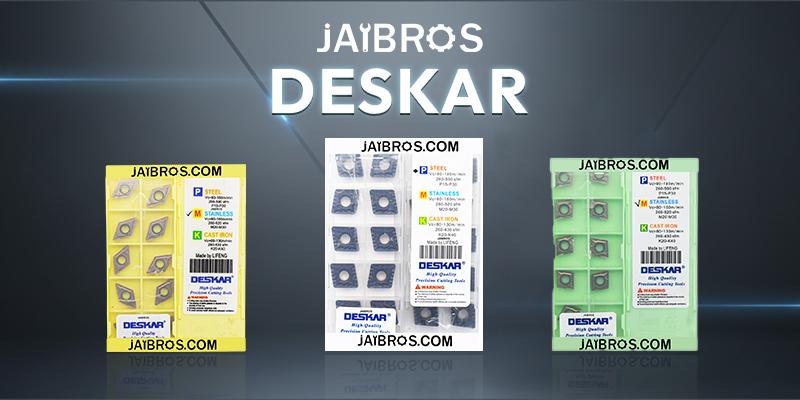
Deskar Inserts vs Other Carbide Inserts: Performance, Quality & Price Comparison
Carbide inserts are essential components in modern machining. They determine cutting efficiency, surface finish, and overall productivity in CNC turning and milling operations. With multiple brands available in the market, selecting the right insert becomes challenging. Among the popular options used in workshops today, deskar inserts are frequently compared with other carbide brands for performance and affordability.
This comparison will help you understand how they differ in terms of material quality, coating technology, durability, pricing, and overall value.
Understanding Carbide Inserts in Machining
Carbide inserts are replaceable cutting tips mounted on tool holders. Made from tungsten carbide combined with a metallic binder, they offer excellent hardness and resistance to wear. Their design allows machinists to replace only the cutting edge instead of the entire tool, making operations more cost-effective.
Different inserts are developed for steel, stainless steel, cast iron, and non-ferrous materials. Performance depends on grade selection, coating type, and manufacturing accuracy.
Overview of Deskar as a Brand
The deskar inserts manufacturer has built a reputation for offering economical tooling solutions suitable for general machining. The brand focuses on producing inserts that balance performance with affordability, making them attractive for small and medium-sized workshops.
Compared to high-end global brands, this company positions itself as a practical solution provider for routine industrial cutting applications.
Material Quality Comparison
One of the main differences between brands lies in carbide substrate quality. Premium manufacturers often invest heavily in ultra-fine grain carbide technology for high-speed and heavy-duty cutting.
Deskar carbide inserts are produced using reliable powder metallurgy techniques that ensure consistent hardness and structural stability. While some premium brands may provide slightly better micro-grain uniformity, the performance difference becomes noticeable mainly in extreme machining conditions.
For general turning and milling tasks, inserts deliver dependable results without significantly increasing tooling costs.
Coating Technology and Heat Resistance
Modern carbide inserts are coated with materials such as TiN, TiAlN, or multilayer coatings to enhance heat resistance and reduce friction. Coating quality directly impacts tool life and cutting speed.
Premium brands often promote proprietary coating technologies developed for aerospace and high-speed production environments. However, deskar carbide inserts also feature effective coating options that handle moderate to high cutting temperatures efficiently.
In everyday machining scenarios involving carbon steel or stainless steel, the performance remains stable and predictable.
Performance in Turning Operations
Turning operations demand consistent edge strength and chip control. In continuous cuts, insert stability plays a major role in surface finish quality.
inserts perform reliably in light to medium-duty turning operations. They provide good chip formation and maintain edge sharpness under standard cutting parameters. Compared to top-tier brands, the difference appears mainly in heavy, interrupted cuts or extremely high-speed applications.
For most industrial workshops, the performance level is more than sufficient.
Milling and Multi-Application Use
In milling applications, insert strength and coating durability determine productivity. Inserts must resist vibration and thermal stress.
Many machinists report satisfactory results using deskar inserts in face milling and shoulder milling tasks. While premium brands may offer specialized grades for aggressive cutting, this brand provides practical options for routine production requirements.
Selecting the right grade and geometry matters more than brand name alone.
Tool Life and Wear Patterns
Tool life is a major consideration when comparing carbide inserts. Premium brands often highlight extended durability under demanding conditions.
In moderate machining environments, deskar carbide inserts show even wear patterns and predictable performance. Their lifespan may be slightly shorter in high-speed or heavy-load applications, but the cost savings often compensate for the difference.
When analyzing overall productivity, balancing tool life with insert cost is essential.
Price and Value Analysis
Cost is one of the strongest decision-making factors for many workshops. Deskar insert price is generally more affordable compared to globally recognized premium brands.
Lower cost does not necessarily mean low quality. Instead, it provides a budget-friendly alternative for manufacturers that prioritize operational efficiency. When calculating cost per component, the difference between premium and mid-range brands should be evaluated carefully.
For workshops handling medium production volumes, this balance often makes economic sense.
Availability and Market Access
Global carbide brands have extensive distribution networks. However, deskar manufacturer distribution has expanded significantly through industrial suppliers and online platforms.
Easy availability ensures reduced downtime and smooth procurement processes. Many businesses now source inserts through reliable tooling suppliers who maintain consistent stock levels.
When to Choose Deskar Over Other Brands
Choosing the right insert depends on your machining requirements.
Deskar inserts are suitable when:
-
You operate under moderate cutting conditions
-
Budget control is a priority
-
Production volume is medium
-
General machining tasks dominate your workflow
Premium brands may be preferable for:
-
Aerospace components
-
High-speed heavy machining
-
Ultra-precision requirements
The key is matching the insert grade to the specific application.
Overall Comparison Summary
When comparing deskar inserts with other carbide inserts, the primary difference lies in positioning. Premium brands focus on high-performance and specialized industries, while this brand emphasizes cost efficiency and reliable general-purpose machining.
For most small and mid-scale manufacturing units, deskar inserts provide practical value without compromising essential machining standards.
FAQs
1. Are deskar carbide inserts good for CNC machines?
Yes, they are widely used in CNC turning and milling operations and perform reliably under standard industrial cutting conditions.
2. How competitive is deskar insert price?
Deskar insert price is generally lower than premium brands, making it cost-effective for workshops focused on budget efficiency.
3. Who is the deskar inserts manufacturer?
The deskar inserts manufacturer produces carbide tooling solutions designed for general industrial machining applications.
4. Do they last as long as premium carbide inserts?
In moderate cutting environments, their durability is reliable. In extreme conditions, premium brands may offer slightly longer tool life.
5. Are these inserts suitable for stainless steel machining?
Yes, with the correct grade and coating selection, they perform effectively on stainless steel and similar materials.
Conclusion
Selecting carbide inserts requires balancing performance, durability, and cost. While premium brands dominate high-end industrial sectors, deskar inserts offer a strong combination of affordability and dependable machining capability. For workshops aiming to maintain efficiency without increasing tooling expenses, they represent a smart and practical choice.
About Jaibros
Jaibros is a trusted supplier of industrial cutting tools and precision machining solutions. The company provides high-quality carbide inserts, CNC tooling accessories, and engineering products designed to support modern manufacturing needs. With a focus on reliability and customer satisfaction, Jaibros delivers durable tooling solutions for workshops and production units across industries.
Categorie
Leggi tutto
Dry Type Transformer Market Synopsis 2025: New York, United States, The purpose of this section's research is to study the Dry Type Transformer Market during the course of the estimated period using several confirmed parameters based on Porter's Five Forces Model. As a result, a thorough inspection of the market helps in recognizing and emphasizing the market's crucial strengths and...

" According to the latest report published by Data Bridge Market Research, the Middle East and Africa Digital Therapeutic (DTx) Market The Middle East and Africa Digital Therapeutic (DTx) market size was valued at USD 5.66 billion in 2025 and is expected to reach USD 30.43 billion by 2033, at a CAGR of 23.4% during the forecast period A top notch Middle...

Canadian NRIs with family ties in India often face a difficult question when arranging healthcare protection. Should they rely solely on overseas coverage, or should they invest in a health plan designed for treatment within India? The answer depends on practical realities such as rising healthcare costs, the frequency of visits to India, and whether ageing parents or dependants require access...

Old Tractor in Indore: A Practical Guide for Smart Buyers Finding an old tractor in Indore can be one of the smartest decisions for farmers, contractors, and landowners who want dependable performance without spending the high price of a brand-new machine. Indore is surrounded by active farming regions where tractors are used daily for cultivation, transportation, and seasonal agricultural...

The Turkish Airlines Terminal at Frankfurt Airport provides travelers with convenient access to flights between Frankfurt and destinations across Turkey and around the world. The airport, officially known as Frankfurt am Main Airport, is one of Europe’s major international aviation hubs. Turkish Airlines passengers can access a range of essential services, including flight booking,...
