


Vinyl Printing vs DTF: What’s the Difference for Custom Apparel Business
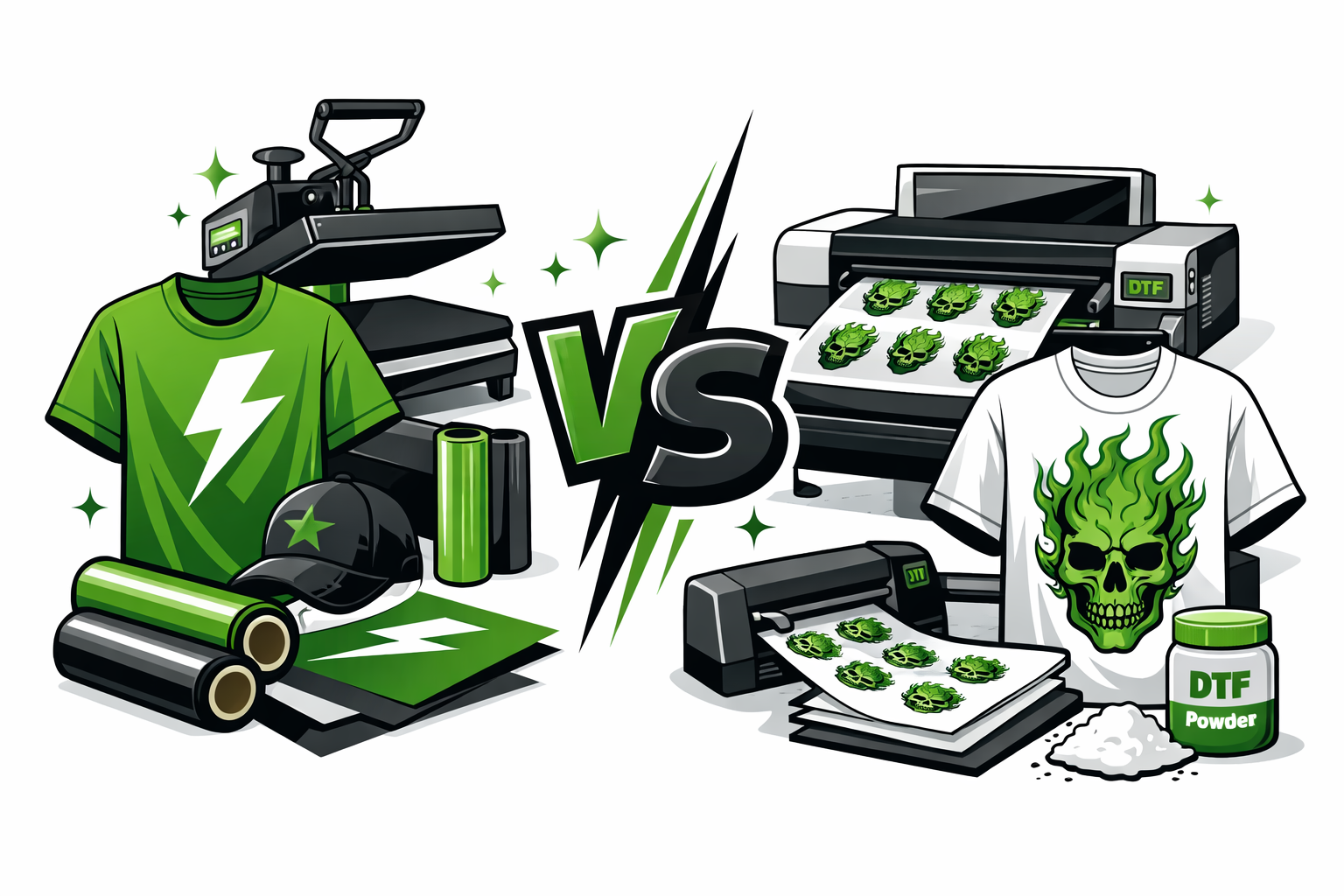
When it comes to vinyl printing vs DTF, the choice can directly impact your production speed, profit margins, and creative freedom. Both methods are widely used in the custom apparel industry, but they differ significantly in process, capability, and scalability. Understanding the real differences between vinyl vs DTF transfers helps you make a smarter investment for your business.
Process Differences
The biggest distinction lies in how each method works.
DTF (Direct-to-Film) printing is a digital process. The design is printed onto PET film using pigment inks, adhesive powder is applied, the print is cured, and then it is heat pressed onto the garment. There’s no cutting or layering involved.
Vinyl printing, on the other hand, uses solid-colored heat transfer vinyl sheets. The design is cut with a plotter, excess material is manually weeded, and the final graphic is heat pressed onto fabric.
Simply put, DTF is print-based and automated, while vinyl is cut-based and manual.
Design Capability
In the debate of vinyl printing vs DTF, design flexibility is a major differentiator.
DTF supports unlimited colors, gradients, shadows, and photo-quality details without increasing setup complexity. Whether your design uses two colors or twenty, the workflow remains the same.
Vinyl works best for simple text, numbers, and bold logos. Multi-color designs require layering multiple vinyl sheets, which increases thickness and labor time. Fine details can also be difficult to cut and weed precisely.
For brands focusing on creative, detailed artwork, DTF clearly offers more versatility.
Fabric Compatibility
When comparing vinyl vs DTF transfers, material flexibility also matters.
DTF adheres well to cotton, polyester, blends, nylon, and even specialty fabrics. This makes it suitable for diverse product lines including sportswear and performance apparel.
Vinyl performs best on cotton and cotton blends. While specialty vinyl options exist for other fabrics, they can increase cost and complexity.
Feel and Durability
DTF prints typically feel smooth and slightly flexible, blending well with the fabric surface when applied correctly. Vinyl prints feel slightly thicker and more raised, especially when layered.
Both methods are durable if properly pressed. However, poor application can lead to cracking in DTF or peeling in vinyl.
Cost and Efficiency
For simple, single-color jobs, vinyl can be faster and more cost-effective. For multi-color or highly detailed designs, DTF often becomes more efficient because it eliminates weeding and layering.
From a scalability perspective, vinyl printing vs DTF often comes down to labor versus automation. DTF reduces manual effort and supports higher-volume growth, while vinyl offers a lower startup barrier for beginners.
Final Take
There’s no one-size-fits-all winner in the vinyl vs DTF transfers comparison. Vinyl excels at simple personalization and sportswear applications. DTF dominates when creativity, versatility, and scalability are the priority.
The right choice depends on your design complexity, production goals, and long-term business vision.
Also Read: Why Direct to Film Transfer Designs Matter Before You Press Print
Categorie
Leggi tutto
Learning a new language can feel overwhelming at first, especially when you are unsure where to begin or how to practice effectively. Many beginners struggle to build confidence in speaking, listening, and understanding everyday conversations. However, consistent practice and simple learning habits can make a big difference. Exploring practical methods used in a German Language Course in Delhi...

Unlock Yolo247 Club and get your Fast-Track Login Guide Are you new to Yolo247 club? The Yolo247 registration process takes less than two minutes and provides immediate access to slot machines as well as live casino and betting on sports. In 2026, the Yolo247 club will prioritize mobile logins through the app or on the web, and which will come with OTP protection for Indian customers. Don't...
In today's digital world, having a mobile application is no longer a luxury. It has become an important part of business growth. Whether you run a startup, a small business, or a large enterprise, working with a professional app development company can help you create a powerful digital presence. A well-designed mobile application improves customer engagement, increases brand visibility, and...
" According to the latest report published by Data Bridge Market Research, the Fertilizer Spreader Market The fertilizer spreader market which was USD 726.37 million in 2022, would rocket up to USD 986.47 million by 2030, and is expected to undergo a CAGR of 3.90% during the forecast period. Fertilizer Spreader Market report has been framed by chewing over an array of...
INTRODUCTION Modern Smart TVs have become sophisticated entertainment devices that combine advanced hardware with powerful software systems. Features such as internet connectivity, streaming applications, voice controls, and smart home integration make televisions more versatile than ever before. However, as technology becomes more advanced, televisions may occasionally experience startup and...
