Electrospinning is a powerful process that produces extremely fine fibers using electrical force. Scientists and manufacturers widely use this method to create advanced materials with unique properties. Today, Electrospinning plays an important role in fields such as healthcare, filtration, energy storage, and material engineering. Companies like Electrospintek continue to develop innovative solutions using this advanced technique.
This article explains how electrospinning works and provides a simple step by step breakdown of the process.
Understanding Electrospinning
Electrospinning is a fabrication process that creates ultra thin fibers from a polymer solution or melt. The diameter of these fibers often falls within the nanometer range. Because of this, the process is strongly connected with Nanofiber Technology.
Electrospinning uses a high voltage electric field to pull a charged polymer solution into extremely fine fibers. These fibers then collect on a grounded surface to form a nanofiber mat. The result is a material with high surface area, excellent porosity, and strong mechanical properties.
These features make electrospinning ideal for many advanced applications including tissue engineering, drug delivery systems, air filtration membranes, and battery separators.
Key Components of Electrospinning Technology
To understand the process better, it is important to know the main components used in Electrospinning Technology.
1. Polymer Solution
The process begins with a polymer dissolved in a suitable solvent. The choice of polymer depends on the desired application. Researchers carefully control the concentration and viscosity of the solution to achieve proper fiber formation.
2. Syringe Pump
A syringe pump controls the flow of the polymer solution. It pushes the liquid slowly through a small needle at a constant rate.
3. High Voltage Power Supply
A high voltage power supply creates the electric field required for electrospinning. This voltage usually ranges between 10 kV and 30 kV depending on the material and system design.
4. Spinneret (Needle)
The spinneret is the small metal needle where the polymer solution exits. The electric field acts on the liquid at the tip of the needle.
5. Collector
The collector is a grounded surface where the nanofibers accumulate. It can be a flat plate or a rotating drum depending on the structure needed.
Step by Step Breakdown of Electrospinning
Step 1: Preparing the Polymer Solution
The process begins by preparing the polymer solution. Scientists dissolve a polymer in an appropriate solvent to create a uniform liquid mixture. The properties of this solution directly influence the quality and diameter of the fibers.
Step 2: Loading the Solution into the Syringe
The prepared solution is then loaded into a syringe connected to the syringe pump. The pump ensures a steady and controlled flow of the solution toward the needle tip.
Step 3: Applying High Voltage
Once the system starts, the power supply applies a strong electric field between the needle and the collector. This electric force acts on the polymer droplet at the tip of the needle.
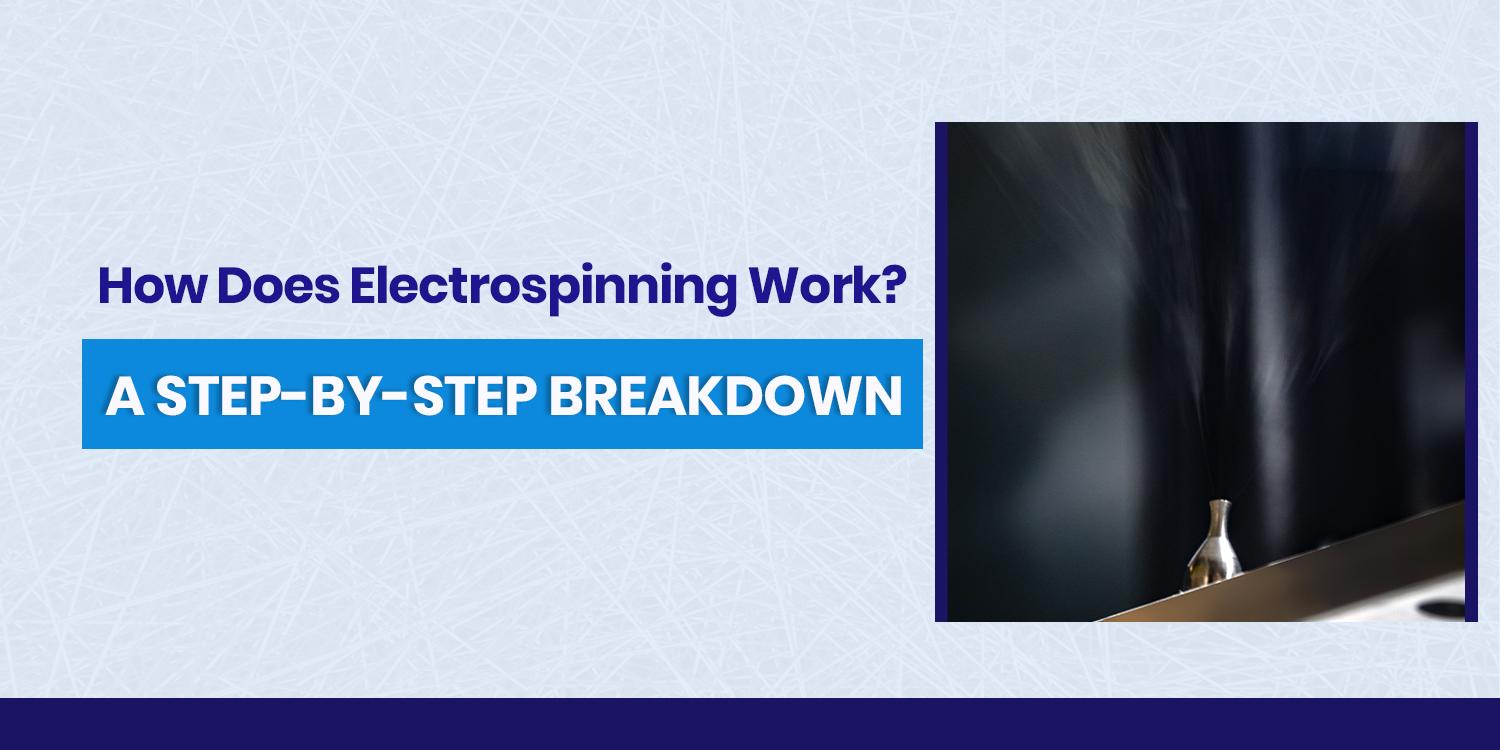
As the electric field increases, the droplet stretches into a shape called a Taylor cone.
Step 4: Formation of the Fiber Jet
When the electric force becomes strong enough, a thin liquid jet ejects from the Taylor cone. This jet travels through the air toward the collector. During this movement, the solvent begins to evaporate.
Step 5: Fiber Thinning and Stretching
The jet continues to stretch and thin while traveling through the electric field. This stage produces extremely fine fibers that often reach nanometer scale dimensions. This is the core reason why electrospinning remains a key process in Nanofiber Technology.
Step 6: Fiber Collection
Finally, the dry nanofibers deposit onto the grounded collector. Over time, they form a nonwoven nanofiber mat. Researchers can control fiber alignment, thickness, and structure depending on the collector design.
Why Electrospinning Is Important
Electrospinning offers several advantages compared to traditional fiber production methods. It produces fibers with very high surface area and excellent porosity. These features improve performance in filtration systems, medical scaffolds, and energy storage devices.
Because of these benefits, industries increasingly adopt Electrospinning Technology to develop next generation materials.
Conclusion
Electrospinning is a fascinating and highly effective process that creates ultra fine fibers using electrical forces. From preparing the polymer solution to collecting the final nanofiber mat, every step plays an important role in achieving high quality results.
As research continues to expand, Electrospinning will remain a key driver of innovation in advanced materials. Companies like Electrospintek are leading the way by developing cutting edge nanofiber solutions that support industries ranging from healthcare to energy technology.