Solving the 3 Critical Precision Failures in Modern Gun Sight Systems
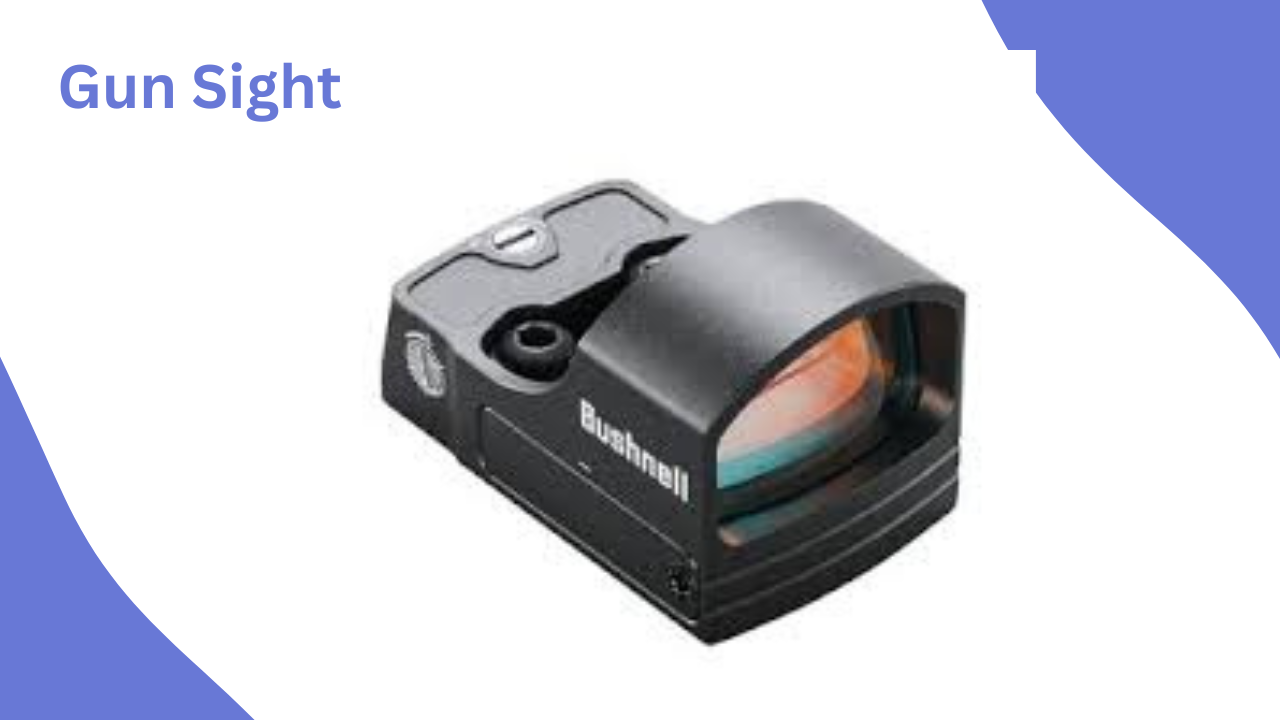
In the world of precision shooting, a gun sight is only as good as its ability to maintain a consistent point of aim under stress. While many shooters focus on magnification levels, the real "deal-breakers" are often invisible optoelectronic failures.
If you’ve ever found your "zero" shifting after a hot day at the range, or lost your red dot in bright sunlight, you are experiencing a failure in optical engineering. Here is how we solve the three most common hurdles in modern sighting systems.
1. The "Ghost" Shift: Solving Parallax Error
The most common precision killer in a gun sight is parallax. This occurs when the reticle and the target are not on the same optical plane. If you move your head slightly, the dot seems to "dance" or move off the target, even though the firearm hasn't moved.
The Problem: Fixed Focus Limitations
Many entry-level reflex sights are "parallax-free" only at a specific distance (usually 50 or 100 yards). If your target is closer or further, your head position dictates your impact point, leading to inconsistent groups.
The Optoelectronic Fix: Side Parallax Adjustment and Aspheric Lenses
To solve this, high-performance sights utilize a side parallax adjustment knob or an aspheric objective lens.
-
The Fix: The side adjustment physically moves the internal lens elements to ensure the target's image falls exactly on the same focal plane as the reticle.
-
The Result: Your point of aim stays locked to your point of impact, regardless of where your eye is positioned behind the glass.
2. The Brightness Paradox: Solving Reticle Washout
Have you ever transitioned from a dark room to a sunlit field and "lost" your reticle? This is known as reticle washout. In high-stress environments, a gun sight that is too dim is useless, but one that is too bright causes "blooming" (where the dot becomes a blurry blob).
The Solution: Photo-Sensor Logic and LED Efficiency
To solve washout, modern sights are moving toward active optoelectronic management.
-
Automatic Brightness Control: Integrating a forward-facing light sensor that adjusts the LED intensity based on the target's light level, not the shooter's.
-
Etched Reticles: To solve the "dead battery" problem, many pros prefer a prism sight with a physically etched reticle.
-
The Benefit: Even if the electronics fail, the black etched reticle remains visible against bright backgrounds, providing a failsafe that a pure LED reflex sight cannot offer.
-
Technical Performance Breakdown
| Feature | Standard Reflex Sight | Prism Gun Sight | Holographic Sight |
| Parallax | Low (at fixed distance) | Adjustable | Minimal (True Parallax-Free) |
| Battery Life | 20,000+ Hours | 5,000+ Hours | 500 - 1,000 Hours |
| Reticle Visibility | LED Only | Etched (Failsafe) | Laser Projection |
| Eye Relief | Unlimited | Fixed (2" - 4") | Unlimited |
3. The Thermal Drift Trap: Solving Zero-Shift
Perhaps the most frustrating problem is "Zero-Shift." You sight in your gun sight in the morning, but by the afternoon, your shots are hitting 2 inches to the left.
The Problem: Thermal Expansion
Optoelectronic sights are made of metal and glass. When exposed to direct sunlight or the heat from a rapid-fire barrel, the different materials expand at different rates. This microscopic warping moves the internal adjustment clickers, shifting your zero.
The Solution: 7075-T6 Housing and Nitrogen Purging
To solve thermal drift, the construction must be "ruggedized" through specific material choices:
-
The Fix: Using 7075-T6 aircraft-grade aluminum housings, which have a lower thermal expansion coefficient than cheaper alloys.
-
Environmental Sealing: Nitrogen or Argon purging prevents internal fogging and helps maintain a stable internal pressure, ensuring that the optical path remains straight regardless of the external temperature.
4. Solving the "Fuzzy Dot": Dealing with Astigmatism
A "problem" often blamed on the gun sight is actually a human optical failure: Astigmatism. Many shooters see a "starburst" instead of a crisp dot.
The Solution: The Prism Sight Transition
If you see a blurry dot, the solution isn't a "better" red dot; it's a Prism Sight.
-
Why it works: Red dots project light directly into your eye, which amplifies an uncorrected astigmatism. Prism sights use a series of lenses to focus the image before it reaches your eye.
-
The Result: A perfectly crisp, circular point of aim for shooters who previously struggled with "blurry" electronics.
[Image showing how astigmatism affects a red dot vs. a crisp prism sight reticle]
Conclusion
A gun sight is a tool of physics. By solving the challenges of parallax alignment, thermal zero-shift, and reticle visibility, shooters can move beyond the limitations of basic optics. Whether you are correcting for your own vision with a prism system or ensuring your zero stays true through high-grade aluminum housing, the goal is the same: absolute confidence in every shot.
When the optics are engineered correctly, the technology disappears, leaving only the target and a clear path to success.
Categorie
Leggi tutto
Pengantar tentang slot online di era digital Dalam beberapa tahun terakhir, istilah slot online semakin sering muncul di dunia internet, terutama di kalangan pengguna yang tertarik dengan hiburan berbasis digital. Perkembangan teknologi membuat banyak permainan yang sebelumnya hanya tersedia di mesin fisik kini bisa diakses melalui perangkat seperti smartphone dan komputer. Hal ini...

Smart Lock Market: Size, Trends, Key Companies, and Segments (2025–2033) The Smart Lock Market is entering a high-growth phase worldwide as digital security rapidly replaces traditional mechanical locks. With technology reshaping homes, offices, rentals, and hospitality, smart locks are becoming an essential part of modern access control. According to recent industry...
In a City That Never Slows Down, Meaningful Company Has Become the Ultimate Luxury Delhi is a city of contrasts. On one side, there are billion-rupee business deals being finalized inside luxury hotels. On the other, there are travelers wandering through centuries-old streets searching for authentic experiences. Some come here for business, some for celebrations, and others simply to explore...

What Is Retina Clear? Retina Clear is a premium eye support supplement created to help maintain healthy vision, support retinal function, and promote overall eye wellness. The eyes require essential nutrients to perform properly, especially when exposed to daily challenges such as screen time, environmental stress, and aging. The retina is one of the most important parts of the eye because it...
Luxury fragrance reflects personality, style, and presence. A well crafted perfume creates a memorable impression and adds confidence to everyday life. Elyon Dubai understands this philosophy and presents a refined collection of signature scents that combine elegance with modern character. The Signature Scents Collection by Elyon Dubai includes three remarkable fragrances. Aria By...