Why Your Engine is Ticking: The Silent Danger of Worn Timing Belt Kits
Imagine driving at highway speeds when, without warning, your engine shuts off. No smoke, no bang—just total silence followed by a repair bill that costs more than the car is worth. This isn’t a horror story for gearheads; it is the reality of neglecting timing belt kits.
While many drivers focus on oil changes and tire pressure, the timing system is the heartbeat of your internal combustion engine. When it fails, the results are catastrophic.
The "Single Part" Trap: Why a Belt Isn’t Enough
The biggest mistake vehicle owners make is asking a mechanic to "just change the belt." A timing belt doesn't work in a vacuum. It relies on a tensioner to stay tight and idler pulleys to stay on track.
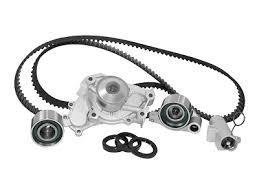
If you replace a worn belt but leave an old, gritty tensioner in place, that tensioner can seize a month later. The result? It snaps your brand-new belt. This is why professional timing belt kits are manufactured as a complete solution. They include:
-
The Synchronous Belt
-
Tensioners and Idlers
-
Required Seals
-
The Water Pump (in many vehicle models)
The Symptom Checklist: Is Your Car Warning You?
Unlike brakes that squeal or batteries that struggle to crank, a timing belt often dies quietly. However, if you notice these three specific problems, your kit is likely on its last legs:
-
The Rhythmic Ticking: If you hear a "tick-tick-tick" coming from the front of the engine while idling, it usually means the belt is stretching or the tensioner pulley bearings are failing.
-
Engine Misfires: A stretched belt can skip a tooth on the camshaft gear. This causes the valves to open and close at the wrong time, leading to poor acceleration and "stuttering."
-
Oil Leaks Near the Cover: Oil is the enemy of rubber. If your front crankshaft seal is leaking, the oil will degrade the belt material, causing it to snap prematurely.
Interference vs. Non-Interference: The Stakes
The urgency of your repair depends on your engine design. In an interference engine, the piston's path and the valve's path overlap. The timing belt is the only thing keeping them from hitting each other.
If the belt snaps in an interference engine, the pistons will smash into the open valves at thousands of revolutions per minute. This results in bent valves, destroyed pistons, and often, a ruined cylinder head. Using a high-quality timing belt kit to perform a swap every 60,000 to 100,000 miles is essentially "engine insurance."
The Water Pump Connection
Many modern engines use the timing belt to drive the water pump. Because the labor required to reach the belt is so intensive, it is a standard industry "best practice" to replace the water pump at the same time. If the pump fails 10,000 miles after a belt change, you will have to pay the exact same labor cost all over again to take the engine apart.
Why Quality Bearings Matter
As automobile bearing experts, we cannot stress enough that the belt is rarely the part that fails first. It is usually the bearing inside the tensioner or idler pulley. When these bearings lose lubrication, they create heat. That heat transfers to the rubber belt, making it brittle until it disintegrates.
When selecting timing belt kits, look for kits that utilize OEM-grade bearings. A cheap kit with inferior bearings is a ticking time bomb for your engine’s internal components.
Conclusion: Don't Wait for the Snap
A timing belt failure is a "binary" problem: your car is either running perfectly, or it is a multi-thousand-dollar paperweight. There is no middle ground.
By choosing a comprehensive kit rather than a standalone belt, you ensure that every rotating component in the timing system is refreshed. It is the difference between driving with confidence and wondering if your next trip will end on the back of a tow truck.
Categorie
Leggi tutto
A chandelier instantly transforms the look of any space, adding elegance, value, and character. However, installing a chandelier is not a simple task. These fixtures are often heavy, complex, and connected to electrical systems that require proper handling. Professional Chandelier Installation Bronx services ensure your chandelier is installed securely, safely, and beautifully. Improper...
Russia's Digital Iron Curtain: The Evolving VPN Landscape Through 2026 As Moscow tightens its grip on internet freedom, experts foresee unprecedented challenges for virtual private networks in the coming years. The digital sovereignty campaign that gained momentum in 2023-2024 appears set to reach new heights by 2026. Digital rights advocates warn that Russia's internet regulatory framework is...

Diamond Coatings Market Size, Growth, Trends and Forecast 2025–2032 The Diamond Coatings Market is witnessing strong global expansion as industries increasingly adopt advanced surface engineering solutions for superior hardness, thermal stability, and wear resistance. The Diamond Coatings Market was valued at USD 2.70 billion in 2024 and is...

In einer Zeit, in der immer mehr Menschen auf ihre Gesundheit und ihren Blutzuckerspiegel achten, gewinnen Nahrungsergänzungsmittel zunehmend an Bedeutung. Ein Produkt, das derzeit viel Aufmerksamkeit erhält, ist Gluco Vital Germany. Viele Verbraucher interessieren sich dafür, wie das Produkt funktioniert, welche Vorteile es bietet und ob es wirklich sicher ist. Official...

The international debut of “Men in Black II” has been highly successful, delivering impressive results across multiple territories. Sony Pictures secured the top position in Japan, Australia, Russia, New Zealand, and Colombia, collectively earning approximately $12.2 million over the weekend from nearly 1,200 screens. In Australia, the film generated an estimated $3.5 million from...