BSc Aeronautical Science After 12th: A Career Path in Aviation
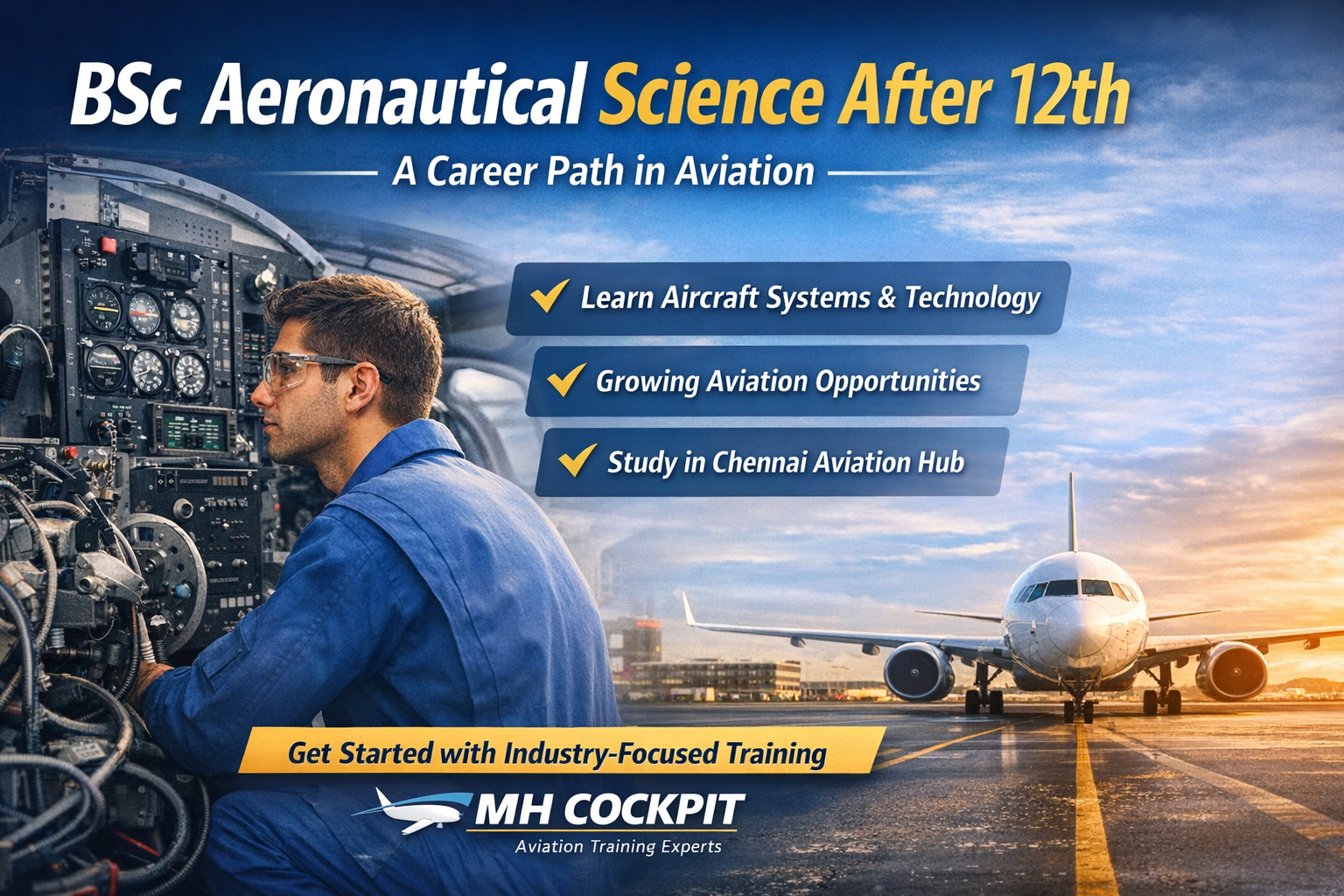
Every year, thousands of students complete their Class 12 exams and begin searching for the right career path. While many choose traditional fields like engineering, medicine, or commerce, some students are drawn toward aviation and aircraft technology.
For those interested in understanding how aircraft work and how the aviation industry operates, BSc Aeronautical Science is one of the most relevant degree options available after 12th.
What is BSc Aeronautical Science?
BSc Aeronautical Science is a 3-year undergraduate degree program that focuses on the scientific and technical aspects of aviation. The course helps students understand aircraft systems, aerodynamics, aviation safety, and the technology that keeps aircraft operating safely.
Unlike some aviation programs that focus mainly on airport operations or management, this course explores the science and engineering concepts behind aviation systems.
Students typically study subjects such as:
- Aerodynamics and flight principles
- Aircraft structures and materials
- Aircraft propulsion and jet engines
- Aircraft systems like hydraulics and avionics
- Aviation safety and regulations
- Aircraft maintenance fundamentals
These subjects help students develop a strong understanding of how aircraft operate and how aviation systems are maintained in real-world environments.
Eligibility for BSc Aeronautical Science
To pursue BSc Aeronautical Science, students generally need:
- 10th and 12th from a recognised board
- Physics and Mathematics in Class 12
- Minimum 50% aggregate marks
Since the course focuses on technical aviation knowledge, a science background is usually required.
Why Students Choose Aviation After 12th
The aviation industry in India has been growing steadily over the past decade. Airlines are expanding their fleets, airports are increasing capacity, and aviation infrastructure is improving across the country.
This growth creates demand for professionals who understand aircraft technology, aviation safety, and technical operations.
Graduates of BSc Aeronautical Science can explore careers in areas such as:
- Airline technical departments
- Aviation safety and compliance
- Aircraft operations support
- Aerospace and aviation service companies
Entry-level salaries in aviation-related roles typically range between ₹3 LPA and ₹5 LPA, with higher growth potential as professionals gain industry experience.
Why Chennai is a Good Location for Aviation Studies
Chennai is one of the important aviation hubs in South India. The presence of Chennai International Airport, along with a growing aviation ecosystem, offers students exposure to real aviation environments.
Students studying aviation in Chennai may also benefit from internships, industry exposure, and networking opportunities within the aviation sector.
Start Your Aviation Journey
Choosing the right aviation institute is an important step in building a career in this field. Programs that combine academic learning with industry exposure can help students better understand real aviation operations.
Training partners like MH Cockpit work with universities to provide aviation-focused education and industry-oriented training for students who want to build careers in the aviation sector.
If you are passionate about aircraft technology and aviation systems, BSc Aeronautical Science can be a strong first step toward entering the aviation industry.
Categories
Read More
"Executive Summary Managed Security Services Market Size and Share Analysis Report The global managed security services market was valued at USD 36.58 billion in 2024 and is expected to reach USD 90.31 billion by 2032. During the forecast period of 2025 to 2032 the market is likely to grow at a CAGR of 11.96%, primarily driven by growing demand for advanced...

ในยุคที่เทคโนโลยีและอินเทอร์เน็ตก้าวหน้าอย่างรวดเร็ว การเล่นสล็อตออนไลน์กลายเป็นที่นิยมในกลุ่มนักพนันทั่วโลก และในประเทศไทย เว็บไซต์ 918kiss.fun เป็นหนึ่งในแพลตฟอร์มที่ได้รับความนิยมอย่างมาก ด้วยการให้บริการที่ครบครันและประสบการณ์การเล่นที่น่าตื่นเต้น ดาวน์โหลด 918kiss.fun ความหลากหลายของเกมสล็อต 918kiss.fun มีเกมสล็อตให้เลือกมากมาย ตั้งแต่เกมสล็อตคลาสสิกที่มีรูปแบบการเล่นง่าย...

Polaris Market Research has introduced the latest market research report titled Automation Testing Market Share, Size, Trends, Industry Analysis Report : By Testing Type (Static Testing, Dynamic Testing), By Service, By Verticals, By Organization Size, and By Region – Market Forecast, 2026–2034 that highlights the major revenue stream for the forecast period. The report...
In today’s competitive digital landscape, video content has become an essential tool for businesses looking to stand out. High-quality videos not only tell a brand’s story but also engage audiences, boost visibility, and drive conversions. For companies in Dubai, investing in the best video production agency can be the game-changer needed to elevate their marketing strategy....

Nylon Fibers have become one of the most versatile and widely used synthetic materials in modern industries. Known for their exceptional strength, elasticity, and resistance to abrasion, these fibers are essential in various applications ranging from textiles and carpets to industrial components. Their excellent resilience and ability to withstand wear and tear make them a preferred choice...