Different Types of Golf Shafts: Flex, Materials, Weight & How to Choose the right one
Many golfers spend time improving their swing or upgrading their clubheads, but one of the most influential parts of any golf club is often overlooked: the shaft. The golf shaft is responsible for transferring energy from the golfer’s swing into the clubhead and ultimately the golf ball.
Choosing the correct shaft can significantly affect distance, launch angle, spin rate, accuracy, and overall consistency. Understanding how shaft flex, material, weight, torque, and bend profile work will help golfers select equipment that fits their swing and maximizes performance.
This guide explains the different types of golf shafts, how swing speed affects shaft selection, and how to choose the right shaft for your game.
Why the Golf Shaft Matters
The shaft acts as the connection between the golfer and the clubhead. During a swing, energy travels from the golfer’s body through the shaft and into the ball at impact.
If the shaft does not match a golfer’s swing characteristics, this energy transfer becomes inefficient.
For example:
• A shaft that is too stiff may reduce launch and distance.
• A shaft that is too flexible can cause timing problems and inconsistent shots.
When the shaft properly matches a golfer’s swing speed and tempo, it helps square the clubface at impact and improves both distance and shot consistency.
For golfers looking to upgrade performance, exploring advanced options like Carbon Fiber Golf Shafts can provide noticeable improvements in speed and feel.
https://steadfastgolf.com/pages/carbon-fiber-golf-shafts
Understanding Golf Shaft Flex
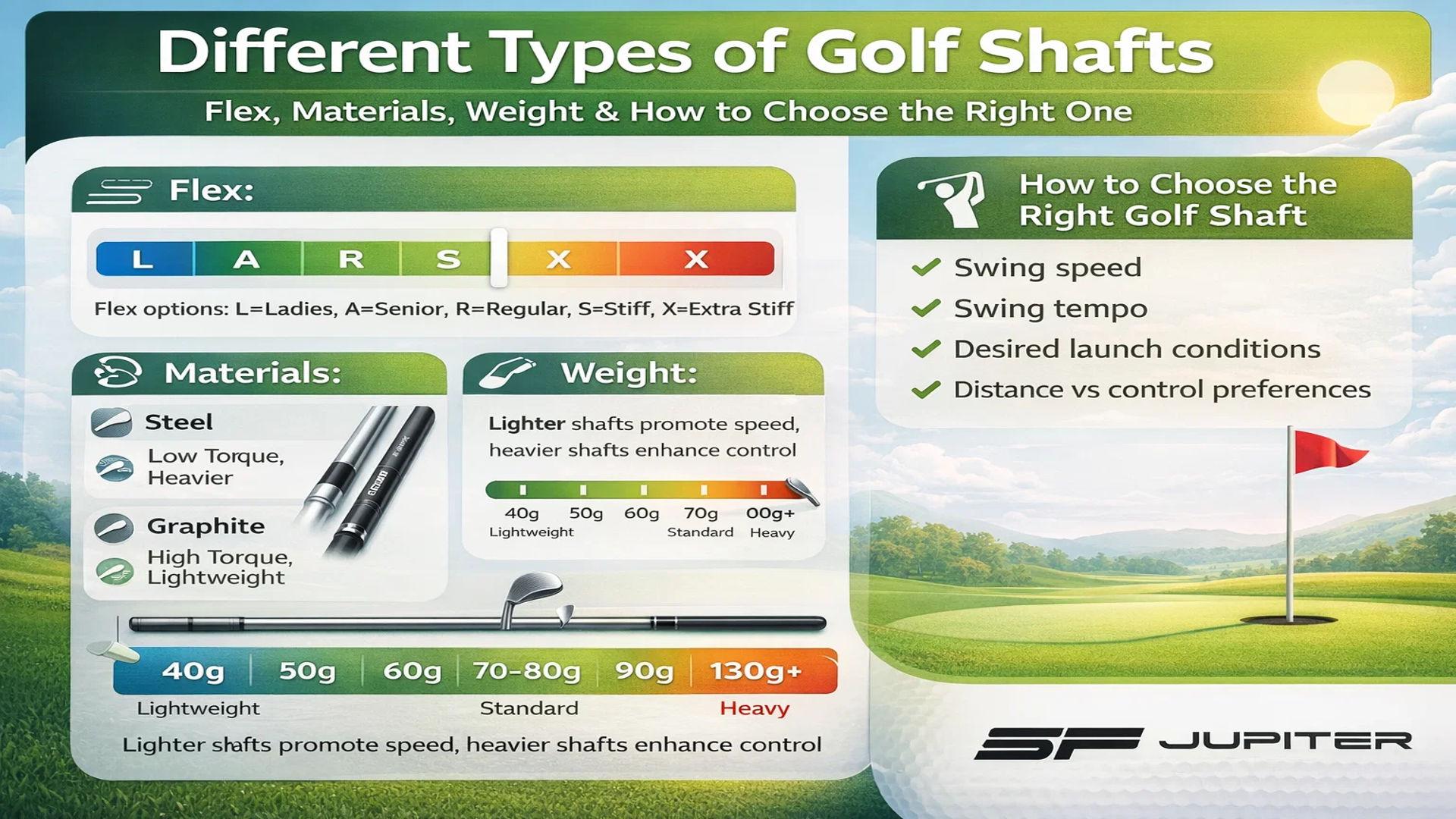
Shaft flex refers to how much the shaft bends during the golf swing. Selecting the correct flex is essential because it directly affects timing, ball flight, and overall control.
Extra Stiff (X-Stiff)
Extra stiff shafts are designed for golfers with very high swing speeds and aggressive transitions. They reduce excessive spin and help keep ball flight controlled.
Stiff (S)
Stiff shafts are commonly used by skilled amateurs and competitive players who generate high swing speeds but still want a balance between control and distance.
Regular (R)
Regular flex shafts are the most common option and work well for golfers with moderate swing speeds, helping them achieve better launch and carry distance.
Senior or Light Flex (A / L)
Senior or light flex shafts are ideal for players with slower swing speeds. They help generate more clubhead speed and launch the ball higher with less effort.
How Swing Speed Affects Shaft Selection
Swing speed is the primary factor when choosing a shaft flex. Golfers with faster swing speeds typically need stiffer shafts to maintain control, while slower swingers benefit from more flexible shafts that help load and release energy.
However, swing tempo also plays an important role. Two golfers with the same swing speed may require different shafts depending on their transition.
• Smooth tempo players may perform better with slightly softer shafts.
• Aggressive transitions often require stiffer shaft profiles for stability.
This is why professional club fitting is often recommended.
Golf Shaft Materials
Modern golf shafts are primarily made from steel or graphite, and each material offers different advantages.
Steel Shafts
Steel shafts are typically used in irons. They are heavier and provide excellent control, feedback, and shot consistency.
Benefits include:
• Greater stability
• Consistent performance
• Long-term durability
However, their heavier weight may make them harder to swing for golfers with slower swing speeds.
Graphite (Carbon Fiber) Shafts
Graphite shafts, often referred to as carbon fiber shafts, are significantly lighter than steel.
They are commonly used in:
• Drivers
• Fairway woods
• Hybrids
• Modern iron sets
Benefits include:
• Increased swing speed
• Greater distance potential
• Reduced vibration at impact
Modern graphite shafts use advanced layering technology to improve stability, feel, and accuracy.
You can explore high-performance shafts here:
https://steadfastgolf.com/
How Shaft Weight Impacts Performance
Shaft weight has a major influence on both swing speed and control.
Lighter Shafts
Lighter shafts can help golfers generate more clubhead speed, which often leads to greater distance. They also help players launch the ball higher.
These shafts are particularly beneficial for:
• Slower swing speeds
• Golfers seeking easier acceleration
Heavier Shafts
Heavier shafts provide greater stability and control. They help golfers maintain tempo and can reduce shot dispersion.
While they may slightly reduce swing speed, they often improve shot consistency and accuracy.
Understanding Shaft Torque
Torque measures how much a shaft twists during the swing.
• Low torque shafts twist less and produce a more controlled ball flight.
• High torque shafts twist more and provide a softer feel.
Golfers with faster swing speeds typically benefit from lower torque shafts, while players with smoother swings may prefer higher torque for comfort and feel.
Kick Point and Ball Flight
Kick point (also called bend point) describes where the shaft bends the most during the swing.
• Low kick point produces higher launch and more spin
• Mid kick point offers balanced launch and spin
• High kick point creates a lower and more penetrating ball flight
Selecting the correct kick point allows golfers to fine-tune their trajectory and optimize launch conditions.
Stock Shafts vs Aftermarket Shafts
Most golf clubs are sold with stock shafts, which are designed to suit a wide range of players while keeping costs lower.
However, stock shafts often have:
• Wider manufacturing tolerances
• Limited customization options
Aftermarket shafts are usually made with higher-quality materials and tighter specifications.
Upgrading to a premium shaft can provide:
• Improved consistency
• Better feel and feedback
• More predictable ball flight
How to Choose the Right Golf Shaft
Selecting the right shaft requires understanding your swing and performance goals.
Key factors include:
• Swing speed
• Swing tempo
• Desired launch conditions
• Distance vs control preferences
The best way to determine the ideal shaft is through professional club fitting using launch monitor data such as ball speed, launch angle, and spin rate.
Final Thoughts
The golf shaft plays a crucial role in how a club performs. When the shaft matches the golfer’s swing, it can significantly improve distance, accuracy, and consistency.
By understanding shaft flex, material, weight, torque, and kick point, golfers can make smarter equipment decisions and get more performance from their clubs.
Investing in the right shaft can transform your game without changing your swing mechanics.
Frequently Asked Questions (FAQ)
▶ What is the most common golf shaft flex?
Regular flex shafts are the most widely used because they suit golfers with moderate swing speeds and provide a good balance of distance and control.
▶ Are graphite shafts better than steel shafts?
Graphite shafts are lighter and can help increase swing speed and distance, while steel shafts provide greater control and feedback. The best option depends on the golfer’s swing style and preferences.
▶ How do I know which golf shaft flex is right for me?
The correct flex depends mainly on swing speed and tempo. A professional club fitting is the most accurate way to determine the best shaft for your game.
▶ Do lighter golf shafts increase distance?
Lighter shafts can help increase clubhead speed, which may lead to more distance for many golfers.
▶ What does torque mean in a golf shaft?
Torque refers to how much the shaft twists during the swing. Lower torque provides more stability, while higher torque can create a smoother feel.
Κατηγορίες
Διαβάζω περισσότερα
In the fast-growing automotive market of the UAE, Etarat Online has established itself as a trusted and customer-oriented platform for all tyre needs. The company focuses on delivering high-quality tyres from renowned global brands to ensure that every customer enjoys safety, durability, and performance on the road. Whether you drive a sedan, SUV, or commercial vehicle, Etarat Online...
Global Polyaspartic Coatings market demonstrates steady expansion, currently valued at US$ 329.9 million in 2024 with projections indicating growth to US$ 440.3 million by 2029, reflecting a CAGR of 4.2%. This trajectory accounts for post-pandemic recovery dynamics and geopolitical influences from the Russia-Ukraine conflict, which reshaped raw material supply chains. Polyaspartic coatings are...

Polaris Market Research has announced the latest report, namely Web Application Firewall Market Share, Size, Trends, Industry Analysis Report, By Component (Solutions (Hardware Appliances, Virtual Appliances, Cloud-based), Services); By Organization Size; By Vertical; By Region; Segment Forecast, 2022-2030, that examines the overall market condition both now and in the future. It provides...

Introduction In today’s digital world, every business needs a strong online presence to grow and stay competitive. Whether you run a retail shop, manufacturing unit, coaching center, clinic, or startup, a professional website helps customers discover your business and trust your brand. If you are searching for the best Website Company Development in Jamshedpur, choosing the right...

Bevor ihr in Pokémon TCG Pocket richtig loslegt, müsst ihr zunächst das grundlegende Kampf-Tutorial für Anfänger absolvieren. Dieses führt euch nicht nur in die Basisregeln der Duelle ein, sondern schaltet auch praktische Items frei. Wusstet ihr jedoch, dass es zusätzlich spezielle Tutorials für fortgeschrittene Spieler gibt? Ich selbst habe...