The Future of Investigation: Decoding the Forensic Technology Market Growth
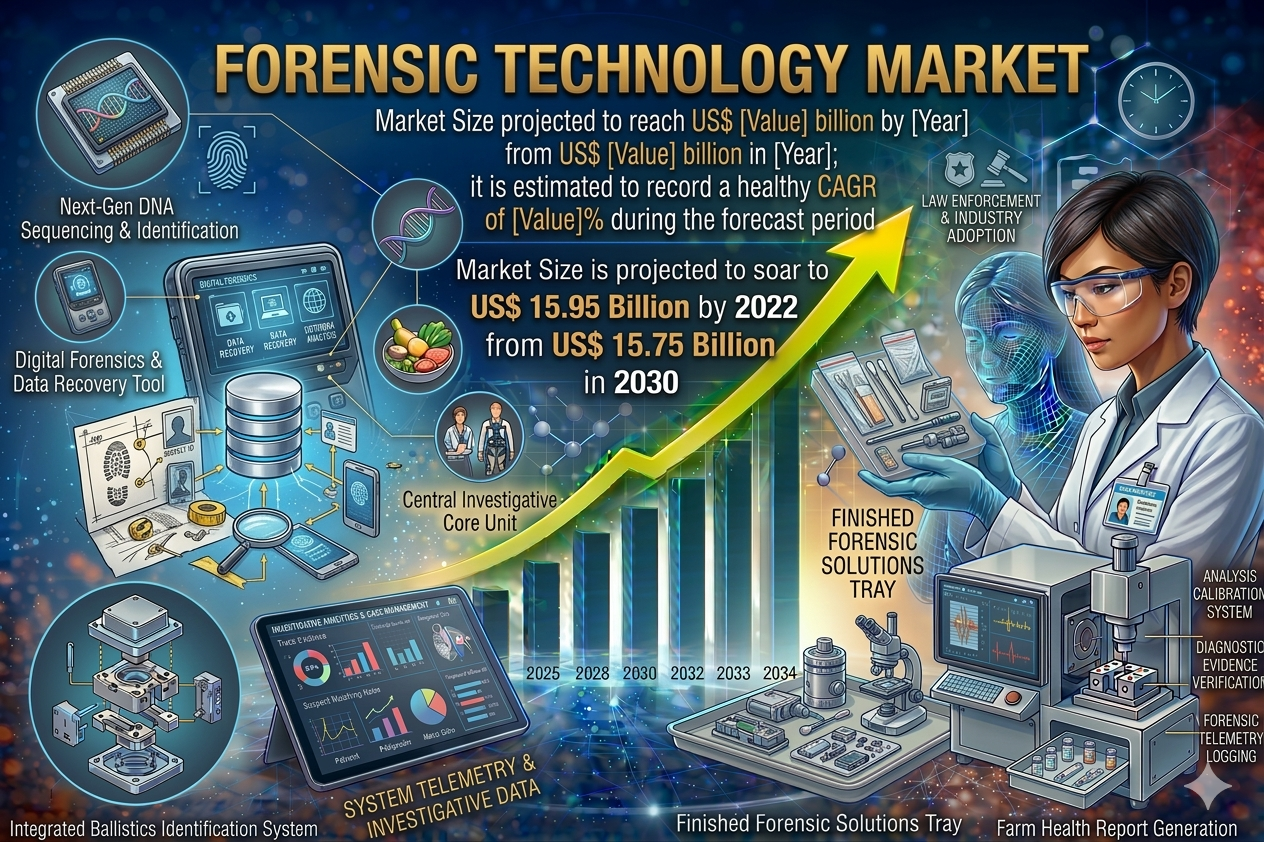
The landscape of criminal justice and civil litigation is undergoing a digital and biological revolution. As criminals become more sophisticated, leveraging technology to obscure their tracks, the tools used to catch them must evolve at an even faster pace. According to a comprehensive market analysis by The Insight Partners, the global forensic technology market is witnessing a period of robust expansion, driven by a shift toward automation, rapid DNA testing, and the explosion of digital forensics.
Market Dynamics and Growth Drivers
The surge in the forensic technology market is not merely a result of increasing crime rates, but rather a fundamental shift in how evidence is processed. Historically, forensic analysis was a time-consuming process that created significant backlogs in laboratory settings. Today, the demand for "justice delayed is justice denied" has pushed the industry toward high-efficiency, portable, and automated solutions.
One of the primary catalysts for growth is the rising investment from governments and law enforcement agencies worldwide. As judicial systems face pressure to clear cold cases and reduce wrongful convictions, there is a heightened reliance on DNA profiling and biometric identification. The Insight Partners highlights that the integration of sophisticated software in forensic laboratories is streamlining workflows, allowing for faster data interpretation and more reliable results.
Key Segments: From DNA to Data
The market is generally categorized into services and products, with several high-growth segments leading the charge:
1. DNA Profiling and Biometrics: DNA remains the "gold standard" of forensic evidence. However, the innovation lies in the speed of delivery. Rapid DNA technology now allows for the processing of samples in hours rather than weeks, enabling law enforcement to identify suspects while they are still in custody. Biometric technologies, including facial recognition and fingerprint analysis, are also becoming more integrated into public surveillance infrastructures.
2. Digital and Computer Forensics: As our lives move online, so does crime. Cybercrime, identity theft, and data breaches have made digital forensics one of the fastest-growing sub-sectors. This involves the recovery and investigation of material found in digital devices, ranging from smartphones to cloud-based servers. The ability to reconstruct deleted messages or track cryptocurrency transactions is now a cornerstone of modern investigations.
3. Forensic Chemistry and Toxicology: The global opioid crisis and the rise of synthetic drugs have necessitated advanced toxicological screening. New mass spectrometry and chromatography techniques allow for the detection of minute traces of substances, providing critical evidence in both overdose cases and environmental crimes.
Regional Outlook
Geographically, North America continues to hold a dominant position in the forensic technology market. This is attributed to a highly developed healthcare and legal infrastructure, coupled with the early adoption of advanced technologies like Next-Generation Sequencing (NGS).
However, The Insight Partners points toward the Asia-Pacific region as a burgeoning frontier. Rapid urbanization, increasing government spending on public safety in countries like China and India, and the modernization of police forces are expected to drive the highest compound annual growth rate (CAGR) in this region over the coming years.
The Role of AI and Machine Learning
Looking forward, the "Proactive Pivot" in forensics involves Artificial Intelligence (AI). AI algorithms are now being used to scan thousands of hours of CCTV footage or cross-reference massive databases of ballistic patterns in seconds—tasks that would take human investigators years. This automation doesn't just save time; it identifies patterns that the human eye might miss, turning raw data into actionable intelligence.
Conclusion
The forensic technology market is at a critical inflection point. As analyzed by The Insight Partners, the transition from manual, reactive processes to automated, proactive technologies is redefining the pursuit of justice. For stakeholders and investors, the message is clear: the future of forensics lies in the intersection of biological precision and digital intelligence. As these technologies become more accessible and cost-effective, they will remain the most potent weapon in the global fight against crime.
Related Report : Digital Forensics Market
Also Available in :
Korean German Japanese French Chinese Italian Spanish
Contact Person: Ankit Mathur
E-mail: ankit.mathur@theinsightpartners.com
Phone: +1-646-491-9876
Categorías
Read More
Roblox Real-Time Chat Rephrasing is transforming how players communicate on the platform as Roblox introduces an AI-powered system designed to automatically rewrite inappropriate language in real time. The new feature aims to keep conversations flowing naturally while ensuring that chats remain respectful and aligned with community guidelines. The gaming platform developed this capability to...

The B2B sales landscape has changed significantly by 2026. Buyers now expect instant responses at any hour. Waiting twenty-four hours for a sales representative is no longer acceptable. This shift has placed Chatbot Development at the center of revenue operations. However, a chatbot alone cannot close a complex B2B deal. Success depends on the transition from the machine to the human expert. We...

If you are looking to start your journey on Winexch360, the first step is to create your account. Registration is simple, safe, and can be done in just a few minutes. This guide will walk you through every step, ensuring a smooth experience. Whether you are new to online trading or exploring digital platforms, this guide is designed for clarity, with easy English and a friendly tone for Indian...

From the outside, ARC Raiders looks like the kind of game that should be all nerves and no breathing room. Third-person. Extraction shooter. Deadly map. You know the drill. But after a few runs, that label starts to feel too small. Embark has built something with a different rhythm, and that's what got me. The setup is bleak enough: Earth's been pushed to the edge by these machine invaders, and...

Welcome to an exciting update preview for Clash of Clans' Builder Base! Today, we're unveiling major changes that will redefine your gameplay experience. Previously, loot collection was limited by a daily cap through the three-win bonus system, but that's changing with the new star-based rewards. Now, players can earn two types of stars in builder base attacks: bronze and silver, by completing...