


How to Identify Strong Trends in Forex Trading

How to Identify Strong Trends in Forex Trading
Introduction
One of the most important skills in forex trading is the ability to identify strong market trends. Markets rarely move randomly for long periods; instead, they often develop clear directional trends that traders can take advantage of.
Recognizing these trends early can help traders enter positions with higher probability and align their trades with the overall market direction.
Professional traders spend significant time analyzing trends before placing trades. Many traders who master trend identification eventually scale their strategies using opportunities such as an Instant funded account after demonstrating consistent trading performance.
In this article, we will explore how traders identify strong trends and use them effectively in the forex market.
Understanding Market Trends
A market trend refers to the general direction in which price moves over a certain period.
There are three main types of trends:
-
Uptrend: The market forms higher highs and higher lows.
-
Downtrend: The market forms lower highs and lower lows.
-
Sideways trend: Price moves within a range without a clear direction.
Successful traders typically focus on trading in the direction of the prevailing trend.
Using Market Structure
Market structure is one of the simplest ways to identify trends.
Traders analyze how price forms highs and lows on the chart.
Uptrend Structure
An uptrend is confirmed when price consistently creates:
-
Higher highs
-
Higher lows
This pattern indicates strong buying pressure in the market.
Downtrend Structure
A downtrend occurs when price repeatedly forms:
-
Lower highs
-
Lower lows
This pattern suggests strong selling pressure.
Understanding market structure allows traders to follow the dominant direction of the market.
Moving Averages
Moving averages are commonly used indicators for identifying trends.
They smooth out price data and help traders see the overall direction of the market.
Common Moving Averages Used
Traders often use:
-
50-period moving average
-
100-period moving average
-
200-period moving average
When price stays above a moving average, it may indicate an uptrend. When price remains below it, a downtrend may be developing.
Trendlines
Trendlines are another simple but effective tool for identifying trends.
A trendline connects multiple price points on a chart and highlights the direction of the market.
How Traders Use Trendlines
-
In an uptrend, a trendline connects higher lows.
-
In a downtrend, a trendline connects lower highs.
Trendlines can also act as dynamic support and resistance levels.
Volume and Momentum
Strong trends are often supported by increasing momentum.
Indicators such as the Relative Strength Index (RSI) or MACD can help confirm whether a trend has strong momentum.
When momentum indicators align with the trend direction, traders gain additional confidence in their analysis.
Avoiding False Trends
Not every price movement represents a strong trend.
Sometimes markets create temporary movements that quickly reverse.
To avoid false signals, traders often:
-
Wait for trend confirmation
-
Use multiple indicators
-
Analyze higher timeframes
These steps help improve the reliability of trend analysis.
Risk Management in Trend Trading
Even strong trends can experience temporary pullbacks.
Proper risk management is essential when trading trends.
Professional traders often:
-
Use stop-loss orders below key support levels
-
Risk only a small percentage of capital per trade
-
Maintain favorable risk-to-reward ratios
These strategies help protect trading capital while allowing profitable trades to develop.
Scaling Your Trading Capital
As traders improve their ability to identify strong trends and maintain consistent performance, they often look for ways to increase their trading capital.
Some traders choose to work with proprietary trading firms through a Forex funded account.
These programs allow traders to manage larger accounts while sharing profits with the firm, providing an opportunity to expand successful trading strategies.
Conclusion
Identifying strong trends is a fundamental skill for forex traders. By analyzing market structure, using tools such as moving averages and trendlines, and confirming momentum with indicators, traders can better understand market direction.
While trend trading can provide powerful opportunities, success still depends on disciplined risk management and consistent strategy execution.
With practice and careful analysis, traders can learn to recognize strong trends and use them as a foundation for building effective forex trading strategies.
Categorii
Citeste mai mult
Dubai has rapidly emerged as a global hub for medical excellence, offering world-class infrastructure, advanced technologies, and internationally trained healthcare professionals. At the heart of this transformation lies every Healthcare Solutions Company Dubai UAE, delivering innovative, patient-centric services that meet international standards. From advanced clinics to specialized...

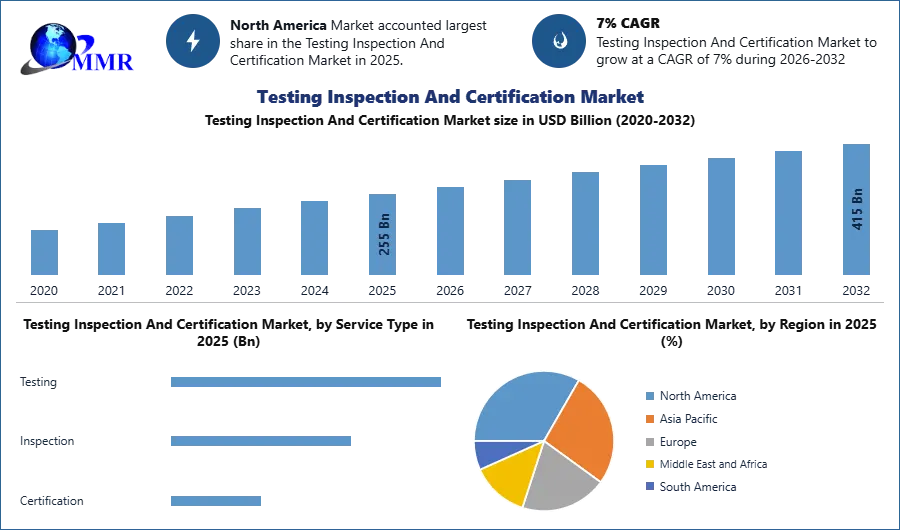
The Testing, Inspection and Certification Market is entering a new era of growth as industries worldwide accelerate digital transformation, smart manufacturing adoption, and next-generation technology deployment. Valued at USD 255 Billion in 2025, the Testing, Inspection and Certification Market is projected to grow at a CAGR of 7% from 2026 to 2032, reaching nearly USD 415 Billion by...
Can the brand-new Weekend Classic cards really help you achieve a 6-0 record? With powerful new additions like Yordan Alvarez, Bobby Witt Jr., and Soto, the latest lineup has quickly become a hot topic among players. This guide breaks down the Weekend Classic rewards, lineup setup, key player roles, MLB The Show 26 Stubs usage, and hitting strategies to help you improve plate discipline, create...

According to the latest report published by Data Bridge Market Research, the Crude Oil Flow Improvers Market The crude oil flow improvers market, valued at USD 1.69 billion in 2022, will reach USD 2.58 billion by 2030, growing at a CAGR of 5.44% during the forecast period of 2023 to 2030. The Crude Oil Flow Improvers Market business research report is fragmented in several features...

The global Insulation Market is witnessing significant growth as governments, industries, and consumers increasingly prioritize energy efficiency, sustainable construction, and advanced thermal management solutions. Valued at US$ 64.9 Billion in 2020, the market is projected to surpass US$ 175.1 Billion by 2031, expanding at a compound annual growth rate (CAGR) of...
