Automating Regression Testing in Continuous Integration Pipelines
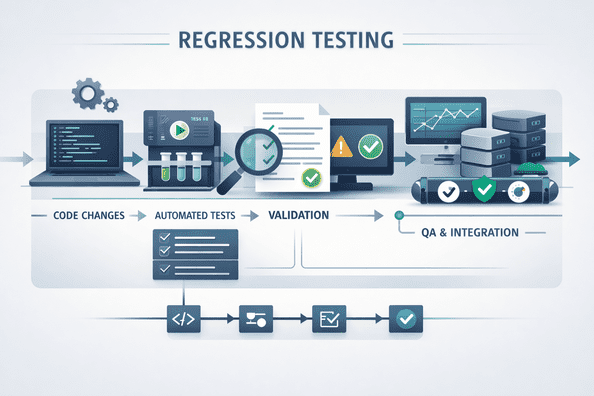
In today’s fast-paced software development environment, frequent code changes and rapid release cycles make regression testing a critical activity. Ensuring that new updates do not break existing functionality is essential for delivering stable, high-quality software. Automating regression tests within continuous integration (CI) pipelines enables teams to maintain reliability while accelerating delivery.
This article explores how to effectively integrate regression testing into CI pipelines, highlighting best practices, tools, and benefits.
Why Automate Regression Testing?
Manual regression testing can be time-consuming, error-prone, and difficult to scale, especially as applications grow. Automation addresses these challenges by:
-
Increasing test execution speed: Automated tests run faster than manual testing, enabling frequent validations.
-
Improving consistency: Automation reduces human error and ensures tests are executed the same way every time.
-
Supporting continuous delivery: Automated regression tests provide immediate feedback on new code changes, supporting faster releases.
Key Steps to Integrate Regression Testing in CI Pipelines
1. Identify High-Value Test Cases
Not all test cases are suitable for automation. Start by identifying tests that:
-
Validate critical workflows
-
Are repetitive or time-consuming
-
Have stable requirements
This prioritization ensures maximum ROI from your regression automation efforts.
2. Choose the Right Automation Tools
Selecting the right tools is crucial for smooth integration into CI pipelines. Popular regression testing tools, such as Keploy, Selenium, Cypress, and Appium, offer robust automation capabilities. Tools should support:
-
Automated test execution
-
Reporting and logging
-
Integration with CI platforms like Jenkins, GitLab CI, or CircleCI
3. Design Modular and Maintainable Test Scripts
Automated regression tests should be modular, reusable, and easy to maintain. Modular test scripts allow:
-
Reuse across multiple releases
-
Easier updates when workflows change
-
Reduced maintenance overhead
4. Integrate Tests into the CI Pipeline
Once test cases are automated, integrate them into your CI workflow:
-
Trigger regression tests automatically on code commits or pull requests
-
Execute tests in parallel where possible to speed up feedback
-
Generate reports to track pass/fail status and defects
5. Monitor and Refine Test Suites
Regularly review regression test results to:
-
Identify flaky or redundant tests
-
Update scripts for new features or changes
-
Optimize execution time for faster pipeline feedback
Monitoring helps ensure that automated regression tests remain effective and efficient over time.
Benefits of Automating Regression Testing in CI
-
Faster release cycles: Automation reduces manual effort and shortens testing time.
-
Improved software quality: Automated regression tests detect defects early, preventing them from reaching production.
-
Consistent validation: Every code change is validated against critical workflows, maintaining system stability.
-
Scalability: Automation allows teams to handle growing applications and complex features without proportional increases in QA effort.
Conclusion
Integrating regression testing into CI pipelines is essential for modern software development. Automation not only accelerates testing but also enhances reliability, reduces human error, and ensures consistent validation of critical workflows.
By identifying high-value test cases, using the right regression testing tools like Keploy, and maintaining modular and reusable test scripts, QA teams can achieve faster releases, improved software quality, and greater confidence in their applications.
الأقسام
إقرأ المزيد
Online betting has changed rapidly over the last few years. What once started with simple pre-match betting has now evolved into fast-paced live experiences that keep players engaged every second of the game. Among these modern options, SkyInPlay has become a popular choice for users who enjoy real-time action and dynamic betting opportunities. But many players still wonder — is...

The Tattoo removal procedures have become increasingly common as individuals seek to modify or completely eliminate unwanted tattoos. Changing lifestyle choices, professional requirements, and evolving aesthetic preferences are encouraging more people to pursue safe and effective removal solutions. Dermatology clinics and aesthetic treatment centers are adopting advanced technologies that can...

Evoluzione dei Casino Non AAMS nel 2026I casino non AAMS stanno evolvendo rapidamente nel 2026 grazie a tecnologie avanzate siti non AAMS e piattaforme più intuitive. I giocatori cercano esperienze moderne con bonus alti e pagamenti rapidi. I migliori casino online si distinguono per varietà di giochi, sicurezza e servizi innovativi che migliorano l’intrattenimento digitale...

Online gaming has become one of the most exciting forms of digital entertainment, and PlayIN7Game is gaining attention among gaming enthusiasts. Players who enjoy smooth gameplay, exciting rewards, and easy accessibility are now exploring platforms like In777 for a complete gaming experience. Whether you are a beginner or an experienced player, the growing popularity of the In777 Game...

A trench is more than just a ditch. On your Woodinville property, it’s the lifeline for critical utilities, the foundation for a new drainage system, or the necessary path for a French drain to protect your home from water damage. The need for a trench often arises from a practical goal: installing a new irrigation system for your garden, running electrical conduit to a detached garage,...