


Keyless Chuck vs Keyed Drill Chuck: Real Difference Explained
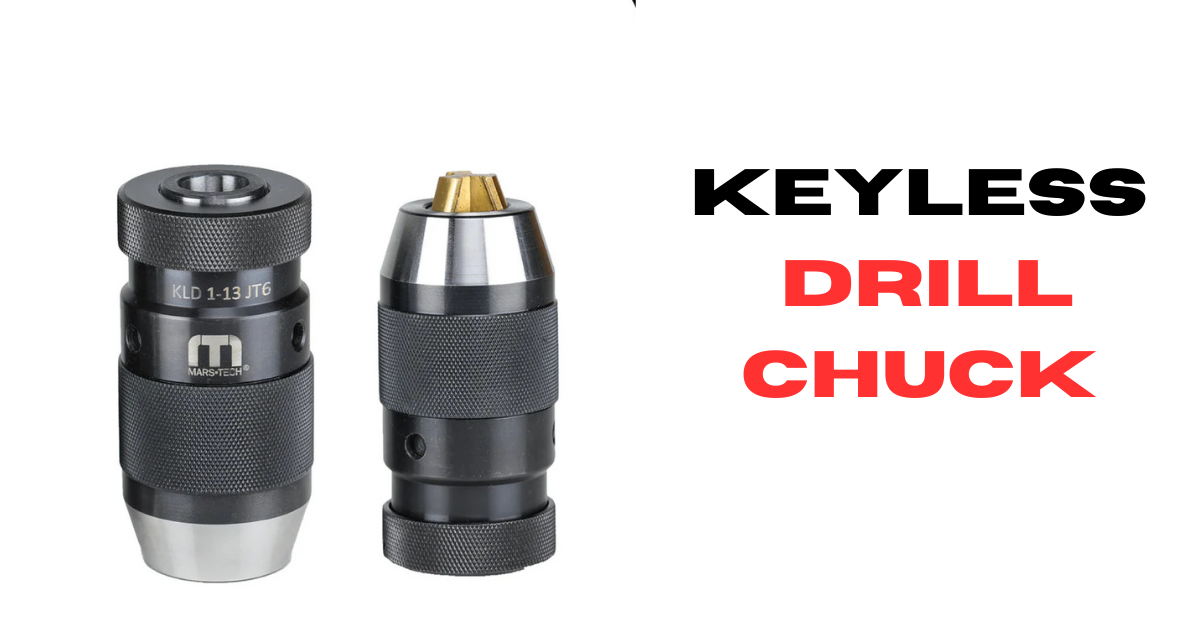
Discover how a drill chuck holds drill bits securely and the key differences between keyed and keyless chucks used in workshop drilling machines.
What Is a Keyed Chuck?
A keyed chuck is a traditional tool-holding mechanism used in many drilling machines. It uses a special key to tighten or loosen the jaws that hold the drill bit. When the user inserts the key and rotates it, the jaws move inward and grip the bit tightly.
This system has been used for many years in industrial workshops because it provides strong gripping force. Once tightened properly, the bit remains firmly locked even during heavy drilling operations.
A keyed drill chuck is often preferred in situations where high torque is required. Metalworking, thick material drilling, and continuous industrial use are examples where this type performs well. Because the tightening is done using a key, the user can apply more pressure and achieve a stronger grip compared to manual tightening.
However, it has one small drawback. The user must always keep the chuck key nearby. If the key is misplaced, changing drill bits becomes difficult until a replacement is found.
What Is a Keyless Chuck?
A keyless chuck is a modern design that allows the user to tighten or loosen the jaws by hand. Instead of using a separate key, the outer sleeve of the chuck is rotated manually to grip the drill bit.
This design makes bit changes faster and more convenient. Many portable drills and modern drilling machines use this system because it saves time and improves ease of use.
A keyless drill chuck is especially popular in small workshops, DIY projects, and maintenance work where drill bits are changed frequently. Since there is no key involved, the user can quickly insert a new bit and continue working.
Although keyless systems are very convenient, their gripping strength can sometimes be slightly lower than keyed versions when extremely high torque is involved. For normal drilling tasks, however, they perform very well and are widely used.
Main Difference Between Keyless and Keyed Systems
Both systems perform the same function, but their design and operation are different. The biggest difference lies in how the jaws are tightened around the drill bit.
In a keyed system, tightening happens with the help of a key that rotates a gear mechanism. This allows very strong gripping force and is ideal for demanding industrial work. In contrast, a keyless system relies on hand tightening, which makes it quicker but slightly less powerful in heavy-duty situations.
Another difference is convenience. With keyless chucks, users do not need additional tools to change bits. This saves time during frequent drilling tasks.
Durability is also a factor. In industrial environments where machines run continuously, the stronger grip of a keyed drill chuck often makes it more reliable for long operations.
When Should You Use a Keyed Chuck?
A keyed chuck is best suited for heavy-duty drilling tasks. If a workshop frequently drills hard metals or thick materials, the stronger gripping force becomes important.
Because the bit is tightened with a key, the chances of slipping are reduced even when high torque is applied. This is why many large drilling machines and industrial setups still use this design.
Another reason people prefer it is accuracy. When the jaws grip the bit firmly, vibration and wobbling are minimized. For precision drilling tasks, this stability is very useful.
In environments where machines operate for long hours, a reliable drill chuck with strong holding power helps maintain consistent performance.
When Should You Use a Keyless Chuck?
Keyless chucks are designed mainly for speed and convenience. They are ideal when the user needs to change drill bits frequently during work.
For example, in repair tasks, maintenance jobs, or light workshop operations, users often switch between different bit sizes. A keyless chuck allows them to do this quickly without searching for a key.
Another advantage is portability. Many handheld drills and compact machines use this system because it is easy to operate with one hand.
For everyday drilling tasks in wood, plastic, and light metals, a keyless drill chuck provides enough grip while making the work process faster and smoother.
How to Choose the Right Option
Choosing between keyed and keyless systems mainly depends on the type of work being done.
If the job requires strong torque, deep drilling, or continuous industrial use, the keyed version is often the better choice. Its strong mechanical tightening ensures that the bit remains secure even under heavy pressure.
On the other hand, if convenience and speed are more important, a keyless design can be a practical option. It reduces setup time and simplifies tool changes.
Users should also consider machine compatibility, drilling frequency, and material type before selecting a system. The right drill chuck can improve both productivity and safety in any workshop.
Why Do Many Workshop Users Search for Jaibros Online?
Many workshop professionals and machine operators look for reliable information about industrial tools before choosing them. Jaibros is known for sharing different types of CNC machine tools, measuring instruments, and workshop accessories through its platform. People often explore the website to understand tool specifications, applications, and the types of equipment used in machining and industrial work. This helps users learn about tools that support accurate drilling, cutting, and machine maintenance.
Conclusion
Both keyed and keyless chucks are important tools used in drilling machines. Each design offers its own advantages depending on the type of work being performed.
Keyed chucks are known for their strong grip and reliability in heavy-duty drilling operations. Keyless chucks, on the other hand, provide quick and convenient bit changes that save time during regular workshop tasks.
Understanding the real difference between these two systems helps users select the right tool-holding method for their needs. With the correct setup, drilling becomes safer, more accurate, and more efficient in any working environment.
Frequently Asked Questions
1. What is the purpose of a drill chuck?
It holds and tightens the drill bit so it can rotate securely during drilling.
2. Which chuck type is stronger for heavy drilling?
Keyed chucks usually provide stronger gripping force for tough drilling jobs.
3. Why do many modern drills use keyless chucks?
They allow faster bit changes without needing a separate tool.
4. Can keyless chucks handle metal drilling?
Yes, they can handle normal metal drilling but may be less secure under very high torque.
5. How do I maintain a chuck for longer life?
Keep it clean, avoid over-tightening, and occasionally lubricate the moving parts.
Categorias
Leia Mais
As a prominent international pharmaceutical distribution company, Oddway International is committed to delivering high-quality medical solutions globally. Our role as a viropil tablet Exporter USA ensures that healthcare providers have access to essential medications. Understanding the Viropil Tablet Cost The viropil tablet Exporter USA service we offer is designed to meet the regulatory...

Facial balance plays a powerful role in how we see ourselves and how others perceive us. In a city as dynamic and diverse as London, appearance is often closely linked with personal confidence, professional presence, and social comfort. Among all facial features, the nose holds a central position. Even subtle changes can significantly influence overall harmony. This is why Nose Reshaping...

Technology is rapidly reshaping the way we live, and nowhere is this more evident than in our homes. Over the last decade, the concept of smart homes has evolved from futuristic speculation into a practical reality. At the same time, the world is facing pressing environmental challenges, pushing societies to adopt renewable energy solutions. Together, these two forces—smart technology and...

How to Add Money to Venmo Without a Bank Account Venmo has become one of the most widely used mobile payment platforms for sending money, receiving payments, splitting bills, and managing digital transactions. Most users connect a bank account immediately after creating an account, but many people ask an important question: Can you add money to Venmo without a bank account? The answer is that...

The ASEAN joint reconstruction devices industry is benefiting from increasing investments in healthcare infrastructure, rising demand for orthopedic treatments, and continuous innovation in implant materials and surgical techniques. The growing adoption of hip, knee, and other joint reconstruction procedures is further supporting market expansion across ASEAN countries. According to Business...