


What Is Torque in a Golf Shaft (And Why It Matters for Your Game)
uring the swing. As you transition from backswing to downswing and approach impact, forces cause the shaft to rotate slightly around its axis.
Torque is measured in degrees (°). For example:
-
Low torque (2.5° – 3.5°) → Less twisting, more stability
-
Mid torque (3.5° – 4.5°) → Balanced feel and control
-
High torque (4.5° – 6.0°+) → More twisting, softer feel
👉 Explore premium shaft options:
https://steadfastgolf.com/
Torque vs Flex: What’s the Difference?
Many golfers confuse torque with flex, but they are completely different:
-
Flex = how much the shaft bends
-
Torque = how much the shaft twists
Both influence performance, but torque mainly affects feel and clubface stability, while flex impacts launch and distance.
How Torque Affects Your Swing
1. Feel and Feedback
-
Low torque shafts feel firmer and more stable
-
High torque shafts feel softer and more responsive
Golfers with smoother swings often prefer higher torque for comfort, while aggressive players benefit from lower torque for control.
2. Stability and Accuracy
Torque plays a role in how stable the clubhead is at impact.
-
Lower torque → Less twisting → More consistent clubface position
-
Higher torque → More twisting → Slight variation in direction
While torque doesn’t control accuracy alone, it supports better consistency when matched to your swing.
Torque and Ball Flight Control
Torque can subtly influence clubface orientation at impact, which may affect shot direction.
-
Low torque = tighter dispersion
-
Higher torque = more feel, but slightly less directional control
That said, swing mechanics still matter more than torque alone.
Torque in Graphite vs Steel Shafts
Torque varies depending on shaft material:
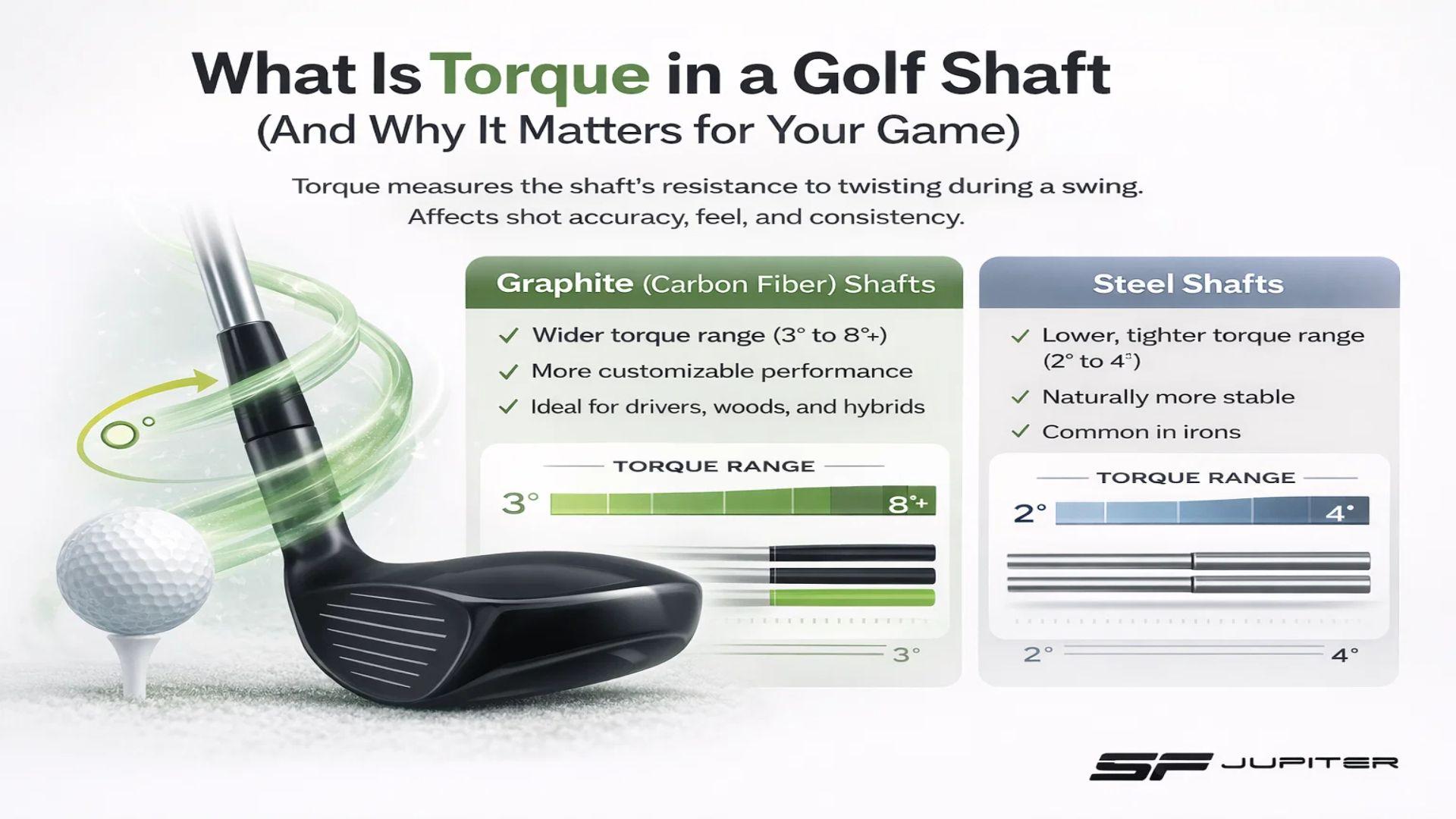
Graphite (Carbon Fiber) Shafts
-
Wider torque range (3° to 8°+)
-
More customizable performance
-
Ideal for drivers, woods, and hybrids
👉 Learn more:
https://steadfastgolf.com/blogs/shaft-insights/graphite-vs-steel-shafts-best-golf-shafts-for-drivers
Steel Shafts
-
Lower, tighter torque range (2° to 4°)
-
Naturally more stable
-
Common in irons
Graphite shafts allow manufacturers to fine-tune torque using advanced fiber layering, making them a popular choice for modern performance.
Who Should Use Low vs High Torque Shafts?
Choose Low Torque If You:
-
Have a fast swing speed
-
Have an aggressive tempo
-
Want maximum stability and control
Choose Higher Torque If You:
-
Have a moderate or slow swing speed
-
Prefer a smoother feel
-
Want more feedback and responsiveness
Torque Is Only One Part of Shaft Fitting
Torque works together with:
-
Flex
-
Weight
-
Kick point
The best results come from combining all these factors through proper club fitting.
👉 Browse high-performance shafts:
https://steadfastgolf.com/
Final Thoughts
Torque is a key factor in how a golf shaft feels and performs during your swing. While it doesn’t directly determine your shot outcome, it plays a major role in stability, confidence, and consistency.
Choosing the right torque—alongside flex and weight—can help you unlock better performance and a more reliable golf game.
FAQs About Golf Shaft Torque
1. What is a good torque for a driver shaft?
Most golfers perform well with torque between 3.0° and 5.0°, depending on swing speed and preference.
2. Does lower torque mean more distance?
Not necessarily. Lower torque improves stability, but distance depends more on swing speed, strike quality, and launch conditions.
3. Is high torque bad for golf shafts?
No. High torque provides a softer feel and works well for golfers with smoother swings.
4. Do beginners need to worry about torque?
Beginners don’t need to focus heavily on torque, but understanding it can help when upgrading equipment.
5. Is torque more important in graphite shafts?
Yes. Torque varies more in graphite shafts, making it a more noticeable factor in performance.
6. Can torque fix a slice or hook?
No. Ball flight issues are primarily caused by swing path and clubface angle, not torque alone.
Categorias
Leia Mais
Top Comedy Selections A good laugh can be a perfect remedy after a demanding day, whether you're at work or school. Netflix provides an extensive array of comedy specials and films to lift your spirits. We've curated a list of top-notch comedies currently streaming, spanning various styles such as stand-up routines, romantic comedies, horror-infused humor, and satirical hits. Prepare yourself...

Global Neryl Acetate Market Expands Strongly with Rising Demand in Fragrance, Personal Care, and Premium Cosmetic Applications Market Overview Neryl acetate is an aroma chemical and ester compound known for its fresh, floral, fruity, and citrus fragrance profile. It is widely used in perfumes, deodorants, creams, lotions, shampoos, soaps, and other personal care...

"Latest Insights on Executive Summary Asia-Pacific Child Safety Seats Market Share and Size CAGR Value The Asia-Pacific child safety seats market size was valued at USD 1.25 billion in 2024 and is expected to reach USD 2.11 billion by 2032, at a CAGR of 6.7% during the forecast period The study and analysis conducted in this industry report also helps...

There's something magical about the aroma of spices sizzling in hot oil, the sound of naan slapping against the walls of a clay tandoor, and that first bite of perfectly cooked biryani that makes your eyes close in pure bliss. If you've ever wondered what makes desi food so irresistibly delicious, you're in for a treat. This isn't just about food—it's about culture, tradition, and...
Trapstar: The Rise of a Streetwear Powerhouse Trapstar has become one of the most influential names in the streetwear world, blending bold designs with urban authenticity. Founded in London, the brand has gained global recognition for its underground aesthetic, unique graphics, and exclusive collaborations. Worn by celebrities, athletes, and music icons, Trapstar has evolved from a local...
