


Network Access Control (NAC) Market Leaders Revealed – SPARK Matrix™ Q3 2025
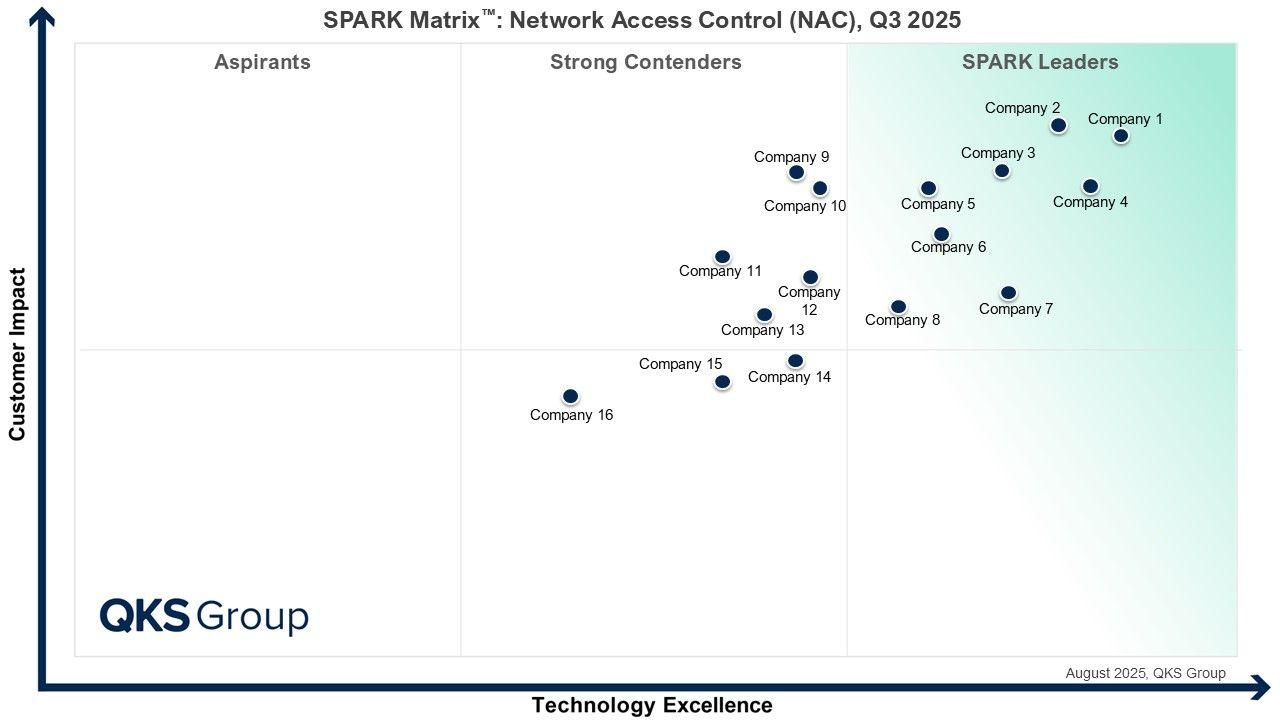
The latest research by QKS Group on the global SPARK Matrix™: Network Access Control provides an extensive evaluation of the industry landscape, highlighting emerging technology developments, evolving enterprise requirements, and the long-term outlook for NAC solutions. As organizations continue to modernize their IT infrastructure and adopt hybrid work models, the need for strong network security frameworks has become more critical than ever. NAC solutions are increasingly viewed as foundational technologies that help enterprises enforce secure access policies, monitor device behavior, and prevent unauthorized access to corporate networks.
This comprehensive market study analyzes how the NAC ecosystem is evolving in response to rising cyber threats, increased device connectivity, and the growing adoption of cloud-based infrastructure. The report explores key technology trends shaping the NAC market, including zero trust architecture adoption, AI-driven network visibility, automated compliance enforcement, and integration with broader cybersecurity ecosystems such as identity and access management (IAM), endpoint detection and response (EDR), and security orchestration platforms. By examining these trends, the research provides a forward-looking view of how NAC solutions are expected to evolve and expand their role within enterprise cybersecurity strategies.
The report is designed to offer valuable strategic insights for both technology vendors and enterprise users. For vendors, it provides a deep understanding of the competitive landscape, enabling them to identify growth opportunities, refine their product development strategies, and align their offerings with evolving customer requirements. For enterprise buyers and IT decision-makers, the study serves as a reliable guide to evaluate different NAC vendors, understand their technological capabilities, and assess their relative strengths in delivering secure and scalable network access solutions.
A major highlight of the research is the detailed competitive analysis conducted using the proprietary SPARK Matrix™ framework developed by QKS Group. The SPARK Matrix provides a comprehensive vendor comparison based on two critical dimensions: technology excellence and customer impact. This framework helps organizations easily visualize the competitive positioning of leading NAC vendors while gaining deeper insights into their innovation strategies, product capabilities, and market presence.
Through the SPARK Matrix evaluation, the report identifies and ranks the leading SPARK Matrix™: Network Access Control providers that have established a strong global presence. These vendors are assessed across multiple parameters, including product innovation, feature differentiation, deployment flexibility, scalability, customer adoption, and strategic partnerships. The analysis also examines how vendors are enhancing their platforms to address emerging enterprise security challenges such as IoT device management, remote workforce access control, and dynamic risk-based authentication.
The SPARK Matrix study includes a comprehensive evaluation of leading vendors such as Akamai Technologies, Belden, Beta Systems Software AG, Check Point Software Technologies, Cisco Systems, CommScope, Extreme Networks, Forescout Technologies, Fortinet, Genians, HPE Aruba Networking, Ivanti, NordLayer, Open Cloud Factory, OPSWAT, and Portnox. Each vendor is examined in detail to understand their product roadmap, technological innovation, and ability to deliver comprehensive NAC capabilities to enterprise customers across industries.
As the enterprise threat landscape continues to evolve, SPARK Matrix™: Network Access Control are becoming increasingly important in securing the modern digital workplace. Organizations today operate highly distributed IT environments that include on-premises infrastructure, public cloud platforms, remote endpoints, and a rapidly growing number of IoT devices. This complexity creates significant security challenges, making it essential for enterprises to implement intelligent access control mechanisms that can continuously monitor and validate every device attempting to connect to the network.
Modern NAC platforms have evolved far beyond traditional authentication and authorization capabilities. Today’s solutions provide advanced functionalities such as real-time network visibility, automated device discovery, and dynamic policy enforcement. These capabilities allow security teams to maintain comprehensive oversight of all connected devices while implementing granular access policies tailored to user roles, device types, and contextual risk factors.
Additionally, modern NAC platforms increasingly integrate with broader cybersecurity ecosystems. Integration with endpoint protection solutions enables NAC systems to evaluate device health and compliance status before granting network access. Similarly, integration with identity management platforms ensures that access decisions are aligned with user authentication and identity verification processes. Such integrations enable organizations to build a more unified and coordinated security architecture.
However, successfully implementing NAC requires more than simply deploying the technology. Organizations must ensure operational maturity by continuously refining access policies, automating response mechanisms, and aligning NAC strategies with broader security frameworks such as Zero Trust Architecture. Zero trust principles emphasize verifying every access request, regardless of whether it originates inside or outside the network perimeter. NAC solutions play a crucial role in enabling this approach by providing the visibility and control necessary to enforce strict access verification policies.
Furthermore, NAC adoption is expected to accelerate as enterprises increasingly prioritize risk-based security models and proactive threat prevention strategies. As cyberattacks become more sophisticated and networks continue to expand, NAC platforms will remain essential tools for organizations seeking to maintain secure and resilient IT environments.
Overall, the SPARK Matrix™: Network Access Control (NAC), Q3 2025 report offers a comprehensive perspective on the current state and future direction of the NAC market. By combining in-depth market analysis with a detailed vendor evaluation framework, the research equips technology providers and enterprise decision-makers with the insights needed to navigate the rapidly evolving network security landscape and make informed technology investments.
Категории
Больше
Healthcare buyers in the USA seeking consistent access to regulated imports can now explore wholesale kamagra oral jelly price options with confidence. Within the first 50 words, the focus on bulk buy kamagra oral jelly ensures clarity for B2B importers while aligning with FDA compliance standards. Bulk Buy Kamagra Oral Jelly for USA Importers Oddway International, an international...

Choosing the right jewelry is about more than beauty—it is about finding a piece that reflects your personality, celebrates special moments, and stands the test of time. An Alexandrite Ring Gold is one of the most remarkable choices for anyone who appreciates elegance and rarity. Known for its mesmerizing color-changing effect, alexandrite appears green or bluish-green in daylight...

Many companies only notice energy limitations after expansion becomes difficult. As operations grow, older electrical systems often struggle to handle changing demand efficiently. That’s why more buyers are now searching for an experienced Solar inverter manufacturer in China and a trusted Commercial energy storage system manufacturer. In many commercial environments, traditional systems...
According to the latest report published by Data Bridge Market Research, the Golf Equipment Market CAGR Value The global Golf Equipment market size was valued at USD 8.43 billion in 2024 and is expected to reach USD 11.28 billion by 2032, at a CAGR of 3.71% during the forecast period With the effectual use of technology, innovative...
Discover a Beautiful Belle Époque Antique from Canonbury Antiques At Canonbury Antiques, we take pride in offering exceptional antique furniture to collectors and interior design enthusiasts across the UK, USA, Europe, Australia, and worldwide. Among our carefully curated collection is the magnificent French Painted Pedestal Stand Table Belle Epoque 1880, a piece that perfectly captures...
