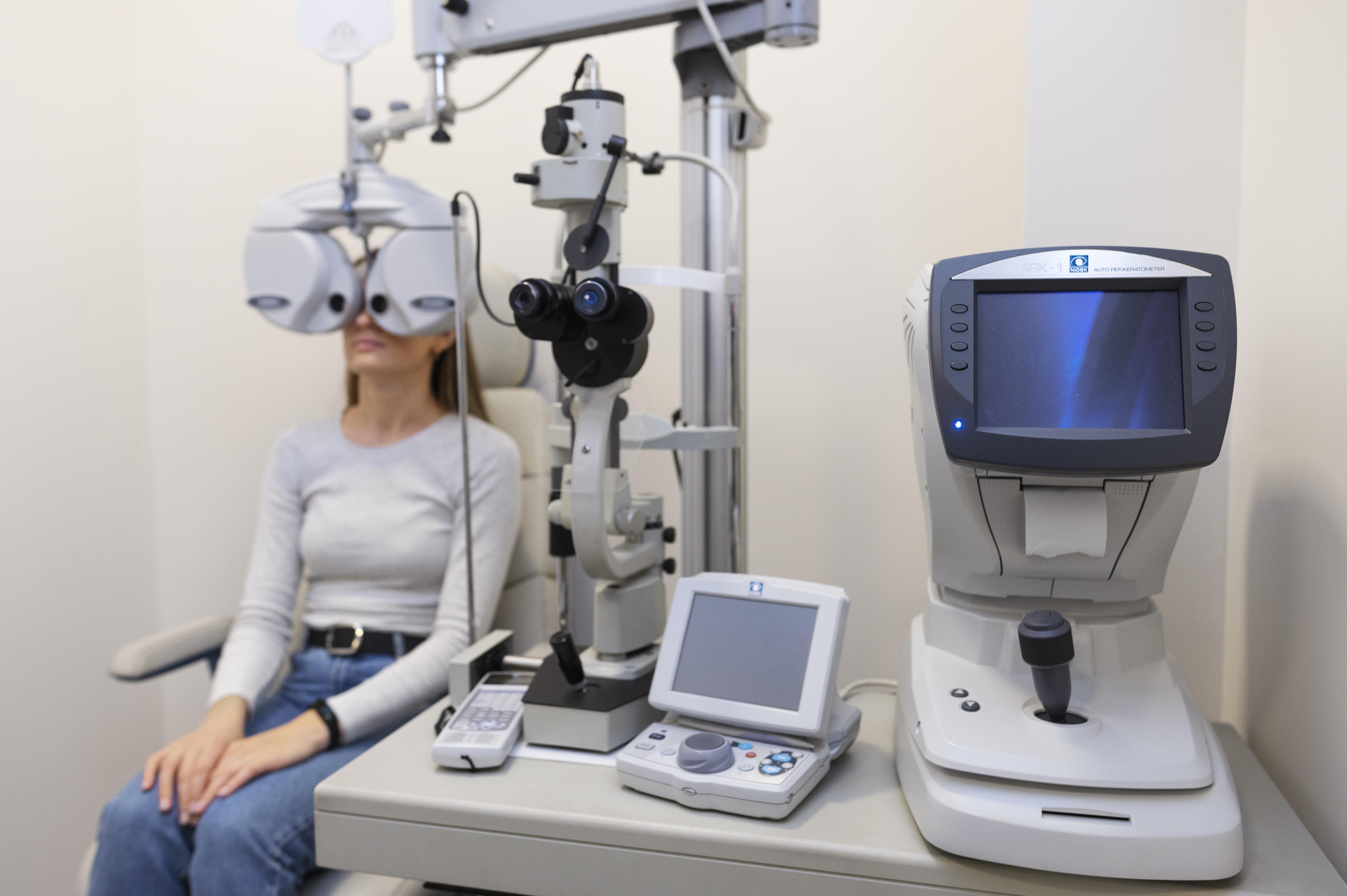
The field of ophthalmology has evolved significantly with the introduction of advanced diagnostic technologies. Among these, focused beam technology has become a key component in examining the anterior segment of the eye. The anterior portion—including the cornea, iris, anterior chamber, and lens—plays a vital role in vision, and even minor abnormalities in these structures can lead to serious visual disturbances.
To accurately assess these delicate components, clinicians require precise illumination and magnification. Focused beam technology enables eye specialists to direct a narrow, controlled beam of light onto specific areas of the eye. This approach enhances visibility and allows for a detailed evaluation of ocular structures.
As a result, focused beam technology has become essential in modern eye care. It supports early disease detection, improves diagnostic accuracy, and helps clinicians deliver better patient outcomes through more precise anterior eye analysis.
Understanding Focused Beam Technology
Focused beam technology refers to the use of a narrow and adjustable beam of light to illuminate specific areas of the eye during examination. Unlike general lighting, which spreads light across a wide surface, a focused beam concentrates illumination on a targeted region.
This targeted lighting allows clinicians to observe how light interacts with different layers of the eye. Variations in reflection, transparency, and depth provide valuable information about the health of ocular tissues. By adjusting the width, angle, and intensity of the beam, specialists can examine various structures with greater precision.
This technology is particularly useful in anterior eye analysis, where detailed observation is required to identify subtle abnormalities. Focused illumination reveals features that may not be visible under standard lighting conditions.
Enhancing Visualization of the Anterior Segment
The anterior segment of the eye contains transparent and semi-transparent tissues that require specialized lighting for proper examination. These include the cornea, aqueous humor, iris, and lens.
Focused beam technology enhances visualization by creating a sharp contrast between illuminated and non-illuminated areas. This contrast makes it easier to identify irregularities such as corneal scars, surface defects, or changes in lens clarity.
An ophthalmic slit lamp is widely used in clinical practice because it incorporates focused beam illumination along with magnification, allowing clinicians to examine the anterior structures of the eye with exceptional clarity.
Improved visualization enables eye specialists to perform more detailed and accurate examinations, ensuring that no abnormalities are overlooked.
Supporting Optical Sectioning for Depth Analysis
One of the most important applications of focused beam technology is optical sectioning. This technique involves directing a thin beam of light across the eye to create a cross-sectional view of its structures.
Optical sectioning allows clinicians to assess the depth and thickness of various tissues. For example, it helps evaluate the layers of the cornea and detect abnormalities such as swelling or thinning. It also provides valuable information about the anterior chamber and lens.
By analyzing these cross-sectional views, clinicians can gain a deeper understanding of the eye’s condition. This level of detail is essential for accurate diagnosis and effective treatment planning.
Improving Diagnostic Accuracy
Accurate diagnosis depends on the ability to observe ocular structures clearly and in detail. Many eye conditions present with similar symptoms, making it difficult to identify the exact cause without precise examination techniques.
Focused beam technology improves diagnostic accuracy by highlighting specific features of the eye. Changes in light reflection and tissue transparency can reveal the presence of infections, injuries, or degenerative conditions.
For instance, early cataracts may appear as slight clouding in the lens, while corneal infections may present as localized irregularities. Focused illumination makes these changes more visible, allowing clinicians to diagnose conditions more accurately.
This precision reduces the risk of misdiagnosis and ensures that patients receive appropriate treatment.
Enabling Early Detection of Eye Conditions
Early detection is crucial in preventing vision loss and managing eye diseases effectively. Many ocular conditions develop gradually and may not produce noticeable symptoms in their initial stages.
Focused beam technology allows clinicians to detect subtle changes in the eye’s structure before they progress into more serious conditions. Small deposits, minor inflammation, or early tissue damage can be identified with greater ease using targeted illumination.
By identifying these early signs, clinicians can begin monitoring or treatment promptly. Early intervention significantly improves patient outcomes and helps preserve long-term vision health.
Monitoring Ocular Changes Over Time
Focused beam technology also plays an important role in monitoring eye health over time. Many conditions require regular follow-up examinations to track their progression and evaluate the effectiveness of treatment.
During these examinations, clinicians can use focused illumination to compare current findings with previous observations. Even minor changes in tissue structure or clarity can be detected with precision.
For example, gradual changes in corneal thickness or lens transparency can be monitored to determine whether a condition is improving or worsening. This ongoing evaluation helps clinicians adjust treatment plans as needed.
Continuous monitoring ensures that patients receive appropriate care at every stage of their condition.
Enhancing Efficiency in Clinical Practice
Focused beam technology contributes to greater efficiency in ophthalmology clinics. Clear and detailed visualization allows clinicians to identify abnormalities quickly and confidently during examinations.
This efficiency reduces the need for repeated tests and helps streamline the diagnostic process. As a result, clinics can manage patient appointments more effectively while maintaining high standards of care.
Modern ophthalmic equipment integrates focused beam technology with advanced optical systems, enabling clinicians to perform comprehensive examinations in less time. This improves workflow and enhances overall productivity.
Improving Patient Communication and Engagement
Detailed examination findings also help improve communication between clinicians and patients. When eye specialists can clearly explain what they observe, patients gain a better understanding of their eye health.
Patients who are informed about their condition are more likely to follow treatment recommendations and attend regular check-ups. This active participation is essential for maintaining long-term vision health.
Focused beam technology supports this process by providing precise and reliable observations that clinicians can use to educate their patients.
The Future of Focused Beam Technology in Ophthalmology
Advancements in ophthalmic technology continue to enhance the capabilities of focused beam systems. Modern innovations are improving the precision, flexibility, and efficiency of these tools.
Future developments may include higher-resolution imaging, improved depth analysis, and integration with digital diagnostic platforms. These advancements will allow clinicians to perform even more detailed examinations and detect diseases earlier.
As technology evolves, focused beam systems will continue to play a central role in anterior eye analysis and overall ophthalmic care.
Conclusion
Focused beam technology has significantly improved anterior eye analysis by providing targeted illumination and enhanced visualization of ocular structures. Its ability to reveal detailed information about the cornea, iris, and lens makes it an essential tool in modern ophthalmology.
By supporting optical sectioning, improving diagnostic accuracy, and enabling early detection of eye conditions, focused beam technology contributes to better patient outcomes. It also enhances efficiency in clinical practice and strengthens communication between clinicians and patients.
As advancements in ophthalmic technology continue, focused beam systems will remain a key component of comprehensive eye examinations. Their role in improving diagnostic precision and treatment planning ensures that patients receive high-quality care and long-term protection of their vision.