


Carbide Boring Bar Applications in Modern CNC Machining
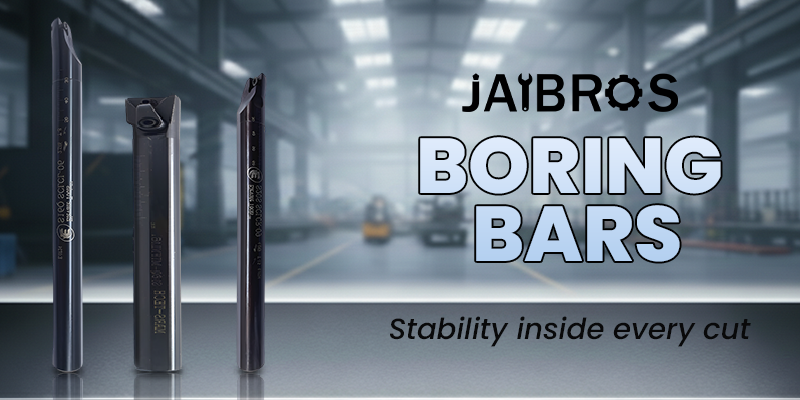
Learn the key applications of carbide boring bar tools in modern CNC machining, including automotive, aerospace, and precision internal machining processes.
Applications of Carbide Boring Bars in CNC Machining
Modern manufacturing industries rely heavily on CNC machining to produce highly accurate and complex components. From automotive parts to aerospace components, precision internal machining has become a critical requirement. One of the most important tools used for internal machining is the carbide boring bar. This tool plays a major role in improving accuracy, surface finish, and machining stability when working on internal diameters.
In modern CNC workshops, boring operations are performed after drilling to enlarge or refine holes with greater precision. As manufacturing technology evolves, machinists increasingly depend on advanced tooling solutions to achieve tight tolerances and consistent performance. Understanding how boring tools are used in different machining applications helps operators improve productivity and maintain machining quality.
Understanding Internal Machining in CNC Operations
Internal machining is the process of enlarging or finishing an existing hole inside a workpiece. Unlike drilling, which creates a new hole, boring improves the accuracy, diameter, and surface quality of that hole. This process is widely used in industries that require precise fits and smooth internal surfaces.
In a typical machining setup, operators use a specialized cnc tool designed for internal cutting. These tools must be rigid enough to handle cutting forces while operating inside the part. Because the tool extends into the workpiece, there is a greater risk of vibration or deflection if the setup is not stable.
A well-designed carbide boring bar helps reduce these issues by providing better strength and rigidity during cutting operations.
Role of Boring Tools in Modern Manufacturing
Manufacturing industries today demand high precision, repeatability, and efficiency. Internal machining operations are used in the production of engine cylinders, hydraulic components, bearing housings, and precision mechanical parts.
The carbide boring bar allows machinists to achieve the required internal dimensions with excellent accuracy. Compared with traditional steel tools, carbide tools are stronger and more resistant to wear. This makes them suitable for machining hard materials such as alloy steel, stainless steel, and cast iron.
Because of these advantages, carbide tools are widely used in modern CNC machining environments where precision and durability are essential.
Automotive Industry Applications
The automotive industry relies heavily on precision machining for engine and transmission components. Many of these parts contain internal features that must meet strict dimensional tolerances.
For example, engine blocks, cylinder liners, and gearbox housings require smooth and accurate internal surfaces. A carbide boring bar is often used to refine these internal features after drilling or rough machining.
High-performance tooling helps manufacturers produce parts with consistent quality while maintaining high production speeds.
Aerospace Manufacturing Applications
Aerospace manufacturing demands extremely high accuracy and reliability. Aircraft components must be manufactured with tight tolerances to ensure safety and performance.
Internal machining operations are commonly used for producing structural components, hydraulic systems, and engine parts. Because aerospace materials can be difficult to machine, high-strength tools such as solid carbide boring bars are frequently used.
These tools provide excellent rigidity and help reduce vibration during deep internal machining operations. As a result, manufacturers can achieve precise internal dimensions and smooth surface finishes.
Mold and Die Industry Applications
The mold and die industry also relies on internal machining to produce precise cavities and holes in molds. These molds are used to manufacture plastic components, metal parts, and industrial products.
During mold manufacturing, accurate internal dimensions are critical for ensuring that the final product meets design specifications. The carbide boring bar helps machinists achieve these dimensions with high precision.
In many cases, molds are made from hardened steel materials. Carbide tools are capable of handling such materials without losing their cutting performance.
Heavy Engineering and Industrial Equipment
Large machinery and industrial equipment often contain components with large internal diameters. Examples include hydraulic cylinders, pump housings, and machine frames.
These components require precise internal machining to ensure proper assembly and functionality. High-rigidity tools like solid carbide boring bars are used to maintain stability during long or deep boring operations.
By using strong and reliable tools, manufacturers can produce large components with excellent dimensional accuracy.
Importance of Tool Rigidity in Internal Machining
Rigidity is one of the most important factors in boring operations. When a tool lacks stiffness, vibration can occur during cutting. This vibration can damage the surface finish and reduce dimensional accuracy.
The carbide boring bar provides greater rigidity compared with many other boring tools. Carbide material has high stiffness and strength, which helps minimize deflection during machining.
This improved stability allows machinists to perform internal machining operations with better precision and smoother finishes.
Tool Selection and Machining Efficiency
Selecting the right tool for a machining job is critical for achieving optimal performance. Different boring tools are designed for different hole sizes, machining depths, and workpiece materials.
In many workshops, machinists use a carbide boring bar set that contains multiple tool sizes. This allows operators to select the correct tool for each internal diameter and machining requirement.
Proper tool selection not only improves machining accuracy but also increases productivity and reduces tool wear.
Cost Considerations in Tool Selection
When purchasing cutting tools, machinists often compare the carbide boring bar price from different suppliers. Price can vary depending on factors such as tool material, coating technology, and brand reputation.
Although cost is an important consideration, selecting high-quality tools is usually more beneficial in the long run. Durable tools provide better machining performance and longer tool life, which helps reduce overall production costs.
Investing in reliable tooling solutions ensures that machining operations remain efficient and consistent.
Future of Boring Tools in CNC Machining
As manufacturing technology continues to evolve, cutting tools are also becoming more advanced. Tool manufacturers are developing improved coatings, stronger materials, and innovative designs that enhance machining performance.
Modern CNC machines also include advanced monitoring systems that help detect tool wear and optimize cutting conditions. These innovations allow machinists to achieve greater efficiency and precision during internal machining operations.
Despite these technological advancements, the carbide boring bar will continue to remain a fundamental tool in CNC machining due to its strength, reliability, and versatility.
Conclusion
Internal machining plays a critical role in modern manufacturing industries. Achieving precise internal dimensions requires the right combination of tools, machining techniques, and machine stability.
The carbide boring bar is widely used for refining internal holes and producing high-precision components in industries such as automotive, aerospace, and heavy engineering. Its strength, rigidity, and wear resistance make it an ideal tool for demanding machining operations.
FAQs
1. What is a carbide boring bar used for?
A carbide boring bar is used in CNC machining to enlarge or finish internal holes with high precision and smooth surface quality.
2. Why are solid carbide boring bars preferred in CNC machining?
They provide higher rigidity, better vibration resistance, and longer tool life compared to traditional steel boring tools.
3. What factors affect carbide boring bar price?
The price depends on tool material, coating technology, size, brand, and overall durability of the cutting tool.
4. What industries commonly use carbide boring bars?
Industries such as automotive, aerospace, mold manufacturing, and heavy engineering commonly use boring tools for precision internal machining.
5. How do CNC operators choose the right boring tool?
Operators select tools based on hole diameter, machining depth, workpiece material, and the type of CNC tool setup used in the machining process.
Κατηγορίες
Διαβάζω περισσότερα
Why Ceramic Substrate for Automotive LED Is Becoming the Hidden Infrastructure Layer Behind Next-Generation Vehicle Lighting The automotive industry is investing billions of dollars in vehicle electrification, autonomous driving, advanced driver assistance systems, and intelligent lighting. Yet one of the most important technologies enabling this transformation remains largely...

The global trailer assist system market is witnessing a significant transformation driven by the integration of advanced sensor technologies and the rising demand for safety features in passenger and commercial vehicles. As towing remains a challenging task for many drivers, automotive manufacturers and technology providers are developing sophisticated solutions to...

According to a new report from Intel Market Research, the global Fresh Pet Food market was valued at USD 1.51 billion in 2024 and is projected to reach USD 4.82 billion by 2032, growing at an exceptional CAGR of 17.2% during the forecast period. The market is driven by rising pet humanization trends, health and wellness awareness among pet owners, and increasing demand for premium nutrition....

The FIFA World Cup 2026 is shaping up to be one of the most anticipated and transformative tournaments in football history. As excitement builds across the globe, fans, analysts, coaches, and players are preparing for an edition that promises monumental changes both on and off the field. With a brand-new expanded format, three host nations, and a record number of participating teams, the...

"Brain Tumor Diagnosis and Treatment Market Summary: According to the latest report published by Data Bridge Market Research, the Brain Tumor Diagnosis and Treatment Market The global brain tumor diagnosis and treatment market size was valued at USD 666.62 million in 2024 and is expected to reach USD 1,217.52 million by 2032, at a CAGR of 7.82% during...