Gear Rack Backlash and Transmission Efficiency
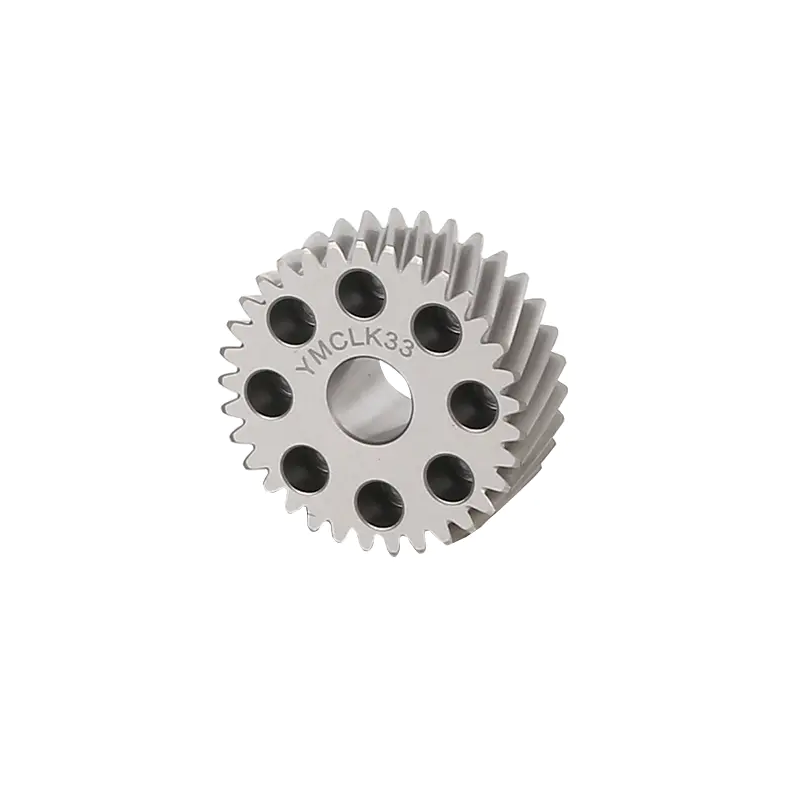
Understanding Gear Rack Performance Factors
In mechanical systems, the performance of a Precision Gear Rack is heavily influenced by its backlash and tooth profile accuracy. Backlash refers to the small clearance between mating gear teeth, while tooth profile accuracy determines how closely the actual gear shape matches the ideal design. Both factors play a critical role in linear motion precision, load distribution, and overall transmission efficiency in robotics, CNC machinery, and other automated systems.
The Role of Backlash in Transmission
Backlash in a precision gear rack system is the intentional or unavoidable gap between the teeth of the rack and its mating pinion. While some backlash is necessary to prevent binding and accommodate thermal expansion, excessive clearance can lead to positioning errors, vibration, and reduced accuracy. In high-precision applications, such as robotic arms or CNC axes, minimizing backlash is essential to maintain repeatable linear motion and precise end-point positioning.
Tooth Profile Accuracy and Smooth Operation
Tooth profile accuracy defines how closely the gear rack’s teeth conform to the designed involute shape. Deviations in the tooth shape can cause uneven meshing, jerky motion, and localized stress concentrations. High-accuracy teeth ensure smooth and uniform engagement with the pinion, reducing vibration, noise, and wear. Consistent tooth geometry is especially important in systems where precise motion and load transfer are critical to maintaining operational efficiency and product quality.
Combined Effects on Transmission Efficiency
The combination of minimal backlash and accurate tooth profiles directly impacts the efficiency of a precision gear rack system. Reduced backlash improves positioning accuracy and minimizes lost motion, while precise teeth ensure smooth load transfer and consistent velocity. Together, these factors enhance the linear motion performance, increase system lifespan, and reduce maintenance needs. Any compromise in either parameter can lead to reduced productivity, excessive wear, and potential mechanical failure.
Impact on Load Distribution and Durability
Backlash and tooth accuracy also affect how loads are distributed across the gear teeth. Uneven contact due to inaccurate tooth profiles or excessive backlash can concentrate stress on specific points, leading to premature wear or tooth deformation. A well-engineered Precision Gear Rack with minimal backlash and high tooth accuracy distributes loads evenly, resulting in improved durability and reliability under repeated or heavy-duty operations.
Practical Considerations for Selection
When selecting a precision gear rack for robotics, CNC machines, or automation systems, it is crucial to consider both backlash tolerance and tooth profile precision. Manufacturers often provide specifications for pitch accuracy, profile deviation, and allowable backlash. Choosing a gear rack that meets these parameters ensures optimal transmission performance, smooth linear motion, and long-term operational reliability.
Conclusion: Optimizing Performance Through Precision
Backlash and tooth profile accuracy are key determinants of a Precision Gear Rack’s transmission performance. Minimizing clearance while maintaining precise tooth geometry ensures smooth motion, accurate positioning, and efficient load transfer. Proper attention to these factors improves system efficiency, reduces wear, and enhances the durability of machinery in demanding applications. For engineers and designers, understanding and controlling these parameters is essential for achieving reliable, high-performance linear motion systems.
Categorias
Leia Mais
Introduction The world of premium residential design is filled with historic properties that tell an incredible story of craftsmanship, endurance, and structural artistry. Among these legendary estates, few structures command as much respect and curiosity as the iconic historical properties that have shaped our modern understanding of residential luxury. When we look at the intersection of...

In today’s digital world, speed is everything. Whether you’re opening an app, switching between pages, or simply logging in, users expect everything to happen instantly. Even a delay of a few seconds can feel frustrating. This is why performance has become one of the most talked-about aspects of any platform. And when it comes to the Reddy Anna Book App, one question keeps coming...

Summary: Diablo 4 Season 14 is bringing significant class balance changes, shifting the meta away from several dominant Season 13 builds while introducing fresh opportunities for experimentation. Although every class remains capable of clearing endgame content, Rogue appears to be the strongest all-around choice thanks to its outstanding build diversity, fast progression, and excellent endgame...

"According to the latest report published by Data Bridge Market Research, the Visceral Leishmaniasis Market The global visceral leishmaniasis market size was valued at USD 37.40 million in 2025 and is expected to reach USD 74.52 million by 2033, at a CAGR of 9.00% during the forecast period Thorough and transparent research studies conducted by a team...

Interior design trends continue to evolve, but one element that never goes out of style is marble. Known for its luxurious appearance and timeless elegance, marble has long been a favorite choice for homeowners, architects, and interior designers. Today, luxury marble sheets are transforming modern interiors by offering the beauty of natural marble in a more practical, lightweight, and...