


Steer-by-Wire System Market Evolution and Technical Architecture
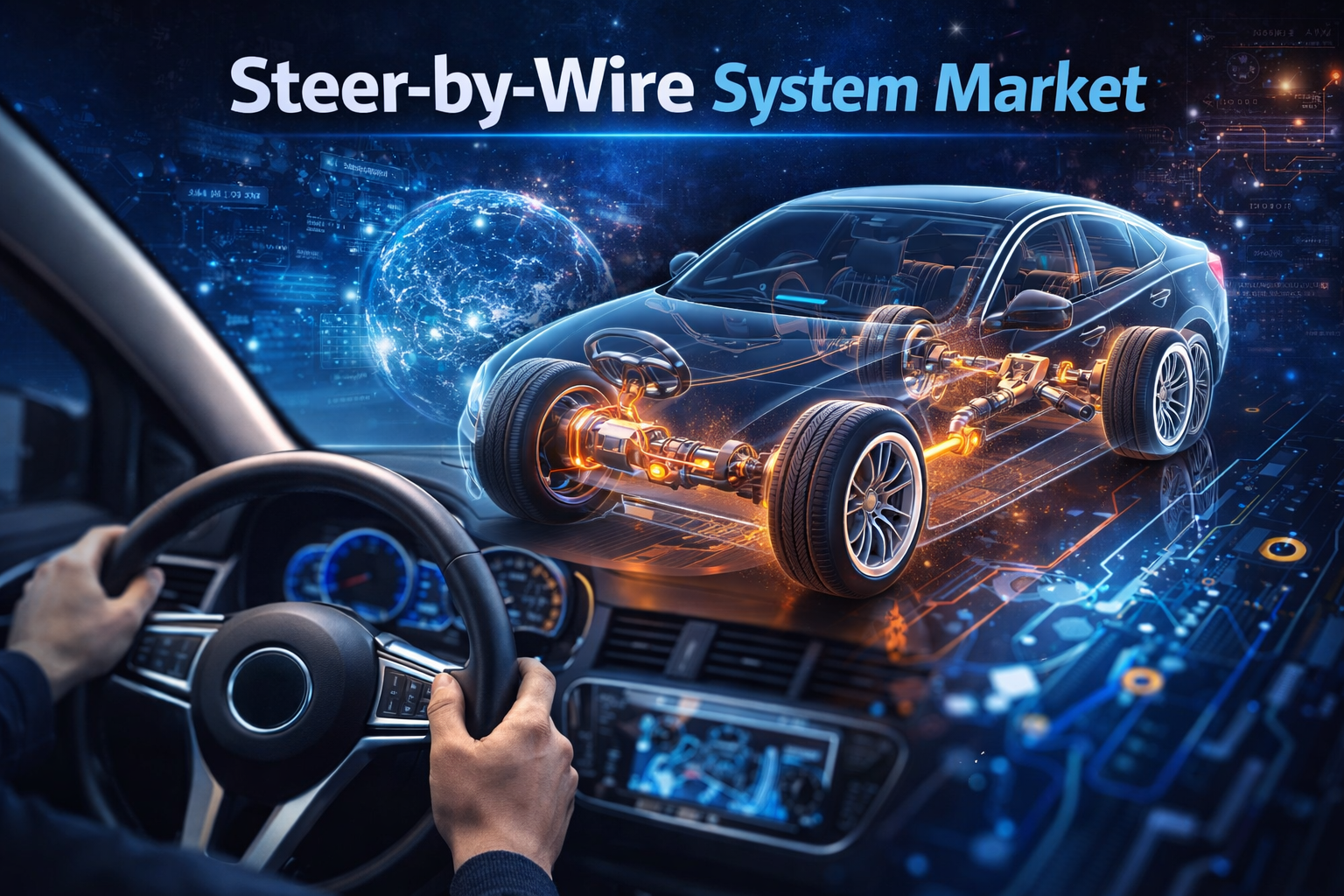
The Steer-by-Wire System Market is currently undergoing a massive transformation as the automotive industry shifts toward full electrification and autonomous driving capabilities. Traditional steering mechanisms that rely on a physical connection between the steering wheel and the tires are being replaced by sophisticated electronic interfaces. In a steer-by-wire configuration, the mechanical steering column is removed entirely and replaced by sensors, actuators, and electronic control units. This transition represents a significant leap in automotive engineering, allowing for greater design flexibility, improved safety protocols, and a more seamless integration with advanced driver assistance systems.
Mechanism and Components of Electronic Steering
The fundamental operation of these systems relies on the transmission of signals rather than mechanical force. When a driver turns the steering wheel, sensors detect the angle and speed of the rotation. This data is processed by a central controller which then instructs electric motors located at the wheel rack to turn the tires accordingly. This lack of a physical link reduces the weight of the vehicle, which is a critical factor for increasing the range of electric cars. Furthermore, the absence of a steering column enhances cabin safety by eliminating a rigid component that could injure a driver during a high speed collision.
Download Sample PDF:https://www.theinsightpartners.com/sample/TIPRE00006344
Integration with Autonomous Driving Technology
One of the primary drivers for this technology is the rise of self driving vehicles. For a computer to take control of a vehicle effectively, it needs a steering system that can be manipulated through software commands rather than mechanical inputs. Steer by wire allows the onboard computer to execute precision maneuvers without the steering wheel moving physically in the cabin, if desired. This capability is essential for autonomous vehicles where the interior cabin might be redesigned for leisure or work, requiring the steering wheel to retract or remain stationary.
Design Flexibility and Cabin Ergonomics
Automotive designers are finding new freedom thanks to the removal of the steering shaft. Without the need for a straight mechanical path from the dashboard to the front axle, engineers can rethink the entire layout of the engine bay and the passenger compartment. This leads to more spacious interiors and the ability to offer right hand drive or left hand drive versions of the same vehicle with minimal structural changes. Additionally, the digital nature of the system allows for customizable steering feels, where the driver can choose between a sporty, firm response or a light, comfortable feel through a simple software setting.
Industry Partnerships and Innovation Trends
Strategic collaborations between traditional automotive giants and technology firms are accelerating the pace of innovation. These partnerships focus on developing highly reliable actuators and software algorithms that can simulate road feel for the driver. By sharing research and development costs, companies are able to bring these complex systems to the mass market faster than previously anticipated. This collaborative environment is also fostering new standards for data communication within the vehicle network, ensuring that steering commands are prioritized and transmitted with zero latency.
Recent Developments in Steering Automation
The industry has witnessed a surge in production ready applications and successful road tests involving fully decoupled steering systems. Major manufacturers are now showcasing prototype vehicles that feature foldable steering wheels and reconfigurable cockpit layouts. These advancements are not limited to passenger cars, as commercial vehicle developers are also testing the technology for long haul trucking applications. Within the current landscape of the Steer-by-Wire System Market Recent Developments , the focus has shifted toward enhancing the haptic feedback systems to ensure drivers maintain a tactile connection to the road surface even without a mechanical link.
Reliability and Redundancy Protocols
Safety remains a top priority for manufacturers developing these electronic systems. Because there is no backup mechanical link, these systems are built with multiple layers of redundancy. This usually involves dual power supplies, multiple independent sensors, and backup electronic control units that can take over instantly if the primary system fails. These fail safe mechanisms ensure that the driver maintains control over the vehicle at all times, matching or exceeding the safety standards of traditional hydraulic or electric power steering systems.
Steer-by-Wire System Market Key Players
-
Bosch
-
Nexteer Automotive
-
JTEKT Corporation
-
Thyssenkrupp AG
-
NSK Ltd
-
ZF Friedrichshafen AG
-
Danfoss
-
Mando Corporation
Market Segmentation and Regional Growth
The demand for these systems is particularly high in regions like Europe and North America where luxury vehicle sales and electric vehicle adoption are most prevalent. However, the Asia Pacific region is expected to see the fastest growth due to the massive scale of automotive production in China and Japan. Manufacturers in these regions are investing heavily in research and development to bring down the cost of electronic steering components, making them more accessible for mid range passenger cars and commercial fleets.
Impact on Commercial Vehicles and Logistics
Beyond passenger cars, the commercial trucking sector is showing great interest in this technology. Large trucks equipped with electronic steering can utilize advanced lane keeping features and platooning technology more effectively. By reducing the physical strain on long haul drivers and improving the precision of low speed maneuvers in tight loading docks, these systems contribute to higher efficiency and safety in the logistics industry. The integration of haptic feedback also allows drivers to receive tactile warnings through the steering wheel about road conditions or potential hazards.
Future Outlook
The future of this technology points toward a world where the steering wheel as we know it may become optional or entirely digital. As software continues to define the automotive experience, steer by wire will serve as the backbone for fully software defined vehicles. We can expect to see advancements in force feedback technology that perfectly mimics the feel of the road while filtering out unwanted vibrations. As regulatory frameworks evolve to support the removal of mechanical links, the adoption rates will likely skyrocket, turning what was once a futuristic concept into a standard feature across the global automotive landscape.
Related Reports:
About Us
The Insight Partners is a leading global market research and consulting firm specializing in delivering actionable insights across various industries. Our research reports combine extensive primary and secondary research to provide accurate market intelligence, helping businesses make informed strategic decisions. The company provides detailed analysis on emerging technologies, market trends, competitive landscapes, and growth opportunities across sectors including technology, healthcare, manufacturing, and energy.
Contact Us
The Insight Partners
Phone: +1-646-491-9876
Email: sales@theinsightpartners.com
Website: https://www.theinsightpartners.com
Categorias
Leia mais
The HMDD Clothing has become an important piece in modern streetwear fashion, offering a combination of comfort, versatility, and effortless style. As fashion continues to move toward relaxed and functional clothing, shorts have evolved from simple summer wear into year-round wardrobe essentials. Designed for individuals who appreciate both comfort and style, the HMDD Short delivers a...

If you're still dragging the same launch-week classes into Season 02, you've probably felt it: you peek a lane, get deleted, and wonder when the game sped up. It didn't just speed up—its whole rhythm changed, especially with the new "special-category" weapons. A lot of players are even pairing their grind with cheap CoD BO7 Boosting so they can actually test these tools in real matches...

What Are MetaBurn Capsules? MetaBurn Capsules are a daily dietary supplement formulated to support metabolic performance, balanced energy, and overall internal wellness. The formula combines plant-based ingredients, dietary fiber, and antioxidants that work together to complement the body's natural metabolic processes. Unlike products that rely on stimulants or short-term approaches, MetaBurn...

Introduction Mental health practices across the USA are experiencing unprecedented demand. From private therapy clinics and psychiatric practices to behavioral health centers and counseling groups, providers are helping more patients than ever before. However, while patient care remains the primary focus, managing complex billing processes has become a growing challenge. Unlike many other...

Sports betting has grown more and more popular with fans who like watching their teams and events. Now online websites make it much easier than before to look at sports bets from just one account. No matter if you like cricket, football, tennis, or other big sports events around the world, picking the right site can make your whole experience better. Laser247 gives access to sports bets through...
