Why Manufacturers Prefer Thread Mill Over Tapping
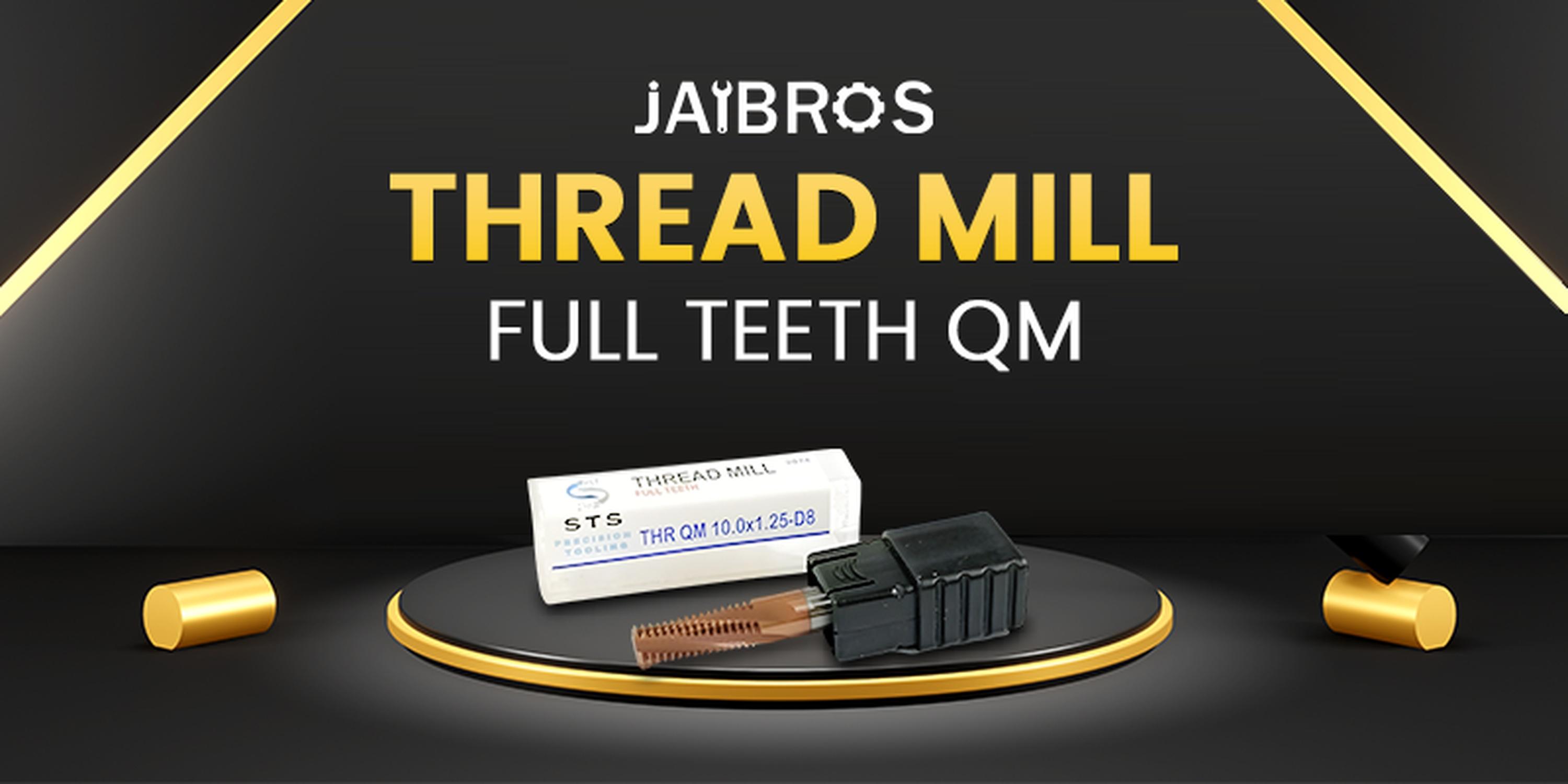
How Thread Mill Outperforms Conventional Threading Methods
Precision, efficiency, and flexibility are the key factors in the success of modern manufacturing enterprises. As the machining industry moves into a higher gear, the demand for cutting tools has increased manifold. Of the cutting tools, the thread mill has become a popular choice in place of conventional methods of threading, such as tapping. The industry is adopting this tool for its efficiency and the quality of threads produced.
Understanding Thread Milling
Thread milling is a machining procedure in which a cutting tool is rotated to create threads in a hole or on a surface. Unlike the usual tapping procedure, which requires a specific tool to create specific threads, a thread mill can create a variety of threads of different sizes with high precision. This is a very vital procedure in today’s computer-controlled operations.
A tool used in thread milling is a helical interpolation path, which reduces the cutting tool and workpiece stress to a great extent.
Key Reasons Manufacturers Prefer Thread-Milling
1. Superior Flexibility
One of the major advantages of using a thread-mill is that it is very flexible. A variety of threads can be cut using a single tool. This is very beneficial to industries that need to work with different types of threads.
2. Reduced Tool Breakage
Taps are often broken, especially when working on hard materials or deep holes. A broken tap is very difficult to remove, which can lead to damage to the workpiece. A thread mill, on the other hand, cuts the threads very smoothly, thus reducing the chances of breaking the tool.
3. Improved Thread Quality
Thread milling is a very accurate way of cutting threads compared to other methods. It is very beneficial in industries that need to work on precise threads.
4. Better Chip Control
Chip removal is a common problem in threading. Ineffective chip removal can result in damage to the tools and poor quality of the threads. Thread milling provides effective chip removal, which prevents the accumulation of heat and improves the performance of the machining process.
5. Cost-Effectiveness
The initial cost of the thread mill tool might be high, but it provides cost-effectiveness in the long term. Fewer tools are needed, the tools can be used for a longer period, and the chances of scrap are minimal. Moreover, the tools can be better managed by the manufacturers.
6. Compatibility with Advanced CNC Tools
Machining processes heavily depend on the use of CNC tools, which are automated tools. Thread-milling tools are compatible with CNC tools, which improve the performance of the process.
Thread-Mill vs Conventional Methods
When you compare the process of thread-milling with tapping, the advantages and differences are quite evident:
-
Flexibility—Thread milling enables the use of more than one size in a single tool, unlike tapping, where a separate tool is needed.
-
Tool Life—Thread milling tools have a longer life because the cutting force is less.
-
Safety—There is less risk of tool breakage and workpiece damage.
-
Precision—There is more control over the size and finish.
Applications of Thread-Milling
Thread-milling is widely used in different industries due to its adaptability and precision. Some of its applications include:
-
Manufacturing of engine parts
-
Aerospace parts requiring accurate measurements
-
Medical equipment with fine threads
-
Mold and die making
-
General engineering components
With the growing need for quality products,milling is being adopted as a reliable method.
Role of CNC Technology in Thread-Milling
The integration of CNC tool systems has greatly revolutionized the process of milling. The advantage of a CNC machine lies in its ease of programming complex thread paths, which enables users to achieve desired results with multiple cycles of production.
In addition, with the evolution of technology, businesses can easily acquire tools from a reliable online shop for CNC tools in India, which enables them to stay competitive in a dynamic business environment.
Factors Affecting Thread-Milling Performance
However, to obtain the best results, there are certain factors that need to be taken into consideration. These factors are as follows:
-
Tool material and coating
-
Cutting speed and feed rate
-
Workpiece material
-
Machine rigidity
-
Cooling and lubrication
This will help to obtain the maximum efficiency from the thread-mill.
Thread Milling Machine Price Considerations
The cost of implementation of thread milling also depends on various factors. The cost of a thread milling machine can vary, but it is worth it in the long run. The benefits of a thread milling machine can be seen in productivity, reduced machine downtime, and quality of products.
Jaibros: Reliable CNC Tooling Partner
Jaibros Tools Pvt. Ltd. is a renowned company in the industry of industrial cutting tools and machine tools in India. The company provides a broad spectrum of products such as threading tools, milling cutters, etc., which cater to the needs of the industry.reliable online shop for CNC tools in India. The company is focused on providing the best quality products that improve the performance of the machine while ensuring the desired output in the industry.
Conclusion
The move away from traditional threading practices and towards thread milling is a result of the need for precision, efficiency, and flexibility. The thread-mill has a number of benefits, including improved quality, reduced tool failure, and integration with modern CNC equipment. The need for innovative solutions, as seen with milling, is a result of the constant evolution of the industry.
By investing in the right equipment, manufacturers can improve their productivity.
FAQs
1. What is a thread-mill used for?
A thread-mill is used for making threads on a material using a computer numerical control machine, giving greater precision and flexibility.
2. How is thread-milling different from tapping?
A thread-mill is a tool used for making threads on a material using a computer numerical control machine. It is different from tapping, where a tool is used to make threads. Thread-milling is a precise and flexible tool for making threads, and the chances of breakage of the tool are low.
3. Can one thread mill tool create different thread sizes?
Yes, a single tool for thread-milling can make various sizes of threads, giving greater flexibility to the tool.
4. Is thread-milling suitable for hard materials?
Yes, thread-milling is suitable for hard materials, as it does not produce stress and heat, reducing the chances of tool breakage.
5. What factors affect thread-milling performance?
Cutting speed, feed rate, tool material, and chip evacuation.
Categorii
Citeste mai mult
The Patriots vs Lions matchup was nearly impacted by a major scare at practice this week. Star quarterback Drake Maye went down after a heavy collision. A defensive player hit him during a team drill. The entire coaching staff held their collective breath. This dramatic physical event happened right before the highly anticipated Patriots vs Lions summer matchup. Football fans need to act...

Trong thời đại công nghệ số phát triển mạnh mẽ, nhu cầu giải trí trực tuyến ngày càng gia tăng. Giữa rất nhiều nền tảng hiện nay, VG99 nổi bật như một thương hiệu uy tín và chất lượng, không ngừng mang đến những trải nghiệm giải trí hấp dẫn cho người dùng. Với sự đầu tư nghiêm túc và chiến lược...

Swalin Pregabalin 300mg is a prescription drug primarily used to manage neuropathic pain, a form of pain caused by nerve damage or dysfunction. It belongs to the class of medications called anticonvulsants, although it is more commonly recognized for its pain-relieving qualities than for treating seizures. Pregabalin is particularly beneficial for illnesses such as diabetic neuropathy,...
Industrial Predictive Maintenance: Enhancing Operational Efficiency in Smart Manufacturing Industrial predictive maintenance is transforming the way industries manage machinery, optimize production processes, and reduce operational risks. By leveraging advanced technologies such as artificial intelligence (AI), machine learning (ML), Industrial Internet of Things (IIoT), and big data...

Cosmetic dentistry has become one of the most sought-after dental services today, with people from all walks of life wanting brighter, straighter, and more confident smiles. But the biggest concern many patients have is affordability—can high-quality cosmetic dental work truly be accessible? With Dr. Jack Ringer, a leading Dentist in Anaheim CA, the answer is absolutely yes. Modern dental...