Choosing Between 4140 vs 4130 Steel: A Practical Guide for Your Projects
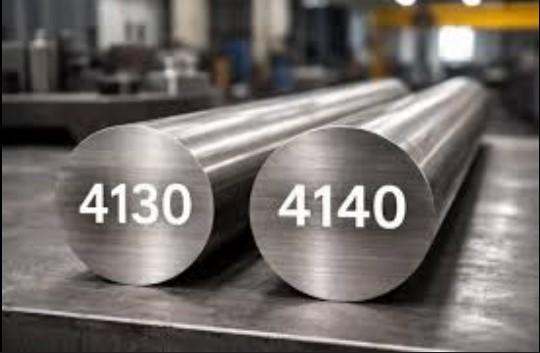
Steel selection can make or break your project, whether you’re working on automotive parts, machinery components, or structural frameworks. Two popular alloy steels often come up in discussions are 4140 and 4130. Understanding their differences, applications, and properties will help you make the right choice. In this article, I’ll share my insights to help you decide which steel is best for your specific needs.
Introduction to 4140 and 4130 Steel
When comparing steels, it’s important to look at both chemical composition and mechanical properties. These factors influence strength, hardness, machinability, and weldability. 4140 vs 4130 steel are both chromium-molybdenum alloy steels widely used in engineering and fabrication. They share some similarities but also have distinct characteristics that can determine their suitability for certain projects.
4140 steel contains higher carbon content compared to 4130, which generally gives it higher strength and hardness. Meanwhile, 4130 steel offers better weldability and ductility, making it easier to work with in applications where shaping and joining are critical.
Key Differences Between 4140 and 4130
Understanding the differences helps in selecting the right alloy:
-
Chemical Composition
-
4140 Steel: Approximately 0.38–0.43% carbon, 0.8–1.1% chromium, 0.15–0.25% molybdenum.
-
4130 Steel: Around 0.28–0.33% carbon, 0.8–1.1% chromium, 0.15–0.25% molybdenum.
The slightly higher carbon content in 4140 makes it harder and stronger, while 4130’s lower carbon gives better toughness and flexibility.
-
-
Mechanical Properties
-
Tensile Strength: 4140 steel can reach 95,000–105,000 psi after heat treatment, whereas 4130 typically ranges between 90,000–95,000 psi.
-
Yield Strength: 4140 has higher yield strength, making it more resistant to deformation under load.
-
Hardness: 4140 achieves higher Rockwell hardness, making it more suitable for applications requiring wear resistance.
-
-
Weldability and Machinability
4130 steel is easier to weld and less prone to cracking, making it ideal for projects requiring heavy welding or complex assemblies. 4140, while weldable, requires preheating and post-weld treatments to avoid brittleness. Machining 4140 is also slightly more challenging due to its hardness. -
Corrosion Resistance
Neither 4140 nor 4130 are stainless steels, so corrosion resistance is moderate. For outdoor or humid environments, coating, plating, or painting may be necessary to prevent rust.
Common Applications
Knowing where each steel performs best is critical for making a decision.
-
4140 Steel Applications:
-
Heavy-duty machinery components
-
Gears, shafts, and spindles
-
Automotive crankshafts and axles
-
High-stress structural parts
4140’s high strength and wear resistance make it ideal for applications under continuous stress and impact.
-
-
4130 Steel Applications:
-
Aircraft structural components
-
Roll cages and bicycle frames
-
Piping and tubing for pressure vessels
-
Projects requiring extensive welding
Its excellent toughness, weldability, and moderate strength make 4130 suitable for lightweight, durable, and welded structures.
-
Heat Treatment Considerations
Heat treatment can significantly alter the properties of both alloys.
-
4140 Steel:
-
Commonly quenched and tempered to increase strength and hardness.
-
Suitable for high-stress applications where durability is critical.
-
-
4130 Steel:
-
Can be normalized or tempered to improve toughness.
-
Overheating can reduce ductility, so controlled heating is essential.
-
Understanding how your project will use heat treatment can help determine which alloy is more practical.
Cost and Availability
Both 4140 and 4130 steels are widely available, but cost can vary slightly depending on supply, size, and form (sheet, plate, bar, or tubing). Generally:
-
4130 is slightly cheaper due to lower carbon content and easier machinability.
-
4140 may cost more but provides superior strength and wear resistance, offering long-term value for heavy-duty applications.
Choosing the Right Steel for Your Project
When deciding between 4140 vs 4130 steel, consider the following factors:
-
Strength Requirements – If your project involves high load or impact, 4140 may be the better choice.
-
Welding and Fabrication – For projects requiring extensive welding, 4130 is easier to work with.
-
Machining Complexity – 4140 requires more effort for machining, while 4130 is more forgiving.
-
Environmental Exposure – If corrosion is a concern, both require protective coatings.
-
Budget – Factor in not only material cost but also processing, labor, and potential maintenance.
By assessing these points, you can match the steel to your project’s exact needs rather than making a guess.
Real-World Example
I once worked on a custom automotive suspension project where both alloys were considered. Initially, 4130 seemed ideal for welding ease, but we needed higher load resistance for the main suspension arms. After consulting material specs and heat treatment options, we chose 4140 steel. Post-treatment, the components handled extreme stress without deforming, while smaller welded supports used 4130 to save weight and improve fabrication speed. This combination leveraged the best qualities of both alloys.
Conclusion
Choosing between 4140 vs 4130 steel doesn’t have to be complicated. By understanding their chemical compositions, mechanical properties, applications, and fabrication requirements, you can make an informed decision.
-
Use 4140 steel when strength, wear resistance, and high-stress durability are priorities.
-
Use 4130 steel when weldability, toughness, and moderate strength are more critical.
Selecting the right alloy not only ensures project success but also optimizes cost, durability, and ease of construction. For any engineer, fabricator, or DIY enthusiast, knowing these details can prevent costly mistakes and help deliver high-quality results every time.
Categories
Read More
Introduction The world is warming up to a smarter way of generating heat and at the center of this revolution are graphene heating films. These ultra-thin, conductive panels generate warmth when electric current passes through a graphene-based coating, delivering uniform, rapid, and energy-efficient heating in a fraction of the space that conventional systems demand. From the cabin of an...

" According to the latest report published by Data Bridge Market Research, the Glioblastoma Multiforme Treatment Market CAGR Value Global glioblastoma multiforme treatment market size was valued at USD 3.09 billion in 2024 and is projected to reach USD 6.44 billion by 2032, with a CAGR of 8.90% during the forecast period of 2025 to 2032. The large scale Glioblastoma Multiforme...

"Cooling System for Edge Computing Market Summary: According to the latest report published by Data Bridge Market Research, the Cooling System for Edge Computing Market The global cooling system for edge computing market size was valued at USD 1.77 billion in 2025 and is expected to reach USD 4.15 billion by 2033, at a CAGR of 11.2% during the forecast period An international Cooling...
Spoken English is the ability to communicate clearly and confidently in everyday conversations using the English language. It focuses on pronunciation, vocabulary, sentence formation, and listening skills to improve real-life communication. Learning spoken English helps people express their thoughts, share ideas, and understand others easily. Regular practice, speaking with others, and...
Access to quality education is the foundation of an inclusive society, yet many children continue to face barriers that limit their learning opportunities. Education Equity is about ensuring that every learner receives the support, resources, and opportunities they need to succeed, regardless of their background, gender, location, or socio-economic status. At the heart of this mission is...