Break-Fix Support vs Continuous Operations: A Technical Comparison of Server Support Frameworks
Introduction
As IT infrastructure evolves into distributed and high-availability systems, the approach to maintaining servers has become a critical engineering concern. Systems today are expected to operate with minimal downtime, handle unpredictable workloads, and maintain consistent performance across environments.
This has led to the emergence of structured it server support services, which differ significantly from traditional break-fix models. The comparison between these approaches reveals how infrastructure reliability is shaped by operational design rather than hardware capability.
Operational Philosophy: Reactive vs Continuous Support
Break-Fix Model
The break-fix approach is based on reactive intervention:
-
Systems are monitored minimally
-
Issues are addressed only after failure
-
Troubleshooting is event-driven
This model assumes that failures are inevitable and focuses on resolving them after they occur.
Continuous Support Model
Continuous support introduces a proactive operational layer:
-
Real-time monitoring across all system metrics
-
Predictive analysis to identify anomalies
-
Preventive actions before failure occurs
Modern frameworks like it server support services are structured around continuous evaluation rather than reactive response.
Monitoring Systems: Threshold Alerts vs Observability Platforms
Break-Fix Monitoring
-
Static thresholds (CPU, memory, disk usage)
-
Alerts triggered only after limits are exceeded
-
Limited insight into system trends
This results in delayed detection and reactive troubleshooting.
Observability-Driven Monitoring
-
Time-series data collection across metrics
-
Correlation between infrastructure components
-
Root cause analysis through distributed tracing
Observability platforms enable engineers to understand system behavior holistically rather than reacting to isolated alerts.
Incident Handling: Manual Response vs Automated Recovery
Break-Fix Approach
-
Engineers manually investigate failures
-
Recovery depends on response time
-
High Mean Time to Recovery (MTTR)
This leads to prolonged downtime and inconsistent recovery outcomes.
Continuous Support Approach
-
Automated health checks detect anomalies
-
Services restart or failover automatically
-
Recovery processes are predefined and repeatable
This reduces downtime and improves system resilience.
Patch Management: Irregular Updates vs Controlled Deployment Pipelines
Break-Fix Model
-
Updates applied inconsistently
-
No structured testing or validation
-
Increased risk of compatibility issues
Unpatched systems are a major source of security vulnerabilities.
Continuous Support Model
-
Scheduled patch cycles
-
Testing in staging environments
-
Rollback mechanisms for failed updates
Controlled patching ensures system stability while maintaining security compliance.
Resource Utilization: Static Allocation vs Dynamic Optimization
Break-Fix Systems
-
Fixed resource allocation
-
No adaptation to workload patterns
-
Risk of overloading or underutilization
Continuous Support Systems
-
Real-time resource monitoring
-
Predictive scaling based on usage trends
-
Efficient distribution of workloads
This improves performance while reducing operational costs.
Security Model: Reactive Defense vs Continuous Hardening
Break-Fix Security
-
Vulnerabilities addressed after detection
-
Periodic audits instead of continuous monitoring
-
Higher exposure to threats
Continuous Security Enforcement
-
Real-time vulnerability scanning
-
Automated patch deployment
-
Policy-driven access control
Continuous hardening significantly reduces the attack surface and improves compliance readiness.
System Scalability: Linear Growth vs Automated Expansion
Break-Fix Infrastructure
-
Scaling requires manual intervention
-
Complexity increases with infrastructure size
-
Limited ability to handle rapid growth
Continuous Support Infrastructure
-
Designed for horizontal scaling
-
Automation handles increased workload
-
Infrastructure adapts dynamically
This makes modern it server support services essential for scalable environments.
Cost Structure: Hidden Costs vs Predictable Operations
Break-Fix Model
-
Lower upfront cost
-
High hidden costs due to downtime
-
Emergency fixes increase expenses
Continuous Support Model
-
Predictable operational costs
-
Reduced downtime-related losses
-
Improved long-term efficiency
Downtime costs often exceed the investment required for proactive support.
Complexity Management: Fragmented Tools vs Integrated Systems
Break-Fix Approach
-
Separate tools for monitoring, patching, and security
-
Lack of integration
-
Increased operational overhead
Continuous Support Approach
-
Centralized management platforms
-
Integrated monitoring and automation
-
Policy-driven operations
Unified systems simplify infrastructure management and improve efficiency.
Reliability Metrics: Reactive Stability vs Engineered Resilience
Break-Fix Systems
-
Reliability depends on response time
-
Frequent disruptions under load
-
Inconsistent performance
Continuous Support Systems
-
Reliability engineered through monitoring and automation
-
Stable performance under varying workloads
-
Reduced failure rates
This shift from reactive stability to engineered resilience defines modern infrastructure.
When Each Approach Works Best
Break-Fix Model Is Suitable If:
-
Infrastructure is small and non-critical
-
Downtime has minimal impact
-
Budget constraints limit automation
Continuous Support Model Is Necessary If:
-
Systems handle production workloads
-
High availability is required
-
Infrastructure is growing or distributed
Conclusion
The difference between break-fix and continuous support is not just operational—it is architectural. One approach reacts to problems, while the other is designed to prevent them.
From a technical perspective, it server support services provide a structured framework for monitoring, optimization, and recovery across complex systems. Break-fix models may still exist in smaller environments, but they fail to meet the demands of modern infrastructure.
In high-performance systems, reliability is not achieved by fixing issues quickly—it is achieved by ensuring those issues rarely occur in the first place.
Categorii
Citeste mai mult
According to the latest report published by Data Bridge Market Research, the BVLOS Drone Market As per Data Bridge Market Research Analysis, the BVLOS Drone Market was valued at USD 13.68 billion in 2025 and is projected to reach USD 43.18 billion by 2033, growing at a CAGR of 15.45% from 2026 to 2033. BVLOS drones are unmanned aerial systems capable of operating...

Polaris Market Research has published a new report titled 4PL Logistics Market Share, Size, Trends, Industry Analysis Report, By Type (Synergy Plus Operating Model, Solution Integrator Model, Industry Innovator Model), By End-User (Aerospace & Defense, Automotive, Consumer Electronics, Food & Beverages, Industrial, Healthcare, Retail, Others); By Region; Segment Forecast, 2022 -...

According to the latest report published by Data Bridge Market Research, the Collateral Ligament Stabilizer System Market CAGR Value The global collateral ligament stabilizer system market size was valued at USD 2.33 billion in 2025and is expected to reach USD 3.91 billion by 2033, at a CAGR of 6.70% during the forecast period Collateral Ligament...
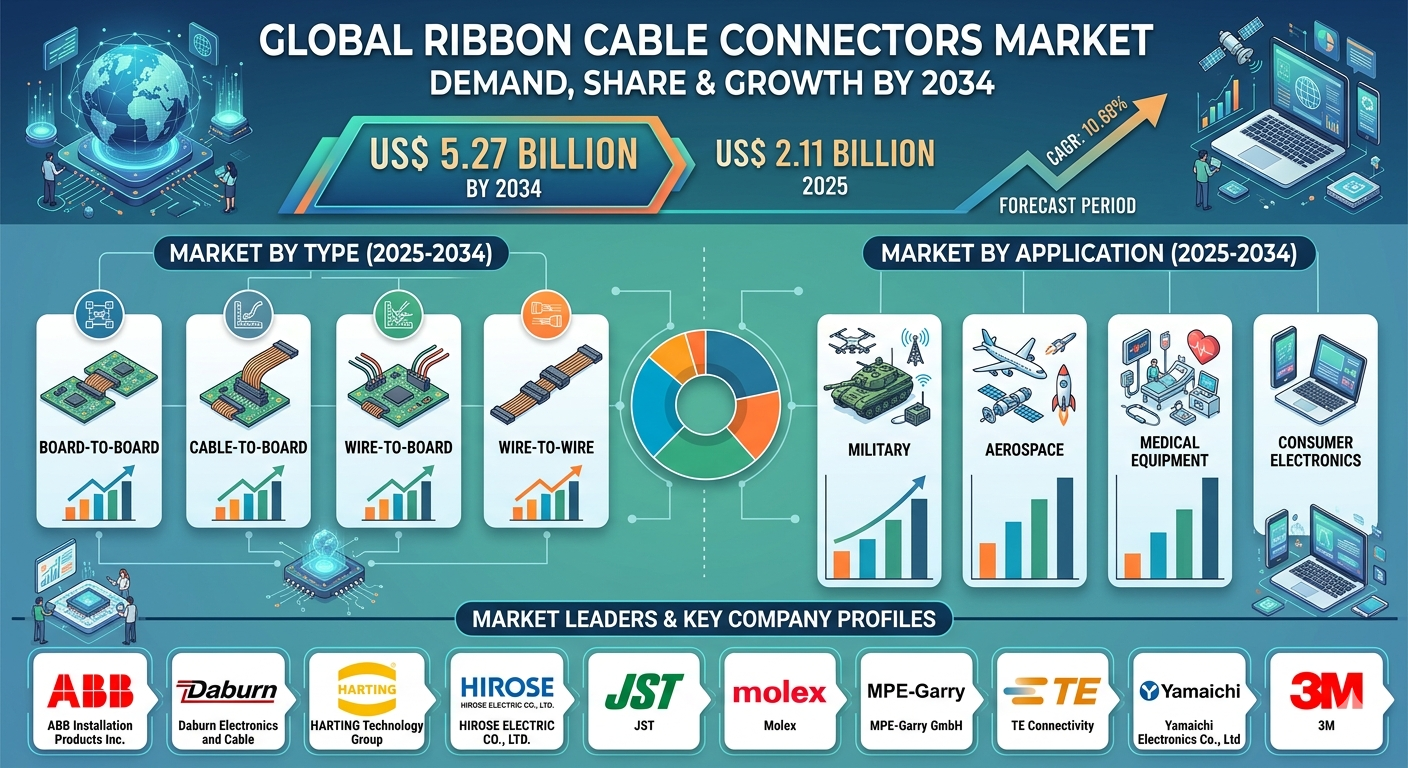
The demand for high-performance electronic interconnect solutions is accelerating rapidly due to the expansion of advanced technologies such as consumer electronics, aerospace systems, and industrial automation. Ribbon cable connectors, known for their compact structure and efficient signal transmission, are becoming essential components across multiple industries. Their ability to support...
The Inland Waterway Tourism market is experiencing remarkable growth as travelers increasingly seek unique, eco-friendly, and leisurely vacation experiences. As per MRFR analysis, the rising popularity of river cruises, scenic boating tours, and adventure-focused inland water experiences is driving market expansion globally. Operators are focusing on enhancing passenger comfort,...