ISO Certification Explained: Process, Benefits, and Standards
In today’s competitive global market, businesses must demonstrate quality, reliability, and compliance to gain customer trust. This is where ISO Certification plays a crucial role. Whether you are a small enterprise or a large corporation, obtaining ISO certification helps improve operational efficiency and enhances your brand credibility across industries.
What is ISO? (ISO Full Form)
ISO stands for the International Organization for Standardization. It is an independent, non-governmental organization that develops international standards to ensure the quality, safety, and efficiency of products, services, and systems. These standards are recognized worldwide and help businesses maintain consistency and reliability.
Understanding ISO Certification
ISO Certification is an official recognition that a company complies with specific international standards set by ISO. It assures customers and stakeholders that the organization follows well-defined processes and maintains quality in its operations.
There are various ISO standards available depending on the nature of the business. Some of the most popular ones include ISO 9001 for quality management, ISO 14001 for environmental management, and ISO 27001 for information security.
What is ISO 9001 Standard?
The ISO 9001 Standard is one of the most widely adopted standards globally. It focuses on Quality Management Systems (QMS) and helps organizations ensure that their products and services consistently meet customer requirements.
ISO 9001 is based on key principles such as:
- Customer focus
- Leadership involvement
- Process approach
- Continuous improvement
Implementing ISO 9001 helps businesses streamline processes, reduce errors, and improve customer satisfaction.
Importance of ISO Standards
ISO Standards provide a structured framework that helps organizations maintain consistency and efficiency. These standards are designed to:
- Improve product and service quality
- Enhance customer trust
- Ensure regulatory compliance
- Reduce operational risks
- Increase market opportunities
By adopting ISO standards, businesses can compete effectively in both domestic and international markets.
ISO Registration Process
The ISO Registration process involves several steps that ensure a company meets the required standards. Although the process may vary depending on the certification body and standard, the general steps include:
- Gap Analysis
The organization evaluates its current processes against ISO requirements to identify gaps. - Documentation Preparation
Policies, procedures, and manuals are created to align with the chosen ISO standard. - Implementation
The organization implements the documented processes across all departments. - Internal Audit
An internal audit is conducted to verify compliance and identify areas for improvement. - Certification Audit
A third-party certification body conducts an external audit. - Issuance of Certificate
Once compliance is confirmed, the ISO certificate is issued.
This process ensures that the organization meets international quality benchmarks.
ISO Certificate Registration Benefits
Obtaining ISO Certificate Registration offers numerous advantages for businesses:
- Enhanced Credibility: Builds trust among customers and stakeholders
- Improved Efficiency: Streamlines internal processes
- Global Recognition: Opens doors to international markets
- Customer Satisfaction: Ensures consistent product and service quality
- Regulatory Compliance: Helps meet legal and industry requirements
These benefits make ISO certification a valuable investment for long-term growth.
Role of an ISO Certified Consultant
An ISO Certified Consultant plays a vital role in simplifying the certification process. These professionals have expertise in ISO standards and guide organizations through every stage of implementation and certification.
Their responsibilities include:
- Conducting gap analysis
- Preparing documentation
- Training staff
- Assisting in audits
- Ensuring compliance with ISO requirements
Hiring a consultant can save time, reduce errors, and increase the chances of successful certification.
Choosing the Right ISO Standard
Selecting the appropriate ISO standard depends on your business type and objectives. For example:
- Manufacturing companies often choose ISO 9001
- IT firms may opt for ISO 27001
- Environment-focused organizations prefer ISO 14001
Understanding your business needs is essential before proceeding with ISO registration.
Cost and Time for ISO Certification
The cost and duration of ISO certification depend on various factors such as:
- Size of the organization
- Type of ISO standard
- Complexity of processes
- Certification body chosen
Typically, the process may take a few weeks to a few months. While the initial investment may vary, the long-term benefits outweigh the cost.
Conclusion
EVTL India is one of the leading BIS Consultant in India , helping manufacturers obtain their BIS licences hassle-free. ISO Certification is more than just a certificate—it is a commitment to quality, efficiency, and continuous improvement. By adopting ISO standards and completing the ISO registration process, businesses can enhance their reputation, improve operations, and achieve sustainable growth.
With the guidance of an experienced ISO Certified Consultant, organizations can navigate the certification process smoothly and ensure compliance with international standards. In a rapidly evolving business environment, ISO certification serves as a powerful tool to build trust and gain a competitive edge.
Categorias
Leia Mais
The global cloud gaming market size was valued at USD 2.28 billion in 2024 and is expected to reach USD 62.43 billion by 2032, at a CAGR of 51.22% during the forecast period. The global business landscape is undergoing a transformation, with industries increasingly leaning on deep research and actionable insights to make strategic decisions. One segment seeing...

Here is a structured market analysis of the Upcycled Foods Market with company references + values (data-backed) for each section: 🌍 Upcycled Foods Market Overview Market size: ~USD 65.89 billion (2025) → USD 131.12 billion by 2035 (CAGR ~7.28%) Alternative estimate: USD 53.7B (2021) → USD 97B by 2031 (CAGR 6.2%)...

S8 is an online entertainment platform that brings together a wide variety of gaming experiences in one convenient destination. Whether you enjoy competitive sports betting, immersive live casino tables, or exciting slot games, S8 offers a well-rounded selection designed to suit different preferences. Its simple interface and fast performance make it easy for players to start enjoying their...
The Internet of Everything market report is intended to function as a supportive means to assess the global Internet of Everything market along with the complete analysis and clear-cut statistics related to this market. In other words, the report would provide an up-to-date study of the market in terms of its latest trends, present scenario, and the overall market situation. Further,...

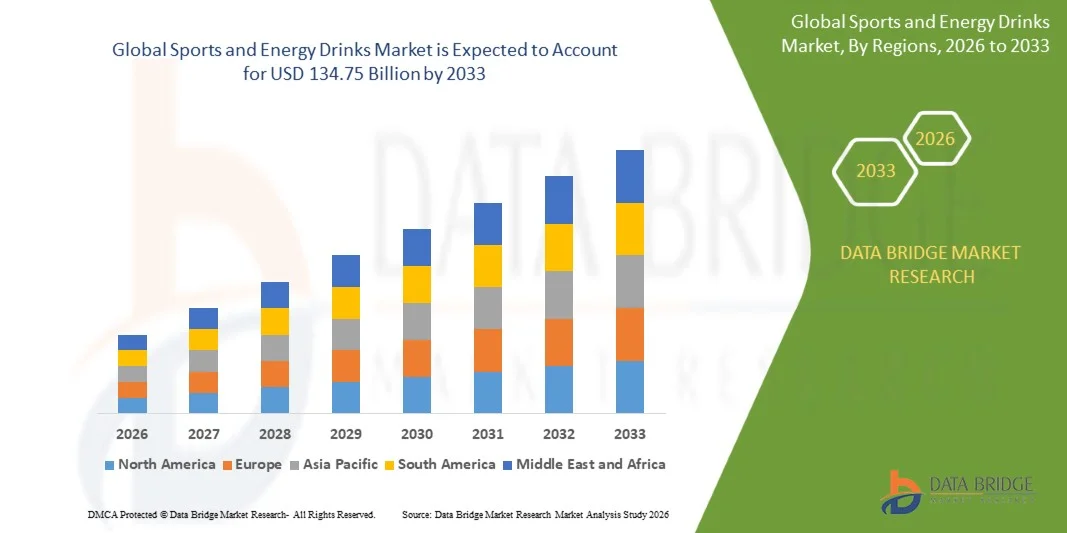
"Sports and Energy Drinks Market Summary: According to the latest report published by Data Bridge Market Research, the Sports and Energy Drinks Market The global Sports and Energy Drinks market size was valued at USD 74.71 billion in 2025 and is expected to reach USD 134.75 billion by 2033, at a CAGR of7.65% during the forecast period Global Sports and...