Anti-Money Laundering (AML) Market Outlook 2030: Trends Driving the Future of Compliance

According to QKS Group, the global Anti-Money Laundering (AML) solutions market is poised for strong and sustained growth, with a projected compound annual growth rate (CAGR) of 16.2% through 2032. This growth trajectory reflects the increasing urgency among financial institutions and regulated entities to combat financial crimes, adhere to stringent regulatory requirements, and enhance risk management frameworks in an increasingly complex financial ecosystem.
Anti-Money Laundering (AML) solutions comprise a comprehensive suite of technologies, tools, and processes designed to detect, prevent, and report illicit financial activities such as money laundering, terrorist financing, and fraud. These solutions form a critical pillar of compliance strategies across banking, financial services, insurance (BFSI), fintech, and other regulated industries. As financial crimes grow more sophisticated and cross-border transactions increase, organizations are prioritizing robust AML infrastructures to safeguard their operations and maintain regulatory compliance.
AML solutions typically integrate multiple functional components to ensure a holistic approach to financial crime prevention. One of the foundational elements is Customer Due Diligence (CDD), which involves verifying customer identities, assessing risk profiles, and conducting ongoing monitoring. Enhanced due diligence (EDD) further strengthens this process for high-risk customers by applying deeper scrutiny.
Another essential component is transaction monitoring, which continuously evaluates financial transactions to identify unusual or suspicious patterns. This is complemented by watchlist screening, where customer data is checked against global sanction lists, politically exposed persons (PEP) databases, and adverse media sources. These processes enable institutions to detect potential risks early and take preventive action.
AML systems also include alert generation and case management capabilities, which allow compliance teams to investigate flagged activities efficiently. Alerts are triggered based on predefined rules or advanced analytics, ensuring timely intervention. Additionally, regulatory compliance modules help organizations align their processes with evolving local and international AML regulations, reducing the risk of penalties and reputational damage.
A critical differentiator in modern AML solutions is the integration of advanced data analytics and artificial intelligence (AI). These technologies enhance detection accuracy by identifying complex patterns and anomalies that traditional rule-based systems may overlook. Machine learning algorithms continuously improve over time, reducing false positives and enabling more precise risk assessments.
Moreover, AML solutions support risk assessment frameworks that allow organizations to evaluate customer behavior, transaction patterns, and geographic exposure. By leveraging centralized data repositories and real-time analytics, institutions can gain a comprehensive view of risk across their operations.
As financial institutions continue to scale their operations, Anti-Money Laundering solutions market provide the necessary infrastructure to manage increasing volumes of customer data and transactions. Their scalability and adaptability make them indispensable for maintaining the integrity of financial systems while ensuring compliance with global regulatory standards.
Strategic Market Direction
The Anti-Money Laundering solutions market is undergoing a significant transformation, driven by technological advancements, regulatory pressures, and the evolving nature of financial crimes. Several strategic trends are shaping the future direction of AML solutions globally.
One of the most prominent trends is the growing adoption of artificial intelligence (AI) and machine learning (ML). These technologies are revolutionizing AML processes by enabling predictive analytics, behavioral monitoring, and real-time anomaly detection. AI-driven systems can analyze vast datasets with greater speed and accuracy, helping organizations proactively identify suspicious activities and mitigate risks.
Another key development is the increasing integration of RegTech (Regulatory Technology). RegTech solutions streamline compliance processes by automating regulatory reporting, monitoring regulatory changes, and ensuring adherence to compliance requirements. This integration reduces operational complexity and enhances efficiency, allowing organizations to focus on strategic risk management.
Cloud-based deployment models are also gaining traction in the AML market. Cloud solutions offer scalability, flexibility, and cost-efficiency, making them particularly attractive for organizations dealing with fluctuating data volumes and evolving compliance needs. They enable seamless updates, improved data accessibility, and enhanced collaboration across geographies.
As financial services become increasingly globalized, AML solutions must support cross-border regulatory compliance. Organizations are required to navigate a complex web of international regulations, making adaptability and standardization critical. Modern AML platforms are being designed to accommodate diverse regulatory frameworks while maintaining consistency in compliance practices.
The demand for real-time transaction monitoring is another significant trend. Traditional batch-processing systems are being replaced by real-time analytics engines that can detect suspicious activities instantly. This shift enables faster response times, reducing the potential impact of financial crimes.
Overall, these strategic directions reflect the industry's efforts to address current challenges while preparing for future threats. AML solutions are evolving into intelligent, adaptive systems capable of handling the complexities of modern financial ecosystems.
Vendor Landscape
The global AML solutions market is highly competitive, with a diverse range of technology providers offering innovative solutions to address evolving compliance and risk management needs. Key vendors in this space include:
ACI Worldwide, AML Partners, Azentio, ComplyAdvantage, Clari5, Dow Jones, Eastnets, Experian, Featurespace, Feedzai, Fiserv, Fourthline, IDology (GBG Plc), IMTF, Kiya.ai, LexisNexis Risk Solutions (Accuity), NICE Actimize, Oracle, Pelican.ai, Quantexa, SAS, SymphonyAI, ThetaRay, Verafin Solutions, and Wolters Kluwer.
These vendors are focusing on enhancing their product capabilities through AI integration, cloud adoption, advanced analytics, and strategic partnerships. Many are investing in research and development to improve detection accuracy, reduce false positives, and provide comprehensive compliance solutions tailored to specific industry requirements.
In addition, vendors are expanding their global presence and strengthening their regulatory expertise to cater to multinational organizations. The competitive landscape is characterized by continuous innovation, mergers and acquisitions, and collaborations aimed at delivering end-to-end AML solutions.
Conclusion
The global Anti-Money Laundering solutions market is set for robust growth over the coming years, driven by increasing regulatory pressures, rising financial crime risks, and rapid technological advancements. AML solutions are no longer just compliance tools; they have become strategic assets that enable organizations to safeguard their operations, build trust, and ensure long-term sustainability.
As the financial landscape continues to evolve, organizations must adopt advanced, scalable, and intelligent AML solutions to stay ahead of emerging threats. The integration of AI, cloud technologies, and real-time analytics will play a pivotal role in shaping the future of AML, ensuring that financial institutions remain resilient in the face of an increasingly complex risk environment.
Categorie
Leggi tutto
Booster Brew UK is a natural health drink mix created for men who want to improve their energy, stamina, and overall confidence. As men age, challenges like low libido, reduced drive, and fatigue can become more common. Booster Brew helps support healthy testosterone levels and circulation, which are essential for maintaining strength, desire, and performance in daily life. This easy-to-use...

LED Lighting Driver Market, valued at USD 7,868 million in 2024, is projected to reach USD 12,350 million by 2032, exhibiting a CAGR of 6.8% during the forecast period. This sustained growth trajectory is detailed in a comprehensive new analysis published by Semiconductor Insight, underscoring the critical function of drivers as the operational heart of modern LED lighting...

"Market Trends Shaping Executive Summary Collapsible Water Bottle Market Size and Share The global collapsible water bottle market size was valued at USD 1.79 billion in 2024 and is expected to reach USD 2.98 billion by 2032, at a CAGR of 6.60% during the forecast period Collapsible Water Bottle report has been formulated by keeping in mind all the vital...
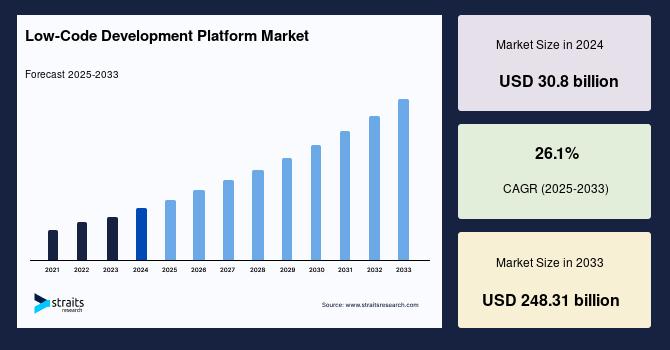
Low-Code Development Platform Industry Insights: The “Global Low-Code Development Platform Market Professional Report 2025–2033” has been introduced by Straits Research to its research database. The report delivers a structured analysis covering market summary, product details, market size and share, value and volume metrics, segmentation, SWOT analysis, and key...
The Indian online betting market is growing faster than ever in 2025, with platforms competing to offer better odds, smoother gameplay, and more reliable services. In such a crowded industry, one name that consistently stands out is Mahadev Book. Known for its advanced technology, user-friendly experience, and transparent approach, Mahadev Book has quickly become a favorite among both...