


Disposable Incontinence Products Market to Reach US$ 19.2 Bn by 2034 Driven by Aging Population, Rising Hygiene Awareness, and Expanding Healthcare Access
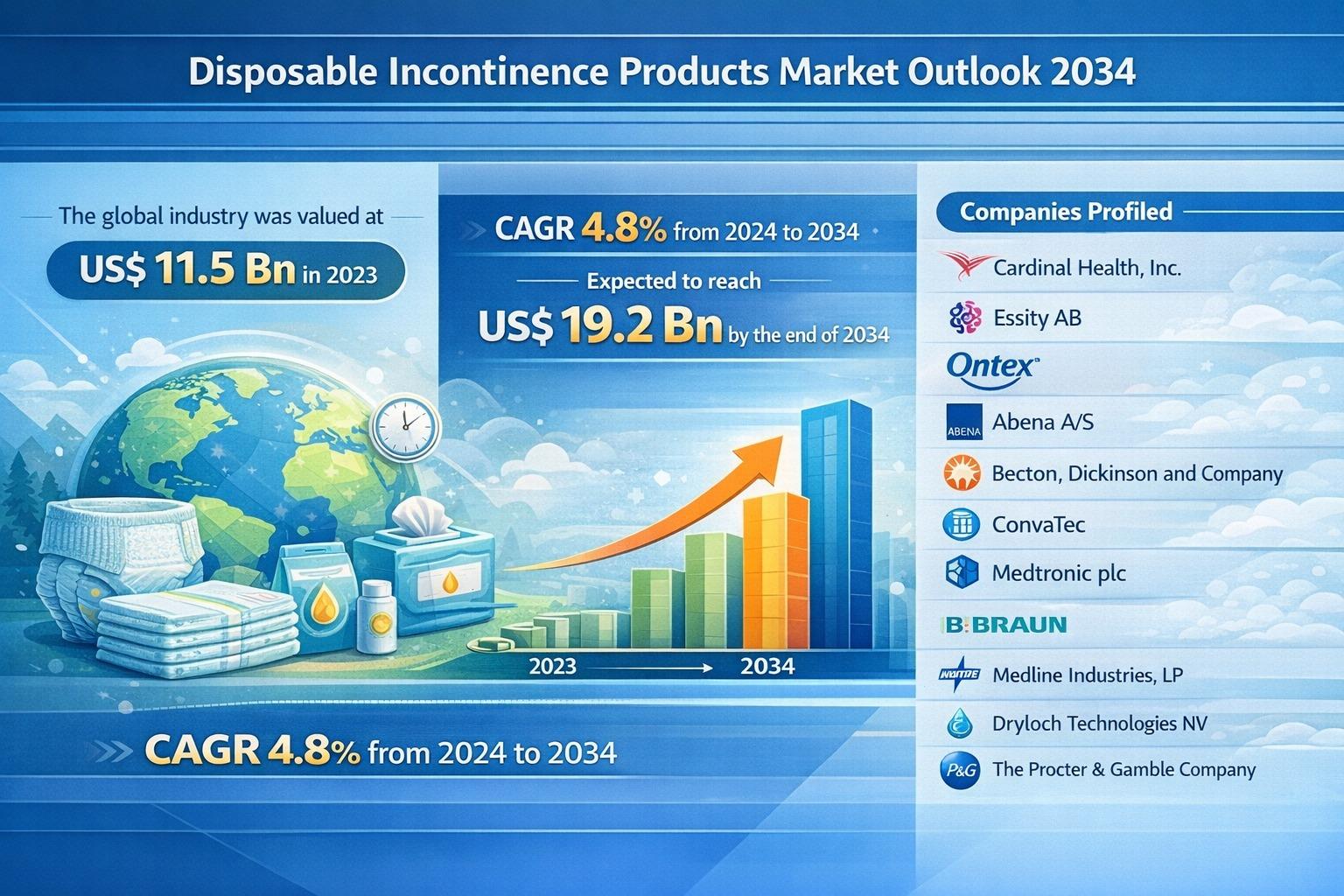
The global disposable incontinence products market is witnessing steady and sustained growth, fueled by demographic shifts, increasing awareness about personal hygiene, and the growing prevalence of chronic health conditions. Valued at US$ 11.5 Bn in 2023, the market is projected to expand at a CAGR of 4.8% from 2024 to 2034, reaching an estimated US$ 19.2 Bn by the end of 2034.
This growth trajectory reflects the rising demand for convenient, hygienic, and single-use solutions designed to manage urinary and fecal incontinence across diverse patient groups, particularly the elderly population.
Market Overview
Disposable incontinence products are single-use absorbent solutions such as pads, liners, diapers, and urinary catheters that help individuals manage involuntary urine or fecal leakage. These products are typically manufactured using nonwoven fabrics, superabsorbent polymers, and cotton-based materials, ensuring high absorbency, comfort, and hygiene.
They are widely used across hospitals, long-term care facilities, and home care settings. Additionally, their application extends beyond incontinence management to include menstrual hygiene and postpartum care, further broadening their market scope.
The market is evolving with innovations in odor control, skin-friendly materials, and eco-friendly alternatives, reflecting changing consumer expectations and regulatory pressures.
Analyst Viewpoint
The market outlook remains positive due to the increasing prevalence of urinary and bowel disorders, coupled with the rising need to maintain dignity and hygiene among patients. Disposable incontinence products play a crucial role in improving quality of life by minimizing embarrassment associated with incontinence.
The geriatric population is a primary contributor to market demand. Aging individuals are more prone to conditions such as bladder dysfunction and mobility limitations, which necessitate the use of incontinence products. Furthermore, the inability to access restrooms quickly makes these products essential in elderly care.
Another important growth avenue is the rising awareness of menstrual hygiene, especially in developing economies. Governments, NGOs, and private companies are actively promoting the use of sanitary and hygiene products, thereby boosting adoption rates.
Companies are also targeting untapped markets in Asia Pacific and the Middle East & Africa, where awareness and accessibility are improving, creating lucrative growth opportunities.
Key Market Drivers
1. Rising Awareness of Menstrual Health and Adult Diapers
One of the major drivers of the market is the increasing global focus on menstrual hygiene and adult incontinence awareness. Various campaigns and initiatives have played a critical role in normalizing conversations around these topics.
For instance, a Pune-based initiative in October 2022 gained global recognition by creating a mosaic using 4,560 biodegradable sanitary pads, aiming to promote sustainable menstrual practices. Such initiatives not only spread awareness but also encourage product adoption among underserved populations.
Similarly, marketing campaigns like “Fear of Falling” by Nobel Hygiene Friends highlight the risks elderly individuals face, thereby promoting the use of adult diapers as a preventive and supportive solution.
2. Growing Investment in Product Innovation
The disposable incontinence products market is also benefiting from increased investments and product innovations. Companies are focusing on developing advanced solutions such as microbiome-friendly tampons, improved catheters, and infection-control products.
For example:
- Daye Limited secured funding of US$ 12 Mn to scale production of vaginal health products.
- Otsuka Pharmaceutical Factory Inc. introduced “Actreen,” a single-use catheter designed for self-catheterization.
- Sonoma Pharmaceuticals launched Microdox, targeting urinary tract infections across multiple regions.
These developments indicate a strong pipeline of innovative products aimed at enhancing patient comfort and clinical outcomes.
3. Rising Prevalence of Chronic Diseases
The increasing incidence of chronic conditions such as kidney disease, bladder cancer, endocrine disorders, and neurological impairments is significantly contributing to market growth. These conditions often lead to incontinence, necessitating long-term use of disposable products.
Additionally, bowel disorders, diarrhea, and nerve damage are further increasing the demand for reliable incontinence management solutions.
Regional Insights
North America – Leading the Market
North America held the largest market share in 2023, driven by:
- High healthcare awareness
- Favorable reimbursement policies
- Government initiatives promoting hygiene standards
The region is expected to maintain its dominance throughout the forecast period.
Asia Pacific – Fastest Growing Region
Asia Pacific is emerging as a high-growth market, primarily due to:
- Rapidly aging population, especially in China and Japan
- Government support programs such as Australia’s Continence Aids Payment Scheme
- Increasing awareness of hygiene products
India and Southeast Asian countries are also witnessing increased adoption due to urbanization and improving healthcare infrastructure.
Europe – Strong Demand from Developed Economies
Europe continues to be a significant contributor, with countries like Germany, the U.K., and France leading demand. The growth is supported by:
- Rising awareness campaigns
- Social acceptance of incontinence-related products
- High demand for premium brands such as TENA
Market Segmentation
The disposable incontinence products market is segmented based on product type, application, material, gender, and end-user.
By Product:
- Disposable adult diapers
- Protective underwear
- Pads & liners
- Urinary catheters
- Urine bags
Among these, adult diapers and protective underwear dominate due to their widespread use in elderly care.
By Application:
- Urinary incontinence
- Fecal incontinence
- Dual incontinence
Urinary incontinence remains the largest application segment, owing to its higher prevalence.
By End-user:
- Hospitals
- Ambulatory surgical centers
- Nursing homes
- Long-term care facilities
The home care segment is also gaining traction due to the preference for personalized care.
Competitive Landscape
The market is highly competitive, with key players focusing on product innovation, strategic collaborations, and geographic expansion.
Major companies include:
- Cardinal Health, Inc.
- Essity AB
- Ontex
- Abena A/S
- Becton, Dickinson and Company
- Convatec
- Medtronic plc
- B. Braun
- Medline Industries, LP
- Drylock Technologies NV
- The Procter & Gamble Company
These companies are investing heavily in R&D, branding, and distribution networks to strengthen their market presence.
Key Developments
Recent developments highlight the dynamic nature of the market:
- Kimberly-Clark Corporation launched a new production facility in Nigeria for feminine care and baby diapers.
- Procter & Gamble introduced the “All Good” diaper brand, focusing on sustainability.
- 3D Systems and CollPlant Biotechnologies collaborated on regenerative solutions, indicating cross-industry innovation.
Additionally, partnerships such as the collaboration between SENIORITY.IN and Nobel Hygiene to launch premium adult diapers demonstrate the growing emphasis on product differentiation.
Future Outlook
The disposable incontinence products market is poised for steady and resilient growth over the next decade. Key trends shaping the future include:
- Increasing adoption of eco-friendly and biodegradable products
- Integration of smart technologies for monitoring incontinence
- Expansion into emerging markets with low product penetration
- Growing demand for premium and skin-friendly products
As awareness continues to rise and healthcare infrastructure improves globally, the market is expected to witness broader adoption across all age groups and regions.
Conclusion
In conclusion, the global disposable incontinence products market is on a robust growth path, supported by demographic trends, healthcare advancements, and increasing awareness about hygiene and dignity. With a projected value of US$ 19.2 Bn by 2034, the industry presents significant opportunities for manufacturers, investors, and healthcare providers alike.
Companies that focus on innovation, affordability, and sustainability are likely to gain a competitive edge in this evolving landscape.
Categorias
Leia Mais
Benefits of Using Certification Exam Preparation Material Certification exams help people grow in their careers. They help you get better jobs. They also help you earn more money. Many students want to pass the AHM-250 exam on the first attempt. This exam is offered by AHIP. However, exam preparation can feel difficult. There are many books to read and many topics to cover. This is why using...

According to TechSci Research report, “Germany Automotive Acoustic Engineering Services Market – By Region, Competition, Opportunities, and Forecast, 2020-2030F”, the Germany Automotive Acoustic Engineering Services Market was valued at USD 544.89 million in 2024 and is projected to reach USD 750.46 million by 2030, expanding at a compound annual...

"Executive Summary Data Logger Market Size and Share: Global Industry Snapshot Global Data Logger Market was valued at USD 7.071 billion in 2021 and is expected to reach USD 12.70 billion by 2029, registering a CAGR of 7.60% during the forecast period of 2022-2029. Each of the topics covered in the Data Logger report is studied very well to get a clear idea about all the factors that...
Portland’s hospitality scene is vibrant and diverse, featuring everything from trendy cafés and boutique restaurants to bustling bars and catering services. For professionals in the industry, finding the right opportunity quickly is essential, as positions often fill fast due to high turnover and seasonal demand. Specialized platforms designed for hospitality hiring have made this...

The Indians and their digital sports environment have undergone a significant change over the last few years. As more and more people have internet and mobile phones, users are no longer restricted to watching matches only. They currently choose platforms that give them a chance to watch, experience, and play their favorite sports live. Mahadev Book belongs to this changing ecosystem, which...
