How Does a Deep Well Pump Support Reliable Water Supply?
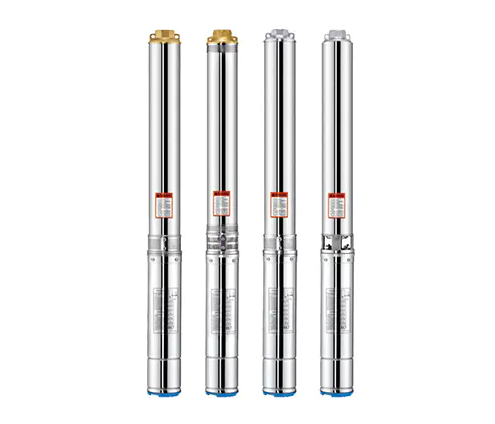
A Deep Well Pump is a type of pump designed to lift water from significant depths, typically from wells or underground reservoirs. Unlike shallow pumps, deep well pumps are built to handle higher suction lift and deliver water efficiently over long vertical distances. These pumps are commonly used in municipal water systems, irrigation, and industrial applications where water must be drawn from deep sources.
Working Principle
The operation of a Deep Well Pump involves a combination of mechanical and hydraulic components. The pump usually consists of a column assembly, a pump bowl at the bottom, and an impeller that moves water upward through the column. The motor, located either at the surface or submerged depending on the design, drives the pump shaft. As the impeller rotates, it imparts energy to the water, pushing it from the well into the discharge pipe. This design allows continuous water flow even from depths exceeding hundreds of feet.
Construction and Materials
Material selection is crucial for the performance of a Deep Well Pump. Cast iron, stainless steel, and specialized alloys are often used for the pump casing, impellers, and column shafts. These materials provide strength, resist corrosion, and allow the pump to withstand continuous operation under varying water conditions. Seals and bearings are also designed to handle high loads and reduce wear, ensuring the pump maintains efficiency over time.
Applications
Deep Well Pumps are highly versatile and suitable for various applications. In agriculture, they supply water for irrigation systems, ensuring consistent crop hydration. In municipal water supply systems, they maintain steady flow from underground reservoirs to distribution networks. Industrial facilities often rely on these pumps for cooling water circulation or processing operations that require large volumes of water. The adaptability of the pump to different flow rates and depths makes it a reliable solution in multiple contexts.
Maintenance Considerations
Regular maintenance is essential for a Deep Well Pump to ensure long-term reliability. Routine inspections focus on bearings, seals, impeller condition, and shaft alignment. Monitoring vibration, noise, and pressure helps detect potential problems before they lead to failure. Proper lubrication of moving parts and periodic cleaning of the pump bowl also contribute to consistent performance. Maintenance schedules depend on the operating environment and water quality but play a critical role in prolonging the pump's service life.
Energy Efficiency
Energy consumption is an important factor for deep well pumping systems. The efficiency of a Deep Well Pump depends on matching the pump's capacity with the system's demand. Operating outside the recommended range can increase energy usage and wear. Correct sizing, monitoring water levels, and ensuring smooth operation help maintain energy-efficient performance while reducing operational costs.
A Deep Well Pump is an essential tool for moving water from underground sources to the surface efficiently. Its robust construction, reliable operation, and adaptability make it suitable for agricultural, municipal, and industrial applications. By understanding its working principle, proper maintenance, and operational considerations, users can ensure consistent water supply and extended pump life. Deep well pumps remain a practical choice wherever water must be drawn from considerable depths, supporting both small-scale and large-scale water systems.
https://www.edwin-pump.com/product/borehole-submersible-pump-oil-filled-borehole-pump
Categories
Read More
According to the latest report published by Data Bridge Market Research, the Non-Invasive Glucose Meter Market The global non-invasive glucose meter market was valued at USD 195.26 million in 2024 and is expected to reach USD 379.19 million by 2032During the forecast period of 2025 to 2032 the market is likely to grow at a CAGR of 8.65%, primarily driven by technological advancements...

An EDMS is a technology solution that automates document management processes, allowing organizations to securely maintain, retrieve, and control electronic documents throughout their lifecycle. How Big is the Electronic Document Management System (EDMS) Market? The Electronic Document Management System (EDMS) Market size is expected to reach US$ 9.7 Billion by 2034 from US$...

Get updated and reliable H12-893_V1.0 Dumps, H12-893_V1.0 Exam Dumps, and H12-893_V1.0 PDF Dumps from DumpsHero for effective exam preparation. Prepare smarter with expert-verified study materials designed to help you succeed in your Huawei H12-893_V1.0 certification exam on the first attempt. H12-893_V1.0 Exam Dumps for Impressive Results on Your First Attempt DumpsHero provides...
If you're looking forward to IPL 2026 and want to take part in the action swiftly and efficiently, then obtaining the Online Cricket ID WhatsApp Number is the most convenient method to get started. There are no lengthy forms and no wait—just a simple text to WhatsApp. Your ID will be waiting for you in just a few minutes. Many cricket fans in India are using WhatsApp registration...
Life in London moves quickly. Between long commutes, busy office schedules, hybrid working and packed calendars, many people now rely on quick and convenient snacks throughout the day. As a result, portable and satisfying food choices have become a big part of modern daily routines for professionals, students and families across the UK. Indian snacks are no longer enjoyed only during tea-time...