


Solve Hub Bearing Noise & ABS Sensor Failures in Fleets
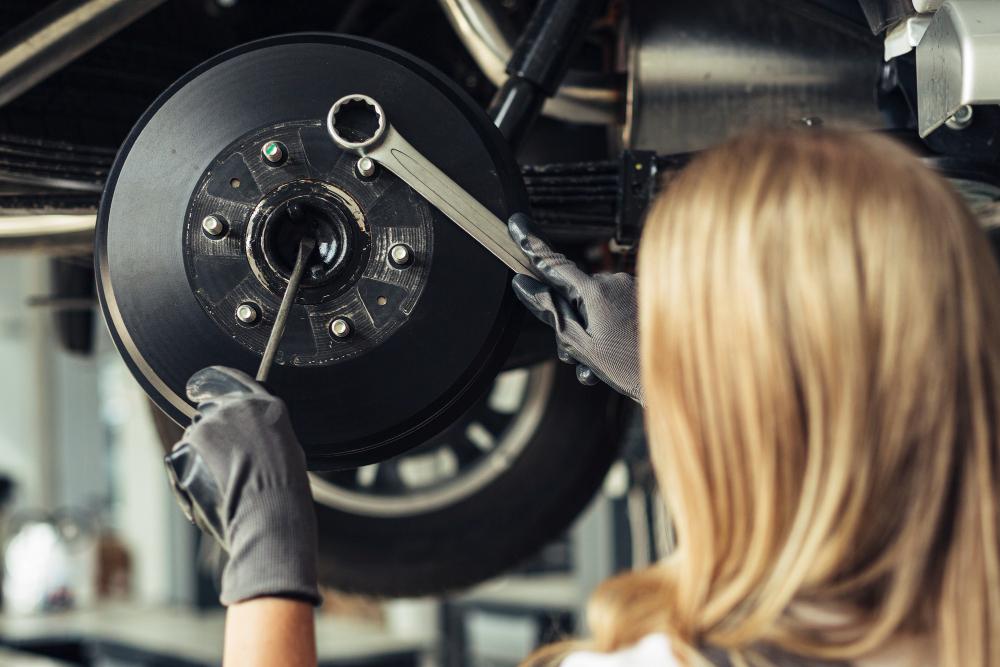
A failing hub bearing is a major safety risk that often starts with a faint humming sound. For B2B fleet operators, ignoring this noise leads to wheel play, which can eventually cause a total hub separation during transit.
The real problem is often the integration of the ABS sensor within the hub unit. When the internal bearing starts to wobble, it strikes the sensor, leading to dashboard error lights and a complete loss of traction control systems.
As manufacturers, we know that solving hub issues requires a focus on the "generation" of the unit. Whether it is a Gen 2 or Gen 3 hub, the seal must be perfect to prevent road salt from destroying the internal rolling elements.
The Domino Effect of Hub Bearing Vibration
In the commercial automotive sector, the hub bearing is the primary support for the vehicle's weight. When a bearing begins to fail—often due to sub-standard steel or inadequate heat treatment—it develops "micro-movement." In a B2B environment where delivery vans and trucks cover thousands of miles monthly, even a small amount of play leads to rapid tire wear and steering instability.
Once the internal raceway is compromised, the friction generates heat that can reach 180°C. This heat doesn't just damage the bearing; it transfers to the brake rotor and the CV axle, leading to a much larger repair bill. For a business, this isn't just a part replacement; it’s a failure of the entire wheel end assembly.
Why Your Current Hub Units are Failing Early
If you are seeing a high rate of hub replacements in your fleet, the issue likely points to one of these three technical factors:
-
Contamination Seepage: Many "budget" hubs use single-lip seals that fail to keep out pressurized water during vehicle washing or heavy rain.
-
Inadequate Preload: If the hub is not manufactured to precise factory specifications, the internal clearance will be incorrect from day one, leading to a "growling" noise within weeks.
-
Low-Quality Grease: Heavy-duty applications require specialized synthetic grease that maintains its viscosity under high-load pressure. Cheap grease breaks down, leading to metal-on-metal contact.
The Manufacturer’s Perspective: Engineering a Solid Foundation
As a manufacturer, we address the hub bearing problem by focusing on induction hardening. By hardening only the necessary contact surfaces of the raceway while keeping the core of the steel tough, we ensure the hub can absorb road shocks without cracking. Precision CNC grinding then ensures that the mounting flanges are perfectly flat, preventing the "lateral runout" that causes brake pedal pulsation.
For B2B distributors, the reliability of a wheel hub depends on the integrated electronics. We test our ABS sensors to ensure they communicate perfectly with the vehicle's ECU. When the bearing remains rigid and the sensor remains aligned, the vehicle stays on the road longer. This synergy is what prevents the "phantom" ABS codes that often plague lower-quality aftermarket hubs.
Strategies for Extending Hub Life and Safety
The goal for any maintenance manager is to reach the maximum service life of the hub assembly. This requires moving away from "white-box" parts and toward components that are manufactured to ISO/TS 16949 standards.
By ensuring the hub bearing provides a rock-solid foundation for the wheel, you protect the entire drivetrain. Transitioning to hubs with high-performance TPE seals and high-carbon steel can prevent the dreaded "wheel-off" incidents. This proactive approach to part selection is the only way to guarantee a safe and efficient operation in demanding B2B environments. Consistent manufacturing ensures that every hub you install performs with the same high level of precision.
Conclusion
As a top-tier manufacturer and supplier, NMR Bearing delivers high-precision hub bearings built for endurance. Trust our factory-direct expertise to keep your fleet safe and operational.
Κατηγορίες
Διαβάζω περισσότερα
Why ISO 14001 Is Gaining Importance in Sri Lanka Environmental responsibility has become a major focus for businesses across the world, and Sri Lanka is no exception. As industries expand and international trade continues to grow, organizations are under increasing pressure to manage their environmental impact responsibly. Customers, regulators, investors, and business partners now expect...

Public and private sector collaborations are accelerating the implementation of smart transportation projects. Technology companies and governments are working together to develop connected infrastructure. These partnerships continue to support market growth. The global smart highways market is experiencing rapid growth as governments and transportation authorities invest in intelligent...

The global competition to manage and automate corporate spending is an intense and evolving arena, and a close examination of the Expense Management Software Market Share reveals a fascinating story of a long-standing titan, agile cloud-native challengers, and a new wave of disruptive fintech platforms. Market share in this industry is a function of several key factors: brand...

A child specialist doctor is a medical expert trained to care for infants, children, and adolescents. These professionals understand the unique medical needs of young patients and are skilled in diagnosing and treating a wide range of childhood illnesses. Unlike general physicians, pediatricians focus entirely on children, making them better equipped to handle both physical and emotional health...

Automotive Logistic Market According to the latest report published by Data Bridge Market Research, the Automotive Logistic Market Automotive Logistics Market was valued at USD 321.6 billion in 2025 and is projected to reach USD 613.4 billion by 2032, growing at a CAGR of 9.7% during the forecast period. Market growth is driven by the rising demand for...
