


Long-Tail Keywords: The Secret Weapon for Explosive Organic Traffic

If your website is not getting enough traffic, the problem might not be your effort, it might be your keyword strategy.
Many businesses focus only on popular keywords like “SEO” or “digital marketing.” But these keywords are highly competitive and very difficult to rank for.
Here’s the secret that smart marketers use:
Long-tail keywords
In this blog, you’ll learn what long-tail keywords are, why they matter, and how to use them to grow your traffic explained in a simple and engaging way.
What Are Long-Tail Keywords?
Long-tail keywords are longer, more specific search phrases that people use when they are looking for something very particular.
Examples
-
Short keyword: “SEO”
-
Long-tail keyword: “how to improve SEO ranking for small business in 2026”
Why Are They Called “Long-Tail”?
Because they come from the “long tail” of search demand:
-
Few people search each keyword
-
But together, they make up most of the total searches
This means more opportunities for your website to rank.
Why Long-Tail Keywords Matter in 2026
Search behavior has changed.
People now search using:
-
Full questions
-
Conversational language
-
Voice search
Tools like ChatGPT have also influenced how users ask questions online.
Instead of typing short words, users now ask detailed queries.
1. Lower Competition = Easier Rankings
Short keywords are very competitive.
Example
-
“Digital marketing” → Very hard to rank
-
“Digital marketing services for small businesses” → Easier to rank
Why This Works
-
Fewer websites target long-tail keywords
-
You have a higher chance to rank
A digital marketing agency focuses on these keywords to get faster results.
2. Higher Conversion Rates
Long-tail keywords bring more targeted traffic.
Example
-
“Shoes” → Just browsing
-
“Buy running shoes under ₹3000 online” → Ready to buy
Why It Matters
-
Visitors know what they want
-
They are more likely to take action
More traffic + better quality = more conversions
3. Matches Search Intent Better
Search engines now focus on intent, not just keywords.
Types of Intent
-
Informational → Learning
-
Transactional → Buying
-
Navigational → Finding a brand
What Long-Tail Keywords Do
They clearly show user intent.
This helps search engines rank your content higher.
4. Perfect for Voice Search
Voice search is growing rapidly.
People speak naturally when using voice assistants.
Example
Instead of typing:
“SEO tips”
They say:
“How can I improve my website SEO quickly?”
Why It Matters
Long-tail keywords match conversational queries perfectly.
5. Supports Strong Content Marketing
Long-tail keywords help you create valuable content.
Example Blog Topics
-
“Why your SEO is not working in 2026”
-
“Best digital marketing strategies for startups”
This improves your content marketing strategy and builds trust with your audience.
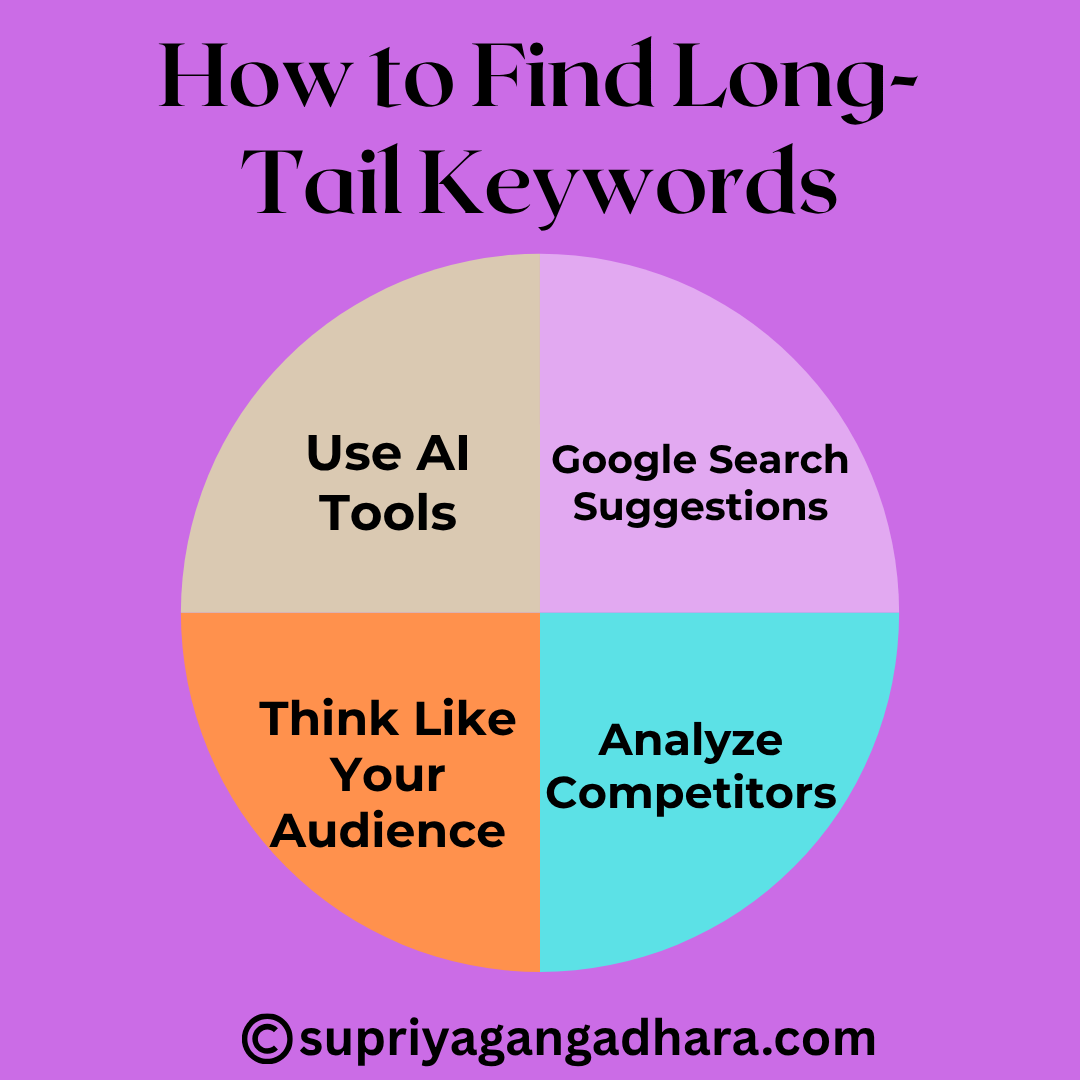
How to Find Long-Tail Keywords
1. Use AI Tools
Tools like ChatGPT can generate:
-
Keyword ideas
-
Questions people ask
-
Blog topics
2. Google Search Suggestions
Type a keyword in Google and see:
-
Autocomplete suggestions
-
“People also ask” section
3. Think Like Your Audience
Ask yourself:
What would my customer search?
4. Analyze Competitors
Check what keywords your competitors are ranking for.
How to Use Long-Tail Keywords Effectively
1. Use Them Naturally
Don’t force keywords.
Write naturally and include them where they fit.
2. Add Them in Important Places
-
Title
-
Headings
-
Meta description
-
Content
3. Create Dedicated Content
Each long-tail keyword can be a blog topic.
4. Combine with Link Building
Strong link building helps your pages rank faster.
Common Mistakes to Avoid
Targeting only high-competition keywords
Ignoring user intent
Keyword stuffing
Creating low-quality content
Not being consistent
A digital marketing agency avoids these mistakes by using smart strategies.
Real-World Example
Scenario
A small business wants more traffic:
-
Uses ChatGPT for keyword ideas
-
Targets long-tail keywords
-
Writes helpful blog posts
-
Builds backlinks
Result
-
Better rankings
-
More targeted traffic
-
Increased leads
Why Long-Tail Keywords Are the Future
In 2026:
-
Search is conversational
-
AI is smarter
-
Competition is higher
Long-tail keywords give you an advantage.
Conclusion
Long-tail keywords are one of the most powerful SEO strategies today. They help you rank faster, attract the right audience, and increase conversions.
Instead of chasing highly competitive keywords, focus on specific, meaningful search queries.
A professional digital marketing agency uses long-tail keywords to build strong and sustainable growth.
Kategoriler
Read More
As the demand for energy-efficient indoor farming continues to rise, finding a reliable LED grow light China manufacturer has become a priority for commercial growers, distributors, and agricultural businesses. The right supplier not only provides advanced lighting technology but also ensures consistent quality, innovative design, and dependable customer support. This is where SINOCOLED stands...

A roof is one of the most important parts of any building because it protects the structure from rain, sunlight, wind, and other environmental conditions. In a coastal city like Mangalore, where buildings are exposed to heavy rainfall, high humidity, and salty air throughout the year, choosing the right roofing material is essential. Many property owners prefer Steel Roofing Sheets in Mangalore...

In today’s age of climate awareness, laboratories must think beyond performance: sustainability is becoming equally important. Ultra-low temperature (ULT) storage is vital in many scientific fields, but standard units often consume huge amounts of power. The -86 Deep Freezer is no exception—it delivers the extreme cold required for sample preservation, but demands thoughtful...

If your household runs on Netflix, YouTube, gaming, and constant video calls, your internet and TV setup can’t be average. Families today need speed, reliability, and flexibility without overpaying. That’s where AT&T family internet and TV bundle deals come in. Let’s break down what actually works for large households and heavy streamers, and how to choose the...

The online retail industry has transformed the way people purchase everyday essentials. From household goods to baby care products, customers now prefer the convenience of shopping online because it saves time and offers easy access to a wide range of items. Businesses operating in the e-commerce sector are continuously adapting to changing customer needs by improving product availability,...
