CNC Tool vs Manual Tools Explained Simply
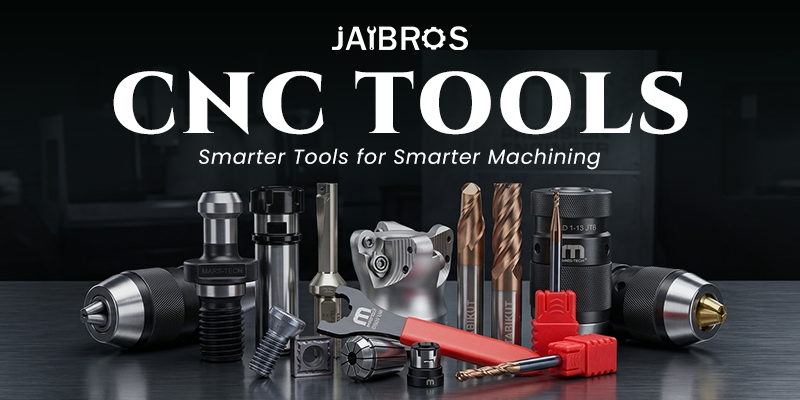
Compare CNC tool vs manual tools to understand differences in cost, accuracy, and productivity for better machining decisions.
CNC Tool vs Manual Tools: Which One Is Right for You?
Manufacturing has evolved significantly over the years, moving from traditional manual machining methods to advanced automated systems. This transformation has improved production speed, accuracy, and overall efficiency. At the center of this evolution is the CNC tool, which plays a crucial role in modern machining processes.
However, manual tools are still widely used in small workshops and for specific applications. Many manufacturers often find themselves choosing between automated and manual machining solutions. Understanding the differences between these two approaches is essential for making the right decision.
What Is a CNC Tool?
A CNC tool is a cutting tool used in computer-controlled machines to perform machining operations such as cutting, drilling, milling, and shaping materials. These tools operate based on programmed instructions, ensuring precise and consistent results.
Unlike manual machining, where operators control the tool movement, CNC machines follow digital commands, reducing human error and increasing efficiency.
Across various types of CNC machine systems, these tools are widely used for high-precision and large-scale production.
What Are Manual Tools?
Manual tools are traditional cutting tools used in machines that require direct human control. Operators manually adjust cutting speed, feed rate, and tool movement during machining operations.
These tools are commonly used in small workshops, repair jobs, and low-volume production environments. While manual tools offer flexibility, they rely heavily on operator skill and experience.
Key Differences Between CNC Tool and Manual Tools
1. Accuracy and Precision
One of the biggest differences is accuracy. A CNC tool provides highly precise results due to automated control and programmed instructions.
Manual tools depend on the operator’s skill, which can lead to variations in dimensions and surface finish.
For industries requiring tight tolerances, automated machining is the preferred choice.
2. Production Speed
CNC-based machining is much faster compared to manual methods. Machines can operate continuously and perform multiple operations without interruption.
Manual tools require constant supervision and adjustments, which slows down production.
This makes CNC tool solutions ideal for high-volume manufacturing.
3. Consistency
Consistency is critical in manufacturing. Automated systems ensure that every component produced is identical in size and quality.
Manual tools may produce variations due to human involvement. Even experienced operators may find it challenging to maintain consistency over long production cycles.
4. Labor Requirement
CNC machining reduces the need for continuous manual labor. Once programmed, machines can run automatically with minimal supervision.
Manual machining requires skilled operators to control every step of the process, increasing labor costs and limiting production capacity.
5. Cost Consideration
Manual tools generally have lower initial costs, making them suitable for small businesses or startups.
However, over time, CNC tool systems offer better value due to higher productivity, reduced labour costs, and improved efficiency.
Manufacturers often invest in the best CNC tools for long-term benefits.
6. Flexibility and Complexity
CNC machines can handle complex designs and intricate geometries that are difficult to achieve with manual tools.
Multi-axis machines allow simultaneous movement in multiple directions, enabling advanced machining operations.
Manual tools are better suited for simple tasks and small-scale projects.
7. Maintenance and Tool Life
Modern tools used in automated systems are designed for durability and long life. Advanced materials and coatings help reduce wear and improve performance.
Manual tools may require frequent maintenance and replacement due to higher wear rates during operation.
When Should You Use CNC Tools?
CNC-based machining is ideal for:
High-volume production
Complex part manufacturing
Industries requiring high precision
Automated and large-scale operations
A high-quality CNC tool ensures consistent performance, making it suitable for modern manufacturing environments.
When Should You Use Manual Tools?
Manual tools are suitable for the following:
-
Small workshops
-
Repair and maintenance work
-
Low-volume production
-
Simple machining tasks
They are cost-effective for businesses that do not require advanced automation.
Digital Transformation in Tool Purchasing
The rise of digital platforms has made it easier for manufacturers to purchase tools. Businesses can now explore CNC tools online to compare specifications, pricing, and product availability.
Online sourcing provides convenience and access to a wide range of products.
At the same time, manufacturers often search for CNC tools near me to find local suppliers who can provide quick delivery and technical support.
Choosing the Right Option for Your Business
Selecting between CNC and manual tools depends on several factors:
-
Production volume
-
Budget
-
Complexity of parts
-
Required precision
For businesses aiming to scale and improve efficiency, investing in advanced tooling solutions is a smart decision.
Choosing the right CNC tool can significantly improve productivity and ensure consistent results.
Future of Machining
The future of manufacturing lies in automation and smart technologies. CNC machining continues to evolve with advancements in artificial intelligence, robotics, and digital monitoring systems.
These innovations are making machining processes more efficient, reliable, and cost-effective.
While manual tools will still have their place in specific applications, automated machining is expected to dominate the industry in the coming years.
Conclusion
Understanding the difference between CNC-based tooling and manual tools is essential for making informed decisions in manufacturing. While manual tools offer simplicity and lower initial costs, they lack the precision, speed, and consistency required for modern production.
A high-performance CNC tool provides better accuracy, improved productivity, and long-term cost efficiency across various types of CNC machine systems.
Manufacturers looking for reliable solutions often explore CNC tools online platforms or search locally using CNC tools near me to find trusted suppliers. Investing in the best CNC tools ensures consistent machining performance and business growth.
At Jaibros, we are committed to delivering high-quality tooling solutions that meet the demands of modern manufacturing. With a focus on precision, durability, and innovation, Jaibros helps manufacturers achieve superior results and stay competitive in today’s industrial landscape.
FAQs
1. What is the main difference between CNC tools and manual tools?
CNC tools operate automatically using programmed instructions, while manual tools require human control.
2. Which is more accurate: CNC or manual tools?
CNC tools provide higher accuracy and consistency compared to manual tools.
3. Are CNC tools expensive?
They may have higher initial costs but offer better long-term value through increased productivity.
4. Can small businesses use CNC tools?
Yes, small businesses can benefit from CNC tools by improving efficiency and production capacity.
5. Where can I buy CNC tools?
You can purchase them from online platforms or local suppliers based on your requirements.
Κατηγορίες
Διαβάζω περισσότερα
Diverse visual effects experts anchor the Canary Islands' creative evolution beyond service work. Dani Pinedo returned to Gran Canaria witnessing vibrant transformation. After crafting audiovisual content for the Las Palmas Carnival, he founded DerroteroVFX. "We're few and interconnected here, making collaborations fluid," he observes. Now exploring Gran Canaria's LED stage potential, his...

In the rapidly evolving world of digital assets, keeping cryptocurrency software updated is essential for security, efficiency, and compatibility. From wallets to portfolio trackers, outdated software can expose users to hacks, transaction errors, and other critical risks. Understanding and applying crypto software update best practices is key to protecting your investments. Why Software...

Gold has always been a significant asset in financial markets, attracting traders and investors who seek stability and potential profits. One of the most efficient ways to trade gold is through futures contracts, which allow investors to buy or sell gold at a predetermined price on a specific date in the future. To navigate this market effectively, understanding gold futures symbols and...

The AI in Energy Market is witnessing rapid expansion as the global energy sector increasingly integrates artificial intelligence to enhance efficiency, optimize operations, and support the transition toward sustainable energy systems. AI technologies such as machine learning, predictive analytics, and advanced data modeling are transforming how energy is generated, distributed, and consumed....

Oliver Glasner sets a clear demand for strong effort from his squad in the Conference League Final 2026. They aim to stay sharp in the Conference League during this busy season. Focus remains on discipline and steady performance across all matches ahead. The team prepares for a key phase where Crystal Palace Vs Rayo Vallecano is used as a reference point for analysis. Football supporters are...