Germany Agribusiness Market Size 2025-2033: Precision Innovation and Sustainability Imperatives
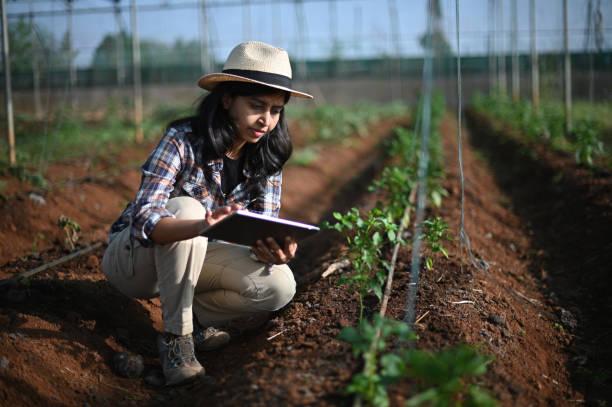
German agribusiness executives face mounting pressure: strict EU environmental and food safety regulations, persistent labor shortages from an aging rural workforce, and the urgent need to maintain export competitiveness while adapting to climate variability and rising input costs. Many wonder how to scale operations profitably without compromising the high-quality standards that define German agriculture on global markets.
The Germany agribusiness market size offers a clear signal of resilience and opportunity. Valued at USD 152.60 billion in 2024, the sector is on track for steady, technology-enabled expansion.
Current Snapshot of the Germany Agribusiness Market Size
According to IMARC Group data, the Germany agribusiness market size stood at USD 152.60 billion in 2024. It is forecast to reach USD 195.48 billion by 2033, expanding at a CAGR of 2.79% from 2025 to 2033.
This moderate but consistent growth reflects a mature market undergoing modernization rather than explosive expansion. Germany maintains its position as a European powerhouse in high-quality dairy, processed foods, and grains, supported by advanced logistics, strong port infrastructure, and a reputation for safety and innovation.
Key quantitative highlights:
- Organic food segment: USD 8.10 billion in 2024, underscoring consumer demand for sustainable products.
- Dairy exports: Milk and milk products exports rose to 568,490 EUR Thousand in January 2024, up significantly from December 2023.
With approximately 255,000 agricultural businesses in 2024 (down from nearly 905,000 in 1975), the sector continues consolidating toward larger, more efficient operations.
What’s Fueling Growth in the Germany Agribusiness Market Size
Several structural factors are driving the Germany agribusiness market size forward while addressing core pain points.
Primary growth drivers include:
- Stringent EU standards and product innovation: Compliance with rigorous food safety rules pushes continuous improvement in quality and traceability.
- Precision farming adoption: Technologies such as GPS-guided machinery, drones, soil sensors, and data analytics help optimize irrigation, monitor crop health, reduce input costs, and tackle labor shortages through automation.
- Strong export performance: Germany leads in high-quality dairy (cheese, butter, milk powders) and processed foods, with demand spanning Europe, Asia, and the Middle East. Advanced processing and efficient logistics provide a competitive edge.
- Government and policy support: Funding for digitalization, smart tools, and sustainable practices aligns with EU environmental goals and regenerative agriculture initiatives.
- Sustainability momentum: Rising focus on organic production and resource efficiency meets both regulatory demands and shifting consumer preferences.
These drivers transform challenges like labor shortages and regulatory pressure into opportunities for data-driven decision making and efficiency gains.
Breaking Down the Germany Agribusiness Market Size by Product and Region
Understanding segmentation reveals where opportunities concentrate within the Germany agribusiness market size.
By Product Category
The market breaks down into several core categories:
- Grains: Including wheat (a major staple), rice, and coarse grains such as ragi, sorghum, and millets.
- Oilseeds: Rapeseed, sunflower, soybean, sesamum, and others – critical for both food and industrial uses.
- Dairy: Liquid milk, milk powder, ghee, butter, ice cream, cheese, and other derivatives. Germany excels here as a leading European producer.
- Livestock: Pork, poultry, beef, sheep meat, and others, with strong regional concentrations.
- Others: Encompassing value-added processed foods and emerging categories.
Dairy and grains likely command significant shares, given export volumes and domestic strength.
By Region
IMARC segments the market across Western Germany, Southern Germany, Eastern Germany, and Northern Germany.
Regional dynamics reflect demographics and specialization:
- Southern Germany (e.g., Bavaria): High bovine populations and strong dairy production.
- Northern Germany (e.g., Niedersachsen, North Rhine-Westphalia): Major pig farming and livestock hubs.
- Eastern and Western regions: Varied strengths in grains, oilseeds, and mixed farming, with differences in farm sizes and modernization levels.
This geographic variation supports tailored strategies for suppliers, processors, and technology providers operating in the German market.
Market Trends Transforming German Agribusiness
Precision agriculture and sustainability initiatives stand out as defining market trends.
Key developments include:
- Widespread integration of data analytics for real-time decision support, enabling consumer insights into crop performance and resource use.
- Regenerative agriculture programs, such as ADM’s January 2025 initiative with Klim, offering financial and agronomic support to farmers growing wheat, rapeseed, and soybeans using targeted fertilizers, conservation tillage, and cover cropping.
- Agrivoltaics (combining solar energy with crop production), exemplified by RWE’s January 2025 facility in North Rhine-Westphalia, which grows diverse crops under thoughtfully spaced panels without disrupting machinery access.
These trends address labor shortages through automation while enhancing resilience to climate pressures.
Future Outlook for the German Agribusiness Market
Looking ahead 12–24 months, the Germany agribusiness market size is expected to continue its steady upward trajectory, likely accelerating modestly as technology adoption deepens.
Predicted developments:
- Accelerated precision and automation rollout: More farms will integrate AI-driven tools and robotics to counter labor shortages and boost productivity, supporting the 2.79% CAGR trajectory.
- Expansion of regenerative and organic practices: Policy incentives and consumer demand will drive further growth in the organic segment, with programs like ADM’s scaling across key crops.
- Increased agrivoltaic and dual-use land projects: Renewables integration will gain traction, helping meet energy and food production goals simultaneously.
- Export resilience with adaptation: Dairy and processed food shipments should remain robust, though players must navigate global volatility through innovation in value-added offerings.
- Data-driven decision making as standard: Real-time analytics will become table stakes for competitiveness, yielding better consumer insights and operational efficiency.
Challenges such as climate events and regulatory tightening will persist, but they will likely spur further investment in resilient, sustainable models. Overall, the market should approach the higher end of current forecasts if digitalization and export momentum hold.
Actionable Business Implications and Data-Driven Strategies
Stakeholders can translate these insights into concrete steps:
- For producers: Prioritize precision farming investments to optimize yields and reduce costs; explore regenerative programs for financial and technical support.
- For processors and exporters: Strengthen logistics and traceability to capitalize on dairy and processed food demand; use market segmentation data to target high-potential regions.
- For technology providers: Focus solutions on labor-saving automation and compliance analytics tailored to German and EU standards.
- For investors: Target companies advancing sustainability and digital tools, particularly those aligned with regional strengths (dairy in the South, livestock in the North).
- Cross-cutting: Leverage analytics platforms for consumer insights and predictive modeling to inform planting, inventory, and market entry decisions.
By embedding data-driven decision making and monitoring market trends, businesses can mitigate risks and seize growth within the evolving Germany agribusiness market size.
Download a sample copy of the report
Conclusion
The Germany agribusiness market size, currently at USD 152.60 billion and heading toward USD 195.48 billion by 2033, demonstrates the sector’s capacity for measured, quality-focused growth amid significant headwinds.
Driven by precision farming, export strength in dairy and processed foods, and a firm commitment to sustainability, the market offers substantial opportunities for those who embrace innovation and regional nuances. Success will hinge on turning regulatory and demographic challenges into advantages through technology, collaboration, and strategic foresight.
For B2B leaders and investors, staying ahead requires continuous monitoring of segmentation shifts, technological breakthroughs, and policy developments, ensuring decisions are grounded in robust market intelligence and aligned with Germany’s strengths in high-standard, sustainable agribusiness.
الأقسام
إقرأ المزيد
BST Competitive Law, we understand that cracking the CLAT requires a strategic approach, in-depth knowledge, and consistent practice. Our coaching programs are designed to cover all sections of the exam: English Language, General Knowledge & Current Affairs, Legal Aptitude, Logical Reasoning, and Mathematics. Our expert faculty members bring years of teaching experience and deep...

Discover the smart, flavorful way to support your workout routine with LIVS Creatin Gummies. These delicious, easy-to-take gummies are formulated with pure Creapure® creatine monohydrate, a premium-grade ingredient known for its exceptional purity and consistency. Designed for adults who value fitness, recovery, and performance, LIVS Gummies bring you a cleaner, simpler way to enjoy the...

Global Automotive Communication Technology Market Accelerates with Rapid Vehicle Connectivity, V2X Expansion, and Software-Defined Mobility Systems The Automotive Communication Technology Market is experiencing rapid transformation as vehicles evolve into highly connected digital platforms powered by intelligent networking systems and real-time data exchange. The Automotive...

The buildup to the next IPL match between the Rajasthan Royals and Royal Challengers Bengaluru is slowly gaining steam and people are looking forward to a good match. Since both teams are well matched in regards to their lineups and the level of competitiveness, this match will definitely be filled with intense play, strategy and moments to remember. Besides the interest in the field, platforms...

Precision measurement plays a vital role in the manufacturing of automotive engine components. Two of the most important components in an engine are the camshaft and crankshaft. These components must operate with perfect synchronization to ensure smooth engine performance. Accurate camshaft measurement and reliable crankshaft gauging are therefore essential processes in modern automotive...