


Pradhan Mantri Ujjwala Yojana 2026: Free LPG Connection, Subsidy & Apply Online
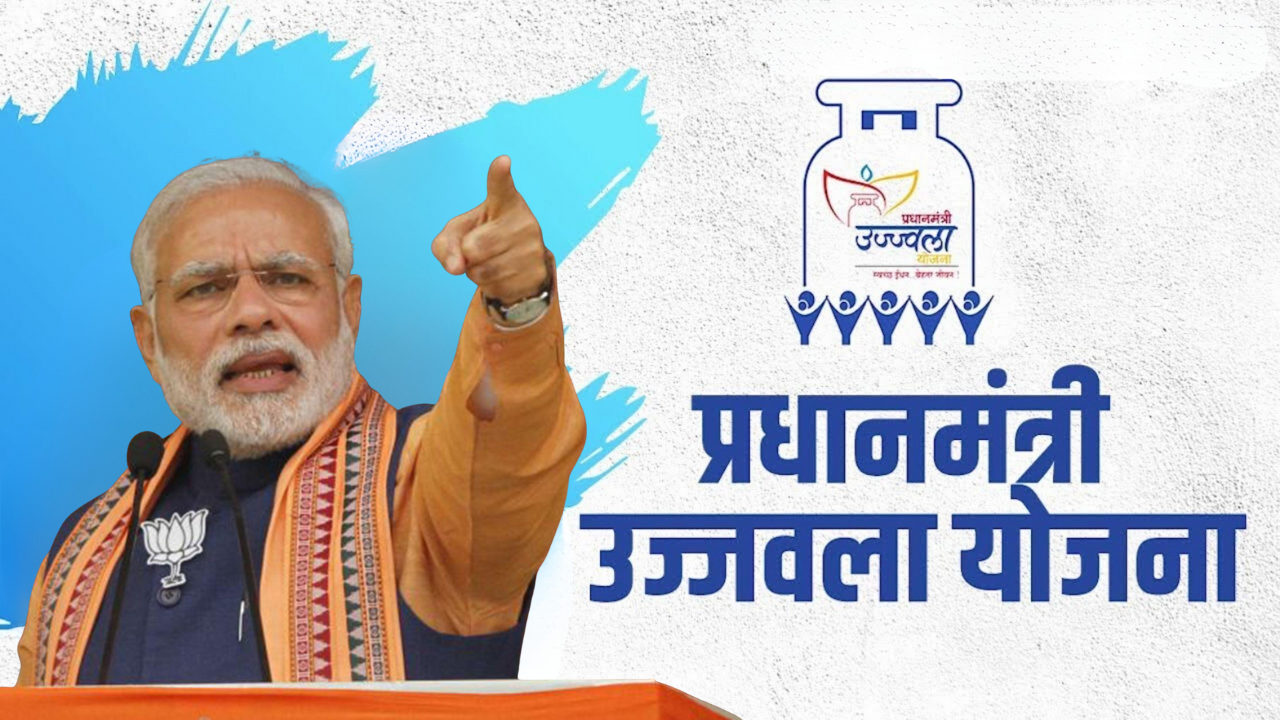
For decades, millions of Indian women faced serious health risks while performing the simple daily task of cooking meals for their families. Smoke from traditional fuels filled their kitchens, damaging lungs and stealing precious hours that could have been spent on education or income generation. A transformative welfare initiative launched in 2016 has fundamentally changed this reality for over 10 crore households across the nation.
What Is Pradhan Mantri Ujjwala Yojana?
Pradhan Mantri Ujjwala Yojana provides deposit-free LPG connections in the name of adult women from economically weaker households. The objective is to reduce indoor air pollution, improve women’s health, and save time spent collecting firewood or biomass fuel.
The scheme is implemented by Oil Marketing Companies (OMCs) such as Indane, Bharat Gas, and HP Gas.
PMUY Key Highlights
|
Particulars |
Details |
|
Scheme Name |
Pradhan Mantri Ujjwala Yojana (PMUY) |
|
Launch Date |
1 May 2016 |
|
Launched By |
Government of India |
|
Beneficiaries |
Adult women (18+ years) |
|
Total Connections |
10.33 crore (as of July 2025) |
|
Fuel Type |
LPG |
|
Connection Cost |
Free |
|
Implementing Agencies |
IOCL, BPCL, HPCL |
|
Official Website |
pmuy.gov.in |
The Vision Behind Clean Cooking Initiative
India initiated this program on May 1, 2016, in Ballia, Uttar Pradesh, with an ambitious goal: eliminate dependence on harmful traditional cooking fuels among economically disadvantaged families. The scheme specifically targets adult women as primary beneficiaries, recognizing their central role in household cooking and the disproportionate health burden they carry from smoke exposure.
Traditional biomass fuels like firewood, coal, and cow dung cakes created severe indoor air pollution. According to World Health Organization estimates, roughly 5 lakh deaths occur annually in India due to unclean cooking fuel usage. Beyond health impacts, women spent 2 to 3 hours daily collecting firewood from distant forests, time that could have been dedicated to education, employment, or family care.
Objectives of PM Ujjwala Yojana
|
Objective |
Purpose |
|
Clean Cooking |
Replace firewood, coal, dung cakes |
|
Women’s Health |
Reduce indoor air pollution |
|
Time Saving |
Eliminate firewood collection |
|
Energy Access |
Expand LPG coverage |
|
Social Empowerment |
LPG connection in woman’s name |
Understanding the Two-Phase Evolution
The initial phase aimed to provide 5 crore LPG connections to Below Poverty Line families. Success came rapidly—the program distributed 2.2 crore connections in just the first year against a target of 1.5 crore. By December 2018, the scheme had already reached 5.8 crore households, prompting the government to revise the target upward to 8 crore connections.
Recognizing gaps in coverage, authorities launched the second phase in August 2021. This upgraded version introduced several enhancements specifically designed to reach migrant families who previously struggled to obtain connections due to documentation requirements. The new phase allocated 1 crore additional connections with a budget outlay for releasing 2.5 lakh new connections during fiscal year 2025-26 at an expenditure of Rs. 676 crore.
Current Reach and Distribution Network
As of July 1, 2025, approximately 10.33 crore PMUY connections exist across India. These connections operate within a broader ecosystem of 32.94 crore total domestic LPG consumers nationwide. The distribution infrastructure has expanded dramatically—from 13,896 LPG distributors on April 1, 2014, to 25,481 distributors by October 2024, with 93% serving rural areas.
This extensive network ensures accessibility even in remote regions. The government designated special focus areas including all hilly states and North Eastern states as priority regions, acknowledging their unique geographical challenges in fuel access.
Financial Package and What Beneficiaries Receive
Every eligible woman receives a deposit-free LPG connection covering multiple components. The government provides cash assistance of Rs. 1,600 for a 14.2 kg cylinder connection or Rs. 1,150 for a 5 kg cylinder connection. This amount covers security deposit for the cylinder, pressure regulator, safety hose, consumer card booklet, and installation charges.
Under the enhanced second phase, beneficiaries additionally receive their first refill completely free along with a two-burner cooking stove at no cost. This comprehensive package eliminates upfront financial barriers that previously prevented poor families from switching to clean cooking fuel.
What Benefits Do PMUY Beneficiaries Get?
|
Benefit |
Details |
|
LPG Connection |
Deposit-free |
|
Financial Assistance |
₹1,600 (14.2 kg cylinder) |
|
Small Cylinder Option |
₹1,150 (5 kg) |
|
First Refill |
Free |
|
Cooking Stove |
Free (2-burner) |
|
Installation Charges |
Covered |
Targeted Subsidy for Sustained Usage
|
Particulars |
Details |
|
Subsidy Amount |
₹300 per cylinder |
|
Cylinder Size |
14.2 kg (pro-rata for 5 kg) |
|
Max Refills |
Up to 9 per year |
|
Valid Till |
March 2026 |
|
Budget Allocation |
₹12,000 crore (FY 2025–26) |
Understanding that international LPG price fluctuations could force families back to traditional fuels, the government introduced ongoing support mechanisms. Initially starting at Rs. 200 per cylinder in May 2022, authorities increased the targeted subsidy to Rs. 300 per 14.2 kg cylinder in October 2023.
For the financial year 2025-26, the Union Cabinet approved continuing this Rs. 300 subsidy for up to 9 refills per year, with a total budgetary allocation of Rs. 12,000 crore. This subsidy applies proportionately to 5 kg cylinder connections as well. India imports approximately 60% of its LPG requirements, making these subsidies crucial for shielding economically vulnerable families from global price volatility.
Eligibility Criteria for Pradhan Mantri Ujjwala Yojana
The scheme exclusively targets adult women aged 18 years or above. The fundamental requirement states that the applicant’s household must not possess any existing LPG connection registered under any family member’s name from any Oil Marketing Company.
Women can qualify through multiple pathways. Those listed in the Socio-Economic Caste Census 2011 database automatically meet basic criteria. Additionally, women from specific categories receive priority consideration: Scheduled Caste and Scheduled Tribe households, beneficiaries of Pradhan Mantri Awas Yojana Gramin, Antyodaya Anna Yojana recipients, Most Backward Classes, forest dwellers, tea and ex-tea garden tribes, and residents of river islands.
For women not falling into these predefined categories, the second phase introduced a simplified alternative. They can submit a 14-point deprivation declaration form, essentially a self-certification confirming their household’s economically disadvantaged status. This provision particularly benefits migrant families who may lack traditional documentation like ration cards.
Documents Required for PMUY
|
Document |
Requirement |
|
Aadhaar Card |
Mandatory |
|
Ration Card / Family Proof |
Preferred |
|
Bank Account Details |
For subsidy |
|
Address Proof |
Aadhaar (if matching) |
|
Self-Declaration |
For migrants |
Applicants must submit Aadhaar cards for themselves and all adult family members listed in their family composition document. If the connection address matches the Aadhaar address, Aadhaar alone suffices as both identity proof and address proof.
A ration card issued by the state government or alternative official document showing family composition must be provided. Migrant applicants unable to produce these documents can instead submit a self-declaration as per the prescribed format. Bank account details including passbook copy or cancelled cheque are necessary to receive direct subsidy transfers.
The simplified documentation approach under the second phase specifically acknowledges the challenges faced by migrant workers and families who relocate frequently for employment. This flexibility ensures the scheme reaches genuinely disadvantaged families regardless of their mobility patterns.
How to Apply for PM Ujjwala Yojana
Online Application Process
Interested applicants can visit the official portal at pmuy.gov.in to apply online. The process begins with selecting the preferred LPG distributor from options including Indane, Bharat Gas, or HP Gas. After choosing the distributor, applicants fill the KYC application form with personal details, family information, and bank account specifics.
Required documents must be scanned and uploaded digitally. Once submitted, Oil Marketing Companies verify the application against official databases and conduct necessary checks. Upon approval, distributors contact beneficiaries to arrange connection installation.
Offline Application Process
Alternatively, women can download the KYC form from the website or obtain it directly from their nearest LPG distributor office. The completed form along with photocopies of all required documents can be submitted in person. Applications processed through Common Service Centers incur a nominal Rs. 20 processing charge, while self-submission involves no fees.
Measuring Success: Usage Patterns and Impact
Average consumption data reveals increasing acceptance and sustained usage. Per capita consumption among PMUY beneficiaries stood at merely 3 refills annually during 2019-20. This figure improved to 3.68 refills in 2022-23 and further increased to approximately 4.47 refills during fiscal year 2024-25.
Out of 8.99 crore connections released as of April 1, 2022, approximately 8.34 crore beneficiaries availed at least one refill during the two-year period between April 2022 and March 2024. This 92.7% active usage rate demonstrates that beneficiaries continue using LPG rather than reverting to traditional fuels—a critical measure of the program’s genuine impact.
Since inception, PMUY households have collectively taken approximately 222 crore LPG refills, with current daily refill numbers averaging around 13 lakh. These statistics indicate deep penetration and regular usage patterns across beneficiary households.
Health and Environmental Benefits Realized
The National Family Health Surveys documented significant improvements in clean cooking fuel access correlating with PMUY implementation. Annual growth rates in rural areas accessing cleaner fuels accelerated from 0.8% before 2015 to 5.6% afterward—a seven-fold increase.
LPG penetration nationwide jumped from 62% in May 2016 to 99.8% by April 2021. This dramatic expansion means nearly every household now has access to clean cooking options, fundamentally altering indoor air quality across rural India.
Women beneficiaries report tangible time savings—the 2 to 3 hours previously spent gathering firewood now gets redirected toward income-generating activities, children’s education, or participation in self-help groups. Many beneficiaries have started small businesses or engaged in skill development programs with their newly available time.
International Recognition and Comparative Context
The International Energy Agency designated the program as a transformative initiative in ending energy poverty, recognizing its scale and implementation effectiveness. The scheme stands among the world’s largest clean cooking programs, distributing connections at a pace and scale rarely achieved in similar global initiatives.
Government events have celebrated individual beneficiary stories. In February 2018, Rashtrapati Bhavan hosted an event where women shared personal transformations—healthier children, smoke-free kitchens, and newfound time for personal development. On December 30, 2023, the Prime Minister visited Meera Manjhi’s home in Ayodhya, the 10-crore beneficiary, symbolizing the program’s milestone achievement.
Challenges in Implementation and Response
Despite impressive numbers, ensuring sustained usage remains an ongoing challenge. Initial adoption sometimes exceeded regular refill purchases, suggesting some beneficiaries used LPG intermittently while continuing traditional fuel use. The targeted subsidy program directly addresses this issue by making refills more affordable, encouraging consistent LPG usage.
The verification process for identifying genuinely eligible households requires constant updating. State governments and Union Territories can add new beneficiaries or remove ineligible ones based on changing circumstances, maintaining database accuracy and preventing misuse.
Another challenge involves reaching extremely remote areas where distributor presence remains limited. The government’s continued expansion of distributor networks in rural areas—with 7,373 distributorships (93% of new ones) established in rural locations—directly tackles this accessibility gap.
Recent Policy Developments
The Cabinet’s approval for continuing subsidies through fiscal year 2025-26 provides stability and predictability for beneficiaries. While the previous subsidy covered up to 12 refills annually, the current framework supports 9 refills per year, still covering most households’ typical usage patterns.
The allocation of Rs. 676 crore for 2.5 lakh additional connections in FY26 demonstrates ongoing commitment to expanding coverage. This targeted expansion likely focuses on remaining pockets of exclusion or newly identified vulnerable communities.
Authorities continue refining eligibility criteria and documentation requirements based on ground-level feedback, balancing accessibility with proper targeting. The migrant-friendly provisions introduced in the second phase exemplify this responsive approach to implementation challenges.
Frequently Asked Questions
What is Pradhan Mantri Ujjwala Yojana?
PMUY is a government scheme that provides free LPG connections to poor households in the name of adult women.
Who is eligible for PM Ujjwala Yojana?
Women aged 18 years or above from households without any LPG connection.
Is PMUY completely free?
Yes. The LPG connection, first refill, stove, and installation are fully free.
Can migrant families apply for PMUY?
Yes. PMUY 2.0 allows self-declaration for migrants without ration cards.
How much subsidy is given per cylinder?
₹300 per 14.2 kg cylinder for up to 9 refills per year.
How long does PMUY approval take?
Usually 10–15 days after document verification.
The Road Ahead
India’s success in achieving near-universal LPG access creates a foundation for the next challenge: ensuring exclusive use of clean cooking fuels. While connections reach households, complete transition away from traditional fuels requires sustained affordability through subsidies, reliable supply chains, and continued awareness about health benefits.
The program represents more than energy access—it embodies recognition of women’s health, time, and dignity as central to development priorities. Each connection symbolizes hours returned to a woman’s day, cleaner air in children’s lungs, and a household freed from the drudgery of firewood collection.
As the program matures, maintaining momentum requires continuous policy attention to subsidy sustainability, distributor network expansion, and beneficiary support systems. The foundation has been built; ensuring every family actually uses their connection exclusively will determine the program’s ultimate legacy in transforming rural India’s cooking landscape.
Nach Verein filtern
Read More
The modern world is interconnected by a sophisticated and largely invisible infrastructure designed to defeat the natural process of decay. From the moment a high-value vaccine is manufactured in a sterile laboratory to the time a fresh exotic fruit is plucked from a tropical tree, a race against time and temperature begins. This complex logistical dance is made possible by Transport cold chain...
Feeling overwhelmed by endless random pulls in traditional RPGs? Duet Night Abyss offers a fresh approach that transforms the entire farming experience. Instead of relying on chance for your favorite characters or gear, players can directly earn them through engaging gameplay mechanics. The game introduces innovative systems like secret letters and covert commissions, making resource gathering...

Prepare confidently with DumpsHero’s updated PEGACPRSA22V1 Dumps and verified PEGACPRSA22V1 PDF Dumps. Get accurate, exam-focused study guides designed to help you pass the Pegasystems PEGACPRSA22V1 certification exam successfully on your first try. PEGACPRSA22V1 Exam Dumps to Achieve Excellent Results on Your First Attempt DumpsHero provides highly dependable Pegasystems...

Making Oracle 1Z0-497 Exam Study Simple and Stress-Free Preparing for the Oracle 1Z0-497 exam does not have to feel stressful or confusing. Many students struggle because they study too much without a clear plan. They read many resources but still feel unsure about what really matters for the exam. Choosing clear and trusted Oracle 1Z0-497 study material makes preparation simple, focused, and...

"Fermented Milk Market Summary: According to the latest report published by Data Bridge Market Research, the Fermented Milk Market The global fermented milk market size was valued at USD 307.41 billion in 2024 and is expected to reach USD 457.66 billion by 2032, at a CAGR of 5.10% during the forecast period The world-class Fermented Milk Market report...