


A Comprehensive Strategic SWOT Evaluation: An In-Depth Artificial Intelligence Market Analysis

A thorough Artificial Intelligence Market Analysis using a SWOT framework reveals a technology landscape defined by profound strengths. The most significant of these is AI's unparalleled ability to automate complex cognitive tasks and derive actionable insights from vast, unstructured datasets. Unlike traditional automation that handles repetitive physical or rule-based tasks, AI can tackle problems that require pattern recognition, learning, and decision-making. This enables businesses to automate entire workflows, from processing insurance claims to moderating online content, leading to dramatic improvements in operational efficiency and productivity. AI's ability to analyze massive volumes of data at speeds no human can match allows organizations to uncover hidden trends, predict future outcomes, and make more informed, data-driven strategic decisions. Another key strength is AI's capacity to enable hyper-personalization at scale. By understanding individual user behavior and preferences, AI can deliver uniquely tailored experiences, from personalized product recommendations on an e-commerce site to customized learning paths in an educational platform, fostering deeper customer engagement and loyalty in a way that was previously unimaginable and economically unfeasible for most businesses.
Despite its immense potential, the AI market is also characterized by significant weaknesses that can act as barriers to adoption. The most prominent weakness is the severe global shortage of skilled AI talent. There is a huge demand for data scientists, machine learning engineers, and AI researchers, but the supply of qualified professionals has not kept pace, leading to intense competition for talent and inflated salaries. This skills gap makes it difficult for many organizations, especially small and medium-sized enterprises, to build and maintain an effective AI team. Another major weakness is the high cost and complexity of developing, deploying, and maintaining AI systems. Building a custom AI model requires access to large datasets, significant computational resources, and specialized expertise, all of which represent a substantial upfront investment. Furthermore, the "black box" nature of many advanced deep learning models, where their internal decision-making processes are not easily interpretable, creates a significant challenge for trust, accountability, and debugging, particularly in high-stakes applications like medical diagnostics or credit scoring, where understanding the "why" behind a decision is crucial.
The opportunities for the artificial intelligence market are virtually limitless, extending into every facet of the economy and society. One of the most transformative opportunities lies in the field of scientific discovery and healthcare. AI is already accelerating the process of drug discovery by predicting how molecules will behave, and it holds the potential to create personalized medicine regimens based on an individual's unique genetic makeup. In the fight against climate change, AI can be used to optimize energy grids, develop more efficient materials, and create more accurate climate models to predict the impact of environmental changes. The emergence of generative AI represents another monumental opportunity, set to revolutionize the creative industries by generating novel text, images, music, and code. This technology can act as a powerful co-pilot for human creativity and productivity, creating entirely new product categories and business models. Furthermore, there are vast, untapped opportunities to apply AI in traditionally underserved sectors like agriculture, education, and public services, where it can help to address long-standing challenges related to efficiency, accessibility, and resource allocation, creating immense social and economic value.
Conversely, the AI market faces a formidable array of threats that could temper its growth and shape its future trajectory. The most significant of these are the profound ethical and societal concerns surrounding the technology. The issue of algorithmic bias, where AI models perpetuate and even amplify existing human biases present in their training data, can lead to unfair and discriminatory outcomes in areas like hiring and loan applications. The potential for large-scale job displacement due to automation is another major societal concern that requires careful planning and policy intervention. Data privacy is a persistent threat, as AI systems often require access to vast amounts of personal data, raising concerns about surveillance and misuse. In response to these issues, the threat of increasing regulatory scrutiny is becoming a reality, with frameworks like the European Union's AI Act aiming to impose strict rules on the development and deployment of high-risk AI systems. Finally, the malicious use of AI, including the creation of sophisticated deepfakes for misinformation campaigns, the development of autonomous weapons systems, and the automation of cyberattacks, poses a serious threat to global security and stability.
Top Trending Reports:
Categorii
Citeste mai mult
Healthy eyes are important for daily life, comfort, productivity, and overall wellness. People use their eyes constantly for reading, driving, working, learning, and enjoying everyday activities. Modern lifestyles often include long screen time, stress, poor sleep, unhealthy eating habits, and environmental pollution. These factors may affect vision comfort and overall wellness over time. Many...

In today’s automotive world, car owners are no longer satisfied with basic functionality. They seek elegance, comfort, and advanced protection for their vehicles. One of the most effective ways to achieve this balance is through high-quality window tinting. Professional tinting is more than just a visual upgrade; it is an investment in your vehicle’s longevity and your driving...

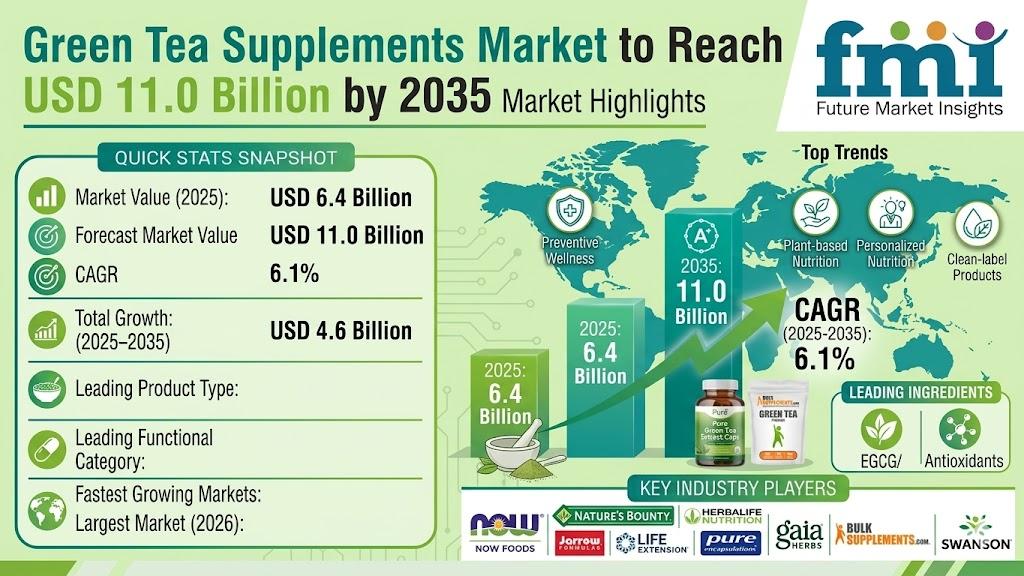
NEWARK, Del., June 8, 2026 The global Green Tea Supplements Market is projected to grow from USD 6.4 billion in 2025 to USD 11.0 billion by 2035, expanding at a CAGR of 6.1% during the forecast period. According to Future Market Insights (FMI), increasing consumer focus on preventive wellness, rising demand for plant-based nutritional supplements, and growing awareness of antioxidant-rich...
The Cell Culture Market has become a vital component of modern biotechnology, pharmaceutical research, and healthcare innovation. Cell culture techniques involve growing cells in a controlled laboratory environment, allowing researchers to study cellular behavior, develop new drugs, produce vaccines, and advance regenerative medicine. With increasing global investments in life...

The liquid crystal polymer market is experiencing rapid growth as industries increasingly adopt advanced materials capable of delivering superior performance in challenging environments. LCPs offer exceptional dimensional stability, chemical resistance, and electrical insulation, making them suitable for precision applications that require long-term reliability. Their expanding use in...