


A Simple Guide to the Different Types of Mutual Fund Schemes in India

A Simple Guide to the Different Types of Mutual Fund Schemes in India
Mutual fund schemes in India are designed to suit different investment goals, risk levels and time horizons. Asset Management Companies (AMCs) offer a wide range of schemes so that investors can choose options aligned with their financial needs. Well-known fund houses such as HDFC MF also structure their schemes using the same industry-wide classification framework.
Here is a simplified overview of the main ways mutual fund schemes are classified in India.
1. Types of mutual funds based on asset class
The risk and return profile of a scheme mainly depends on the assets it invests in:
-
Equity funds – invest primarily in shares of companies
-
Debt (fixed income) funds – invest in bonds and money market instruments
-
Commodity funds – invest in assets such as gold or silver
-
Hybrid funds – invest in a mix of equity, debt and other asset classes
2. Active funds vs passive funds
-
Active mutual funds are managed by a fund manager who selects securities with the objective of outperforming a benchmark.
-
Passive mutual funds aim to replicate a market index and try to closely match its performance, with minimal fund-manager intervention.
3. Sector and thematic mutual funds
These are mainly equity-oriented schemes:
-
Sector funds invest in a single sector such as banking, pharma or technology.
-
Thematic funds invest across multiple sectors linked by a common theme, such as multinational companies or infrastructure.
Thematic funds usually offer broader diversification than sector funds.
4. Open-ended, close-ended and interval funds
-
Open-ended funds allow investors to buy and sell units at any time.
-
Close-ended funds are available only during a New Fund Offer and are later traded on stock exchanges.
-
Interval funds combine features of both and allow transactions only at pre-defined intervals.
5. Direct plan and regular plan
Every mutual fund scheme is available through two routes:
-
Direct plan – investors invest directly with the AMC, resulting in lower expenses.
-
Regular plan – investments are made through a distributor, and the expense ratio includes distribution costs.
6. Growth option and IDCW option
Under both direct and regular plans, investors can choose:
-
Growth option – returns remain invested in the scheme.
-
IDCW (Income Distribution cum Capital Withdrawal) option – periodic payouts may be made, subject to availability of distributable surplus, as defined by the Securities and Exchange Board of India regulations.
Conclusion
Understanding the different types of mutual fund schemes—based on asset class, management style, sector focus, structure and investment route—helps investors select funds more confidently. Whether you invest through HDFC MF or any other AMC, choosing the right category, plan and option should always depend on your risk appetite, time horizon and financial goals.
Categorii
Citeste mai mult
What’s Fueling Executive Summary High Barrier Packaging Films Market Size and Share Growth CAGR Value The global high barrier packaging films market size was valued at USD 27.32 billion in 2024 and is expected to reach USD 49.83 billion by 2032, at a CAGR of 7.8% during the forecast period To stand apart from the competition, a careful idea about the competitive landscape, their...

The residential market in Chennai continues to grow because buyers seek modern homes that combine luxury, comfort and convenience. Brigade Thiruvanmiyur presents a premium residential development designed to meet the expectations of families, professionals and investors. The project offers spacious apartments with elegant interiors and thoughtful layouts that support comfortable daily living....

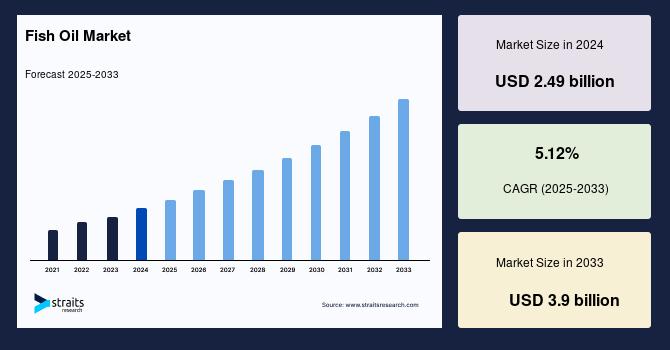
The global fish oil market size was valued at USD 2.49 billion in 2024 and is projected to reach from USD 2.62 billion in 2025 to USD 3.9 billion by 2033, growing at a CAGR of 5.12% during the forecast period (2025-2033). Overview of the Fish Oil Market Fish oil is extracted primarily from oily fish species such as anchovies, cod, and sardines. Its...
"Executive Summary Personalized Nutrition Market Value, Size, Share and Projections CAGR Value The global personalized nutrition market was valued at USD 12.22 billion in 2024 and is expected to reach USD 27.17 billion by 2032. During the forecast period of 2025 to 2032 the market is likely to grow at a CAGR of 10.50% The top notch Personalized Nutrition...
Polaris Market Research has introduced the latest market research report titled Asia Pacific Organic Cereals Market Share, Size, Trends, & Industry Analysis Report By Source (Wheat, Rice, Oat, Corn, Barley, Others); By Type; By Distribution Channel; By Country; Segment Forecast, 2024 - 2032 that highlights the major revenue stream for the forecast period. The report contains...