Best Chamfer Tool: A Complete Buyer’s Guide for You
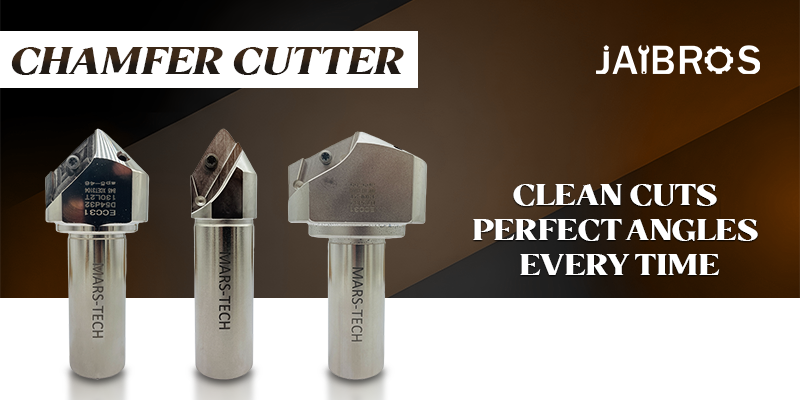
Expert Guide to Selecting Chamfer Tools for Perfect Finishes
In today’s machining and manufacturing industry, achieving clean edges and precise finishes is essential. Whether in automotive, aerospace, or general engineering applications, the quality of your tools directly impacts the final output. One of the most important tools in this process is the chamfer tool, widely used for chamfering, beveling, and removing sharp edges from workpieces.
However, selecting the right chamfer tool is not just about choosing any cutting tool. It requires a clear understanding of the material, machining conditions, and desired surface finish. In this guide, we’ll walk you through the key factors to consider so you can choose the best chamfer tool for accurate and consistent results.
What is Chamfering in Machining?
A chamfering operation involves removing a sharp edge or corner by creating an angled surface where two faces meet. This process plays a crucial role in both functionality and finishing of machined parts. It helps in:
-
Eliminating sharp edges to improve safety
-
Enhancing part assembly and fit
-
Improving overall surface finish
-
Reducing stress concentration in metal components
Using a high-quality chamfer tool ensures all these operations are performed with precision, consistency, and efficiency.
Types of Chamfering Tools
However, before selecting the appropriate option, it is vital to know the various types of tools available in the market:
1. Standard Chamfering Tools
This type of tool is mostly used for edge preparation. It can be used for various materials such as aluminum, steel, and plastic.
2. Back Chamfer Tool
This type of tool is used particularly for creating chamfers in the backside of holes. It is mostly used in scenarios where hole surface preparation is required without moving the object.
3. Multi-Flute Chamfer Tools
This type of tool is used for creating smooth finishes. These tools are mostly used in scenarios where high-speed machining is required.
4. Countersink Tools
This type of tool is slightly different. However, it is used for creating chamfers in holes to accommodate screws.
Factors to Consider When Choosing the Right Tool
The selection of the appropriate tool is influenced by several factors. Let’s discuss them individually:
1. Material of the Workpiece
The composition of tools also depends on the materials with which they will be used. For example:
-
Carbide tools are used with hard materials, e.g., stainless steel.
-
HSS (High-Speed Steel) tools are used with soft materials.
Selecting the appropriate tool according to the workpiece material is crucial for extending tool life and precise work.
2. Type of Machine (CNC or Manual)
If you are using a CNC machine, then it is also crucial that you select the appropriate tool for your CNC machine. Using CNC-compatible tools provides the following:
-
High repeatability with high accuracy.
For using tools in vertical machining centers, it is recommended that you use a chamfer tool for VMC.
3. Angle Requirement
Chamfer tools have standard angles of 30°, 45°, or 60°. The selection of tool angle depends on your requirements. For example:
-
45° is the standard angle used in most cases.
-
30° or 60° is used in certain cases in engineering.
4. Tool Coating
Coating the tool with materials such as TiN, TiAlN, and DLC helps in:
-
Reducing friction
-
Increasing tool resistance to heat
-
Increasing tool life
This is particularly important when working with high-speed CNC machines.
5. Tool Size and Geometry
The tool’s size and geometry should be similar to the piece that needs to be worked on. Incorrect tool sizing and geometry may result in:
-
Poor surface finish
-
Tool failure
-
Incorrect depth of chamfer
The right tool geometry is always required for precise work.
Importance of Precision in Chamfering
Precision is not limited to the look of the material; precision is also essential in the functionality of the material. If the material is not well chamfered, the following problems may arise:
-
Components do not fit properly
-
Wear and tear are high
-
Safety risks are involved due to sharp edges
Using the appropriate chamfer cutting tool ensures the material has smooth edges, is more durable, and performs well.
Tips for Getting the Best Results
In order to get the best results in the machining process, the following tips should be considered:
-
The appropriate spindle speed and feed rate must be used
-
The tools must be properly aligned before cutting
-
Tools must be checked regularly to ensure they are not damaged
-
Cooling must be used when cutting hard materials
Tools must not be subjected to pressure to avoid breakage
Common Mistakes to Avoid
Even an experienced machinist may make errors in the selection of tools. Here are some of the common errors:
-
Selecting incorrect angles for the process
-
Not considering machine compatibility
-
Using worn-out tools for precise machining
-
Not considering hardness of materials
-
Not considering the need for specialized tools such as back chamfer tools
Avoiding these errors can greatly improve your machining process.
Why Tool Quality Matters
The importance of investing in good-quality tools can be understood in the following ways:
-
The best tools provide precise dimensions.
-
The best tools provide longer service.
-
The best tools are cost-effective in the long run.
For CNC machining, using a good-quality CNC tool can greatly improve your productivity.
About Jaibros Tools Pvt. Ltd.
Jaibros Tools Pvt. Ltd. is a name synonymous with industrial tools and machining solutions in India, and it offers a variety of products like precision cutting tools, measurement tools, and CNC tools. The company is known for its reliable and durable tools that are priced reasonably and are available in a wide variety. The tools are suitable for CNC and VMC machines and are reliable solutions for modern industry requirements, like the efficient tool for chamfering provided by it.
Conclusion
The selection of an appropriate chamfering tool is vital in ensuring precision, efficiency, and durability in machining processes. Various considerations, such as materials, machine types, tool angles, and coatings, can help in ensuring optimal performance and quality.
In any machining process, whether it is an edge or an internal surface, an appropriate tool can greatly contribute to enhancing the process's efficiency and quality. Therefore, it is advisable to invest in good tools to get the best out of your machining process.
FAQs
1. What is the primary purpose of the chamfering tool?
The tool is used to make angled edges and remove burs.
2. Which tool is most appropriate for internal chamfering?
The back chamfer tool is most appropriate for this.
3. Can the chamfering tools be used on all materials?
Yes. However, the tool material and coating must be compatible with the materials.
4. What is the most appropriate angle for chamfering?
The most appropriate angle is 45 degrees.
5. Why is tool selection important in the process of CNC machining?
The selection of the right tool in the process of machining is important since it helps in the improvement of productivity.
Categories
Read More
Vortex Revolver im Einsatz Der Vortex Revolver in Zenless Zone Zero ist eine Fernkampfwaffe, die sich durch ihre schnelle Schussfolge auszeichnet. Besonders bemerkenswert sind ihre Vortex-Geschosse, die beim Auftreffen explodieren und so Flächenschaden verursachen. Diese Explosionen stören Gegner und bieten eine starke Kontrolle über das Schlachtfeld. Die Kombination aus hoher...
Dark Reality Behind Bright Facade The colorful facade of competition masks a grim reality beneath. As protagonist Gi-hun steps into the vibrant arena filled with playful pinks, soothing greens, and sparkling lights, he encounters an environment seemingly designed to evoke childhood nostalgia. Yet this cheerful exterior conceals a brutal truth: the violence within these walls far exceeds the...

Travel questions often come up when you least expect them, and having quick access to the Turkish Airlines Aqaba Office Contact Number can make all the difference. It connects you directly to a team that understands your concerns and is ready to provide clear guidance. From ticket reservations and modifications to checking important travel updates, the support you receive is both practical and...

If you’re trying to figure out How to Hire A Web Development Company, you’re probably already feeling a bit confused. There are too many options out there freelancers, agencies, cheap deals, premium services it’s not always clear what’s right. Truth is, hiring the wrong company can cost you time, money, and a lot of frustration. So it’s better to slow...

"Executive Summary North America Thermal Transfer Overprinter Market Market Size and Share Forecast The North America thermal transfer overprinter market size was valued at USD 120.77 million in 2025 and is expected to reach USD 185.44 million by 2033, at a CAGR of 5.5% during the forecast period This North America Thermal Transfer Overprinter Market...