


Rising Burden of Neurological Disorders and AI-Driven Innovations to Propel Global Neurology Diagnostic and Monitoring Devices Market Beyond USD 12.4 Billion by 2031
The global neurology diagnostic and monitoring devices market is witnessing steady expansion, driven by the increasing prevalence of neurological disorders and rapid technological advancements in medical imaging and monitoring systems. The industry was valued at US$ 6.5 Bn in 2022 and is projected to grow at a CAGR of 7.5% from 2023 to 2031, reaching more than US$ 12.4 Bn by the end of 2031.
This growth trajectory reflects the rising global burden of neurological conditions such as Alzheimer’s disease, Parkinson’s disease, epilepsy, and stroke. Increasing awareness about early diagnosis and the need for continuous monitoring are further supporting market expansion.
Analysts’ Viewpoint: Technology and Awareness Driving Demand
According to industry analysts, the market is primarily driven by three key factors:
- Increasing prevalence of neurological disorders
- Advancements in diagnostic technologies
- Growing healthcare awareness
Devices such as EEG systems, MRI scanners, and CT imaging solutions are experiencing high demand, especially due to the rapidly aging global population. Additionally, wearable technologies and digital sensors are reshaping how neurological conditions are monitored, enabling real-time and remote patient tracking.
While North America and Europe currently dominate the market, Asia Pacific is expected to emerge as a high-growth region due to increasing healthcare investments and improved access to diagnostic infrastructure.
Market Introduction: Importance of Early Neurological Diagnosis
Neurological disorders affect millions of people worldwide and represent a significant public health challenge. Conditions such as neurodegenerative diseases, epilepsy, and stroke require accurate diagnosis for effective treatment and long-term management.
Key diagnostic and monitoring devices include:
- Electroencephalogram (EEG) systems
- Magnetic Resonance Imaging (MRI) systems
- Computed Tomography (CT) scanners
- Positron Emission Tomography (PET) systems
- Ultrasound imaging systems
The growing prevalence of neurological diseases, combined with an aging population, is significantly boosting demand for these devices. Moreover, the introduction of portable and wireless diagnostic solutions is improving accessibility and convenience for patients.
Advancements in Neuroimaging and Diagnostic Technologies
Technological innovation remains at the core of market growth. Advanced neuroimaging tools and diagnostic systems are transforming how neurological diseases are detected and managed.
Innovations shaping the market include:
- Functional MRI (fMRI) and high-resolution imaging
- AI-driven diagnostic platforms
- Digital biosensors and wearable monitoring devices
- Whole-exome sequencing for personalized treatment
These technologies enable real-time data collection, improve diagnostic accuracy, and facilitate early detection of neurological disorders. Additionally, non-invasive diagnostic tools are gaining traction due to their patient-friendly nature.
Healthcare Expenditure and Government Initiatives Fueling Growth
Rising global healthcare expenditure and supportive government initiatives are playing a crucial role in advancing neurological care. Governments and healthcare organizations are increasingly investing in research and development to improve diagnostic capabilities.
Funding initiatives have led to the development of innovative solutions such as:
- Advanced brain imaging systems
- Next-generation EEG machines
- Neuromodulation devices
Furthermore, increased awareness campaigns about neurological disorders are encouraging early diagnosis, which in turn drives demand for diagnostic and monitoring equipment.
Adoption of Emerging Technologies Accelerating Market Expansion
The integration of advanced technologies such as artificial intelligence, wearable sensors, and smart monitoring systems is revolutionizing neurology diagnostics.
AI-based tools are enhancing diagnostic precision, while wearable devices enable continuous patient monitoring outside clinical settings. Smart clothing embedded with sensors and cloud-connected monitoring systems are further expanding the capabilities of neurology devices.
Collaborations between private companies, research institutions, and healthcare providers are accelerating innovation and ensuring widespread adoption of these advanced technologies.
Segment Analysis: CT Scanners Lead the Market
Based on device type, computed tomography (CT) scanners dominated the market in 2022. Their widespread adoption can be attributed to:
- Rapid imaging capabilities
- Cost-effectiveness compared to MRI
- High accuracy in detecting neurological abnormalities
The preference for minimally invasive diagnostic procedures has further strengthened the position of CT scanners in the market.
Indication Analysis: Neurodegenerative Diseases at the Forefront
Among indications, the neurodegenerative disease segment held the largest share in 2022. Disorders such as Alzheimer’s disease, Parkinson’s disease, and amyotrophic lateral sclerosis are increasing globally.
The growing burden of these diseases, especially among aging populations, is creating a strong demand for advanced diagnostic and monitoring solutions. Additionally, non-communicable neurological disorders such as migraines, multiple sclerosis, and epilepsy are contributing significantly to market growth.
End-user Insights: Hospitals and Surgical Centers Dominate
Hospitals and surgical centers remain the primary end-users of neurology diagnostic and monitoring devices. These facilities prioritize:
- Clinical accuracy
- Cost-effectiveness
- Long-term patient outcomes
The presence of Health Technology Assessment (HTA) frameworks ensures that only the most effective and efficient devices are adopted, further driving demand for high-quality diagnostic systems.
Regional Outlook: Asia Pacific Emerging as Growth Hub
North America dominated the global market in 2022, supported by advanced healthcare infrastructure, high awareness, and strong presence of leading companies such as GE Healthcare, Canon Medical Systems Corporation, and Siemens Healthineers AG.
Europe also holds a significant share due to robust healthcare systems and increasing research activities.
However, Asia Pacific is expected to witness the fastest growth during the forecast period. Factors driving regional growth include:
- Rising healthcare expenditure
- Increasing awareness of neurological disorders
- Expanding healthcare infrastructure in countries such as China and India
Competitive Landscape: Strong Presence of Global Leaders
The neurology diagnostic and monitoring devices market is highly competitive, with several global players focusing on innovation and strategic expansion.
Key companies operating in the market include:
- GE Healthcare
- Koninklijke Philips N.V.
- Fujifilm Holdings Corporation
- Shimadzu Corporation
- United Imaging Healthcare Co., Ltd.
- Hologic, Inc.
- Esaote SpA
These companies are adopting strategies such as product portfolio expansion, partnerships, and increased R&D investments to strengthen their market position.
Recent Developments: Innovation at the Core
Recent innovations highlight the rapid evolution of the market:
- Development of non-invasive biosensors for detecting Alzheimer’s and Parkinson’s biomarkers
- Introduction of AI-powered EEG systems for real-time neurological monitoring
- Launch of advanced diagnostic tools such as the NeuroMotor Pen for neuromotor disorders
These advancements are expected to significantly enhance diagnostic accuracy and improve patient outcomes.
Future Outlook: A Technology-Driven Market Expansion
The global neurology diagnostic and monitoring devices market is poised for substantial growth in the coming years. Continuous advancements in imaging technologies, AI integration, and wearable monitoring solutions will redefine neurological care.
As healthcare systems worldwide shift toward early diagnosis and preventive care, demand for advanced neurology diagnostic tools will continue to rise. Emerging economies, particularly in Asia Pacific, are expected to play a pivotal role in shaping the future of the market.
In conclusion, the convergence of technological innovation, rising disease burden, and increasing healthcare awareness is set to drive the neurology diagnostic and monitoring devices market toward sustained growth through 2031.
Categorie
Leggi tutto
Polaris Market Research has introduced the latest market research report titled Plant Extracts Market Share, Size, Trends, Industry Analysis Report By Product Type (Oleoresins, Essential Oils, Flavonoids, Alkaloids, Carotenoids); By Application; By Form; By Source; By Region; Segment Forecast, 2025 - 2034 that highlights the major revenue stream for the forecast period. The report...

Mental health is an essential part of overall well-being, and access to the right support can make a significant difference. Intensive behavioral health services PA are designed to provide structured, comprehensive care for individuals facing emotional, psychological, or behavioral challenges. These services often include therapy sessions, medication management, and personalized treatment plans...
Golf technology continues to evolve, and one of the most impactful upgrades golfers can make today is switching to carbon fiber golf shafts. Compared to traditional materials, carbon fiber shafts provide improved swing speed, better control, and more consistent ball flight. Many modern golfers are moving toward carbon fiber because the lightweight design helps generate more power while...

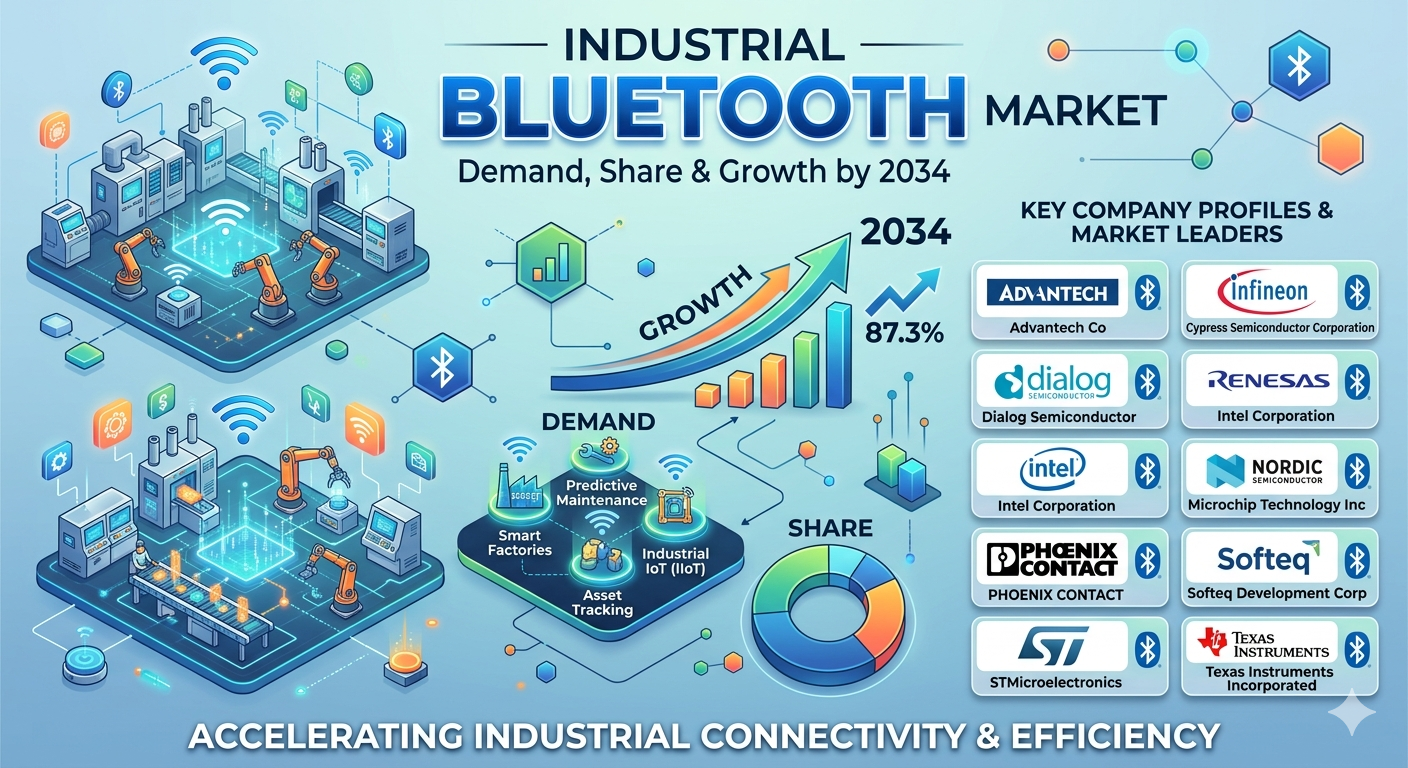
Industrial wireless communication technologies are becoming essential across manufacturing plants, mining operations, oil & gas facilities, and power infrastructure worldwide. The increasing adoption of Industry 4.0 solutions, industrial automation, smart sensors, and connected devices is accelerating the demand for Bluetooth-enabled industrial systems. Businesses are integrating advanced...
LuckyLand Casino Review 2026: Complete Guide to Bonuses, Slots, Payouts & Features The online gaming world in 2026 has shifted significantly, with sweepstakes casinos becoming one of the most popular alternatives to traditional online gambling. Among the pioneers of this model is LuckyLand Casino (LuckyLand Slots)—a platform known for its slot-focused gameplay, free bonuses, and real...