Chamfer Tool for Better Finishing and Accuracy in CNC
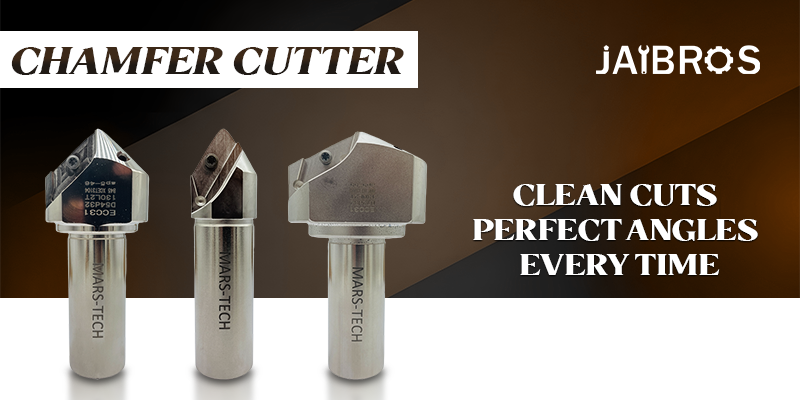
How a Chamfer Tool Improves Finishing and Accuracy
In the current world of machining operations, the final product's smoothness and edges play an important role in the performance as well as the looks of the product. Be it a small-scale operation or a large-scale operation, the final product's quality is always dependent on the tools used during the machining process. One such important cutting tool used during machining operations is the chamfer tool, which is used to enhance the smoothness as well as the edges of the product.
Understanding the Role Played by Edge Finishing in Machining Operations
During machining operations such as milling, drilling, or turning, the edges formed during the machining process are always rough. This is where the process of edge finishing is used to remove the unwanted material from the edges.
Edge finishing is important as it helps the product in the following ways:
-
Better fitting
-
Safety from injuries
-
Better looks
-
Better performance
It is where the chamfer cutting tool is used to enhance the edges of the product, not only for the looks but also for the performance.
How It Enhances Surface Finishing
For industries like the automotive, aerospace, and precision engineering sectors, a highly finished surface is essential. The tools used for chamfering help in deburring and removing sharp corners, resulting in a highly finished and polished surface.
The tools can be used to:
-
Eliminate sharp edges resulting from cutting operations
-
Maintain a consistent edge angle across the entire edge
-
Eliminate the need for secondary finishing operations
This results in time savings and increases productivity. Instead of depending on manual deburring, these tools can be used to produce highly finished surfaces in a single operation with advanced CNC tool technology.
Improving Dimensional Accuracy
Accuracy is one of the most important aspects of machining. A small deviation in accuracy can lead to improper alignment or failure of parts during assembly. The tools used for chamfering help in maintaining dimensional accuracy.
The back chamfer tool can be used to finish internal edges or areas that are difficult to reach. This tool ensures proper finishing of even internal edges without damaging the workpiece. This improves the overall geometry and ensures proper compatibility.
The tools used for chamfering help in maintaining dimensional accuracy by:
-
Maintaining consistent edge angles
-
Tight control over tolerances
-
Improper alignment during assembly
-
Reduced rejection rates
Importance in CNC and VMC Operations
In the age of automation, CNC tool systems have become the mainstay of modern manufacturing. In these systems, precision and repeatability are key requirements. A chamfer tool for a VMC (Vertical Machining Center) is designed to work in harmony with these machines.
In a VMC process, these tools are useful for:
-
Achieving consistent results for multiple parts
-
Cutting out the need for human intervention
-
Improving cycle time efficiency
CNC machines are high-speed machines, and the use of these tools ensures that the edges are cut without compromising on accuracy.
Reducing Wear and Increasing Tool Life
The other significant advantage of using these chamfering tools is their capability to minimize wear on both the workpiece and other cutting tools. Sharp edges, in most cases, are likely to result in stress concentration, which may result in cracks.
By using these tools to smooth these edges, there will be:
-
Uniform stress distribution
-
Increased life of the workpiece
-
Reduced wear on secondary tools
Enhancing Safety and Functionality
Safety is an important factor in any industrial setup. The sharp edges can be hazardous during handling, assembly, or transportation. The process of chamfering removes these hazards and results in smooth transitions.
Moreover, in cases like pipes or mechanical components, chamfered edges make it easier to insert the components and provide tighter sealing. This improves the usability of the final product.
Versatility Across Materials
One of the most significant advantages of using a chamfering tool is its flexibility, which enables its usage with a variety of materials, such as:
-
Steel
-
Aluminum
-
Brass
-
Plastics
Regardless of whether you are dealing with soft materials or hard alloys, a properly chosen tool will help you get good results, making this tool a vital addition to any workshop.
Choosing the Right Tool for Better Results
The right tool is a necessity if you want to get good results in terms of finishing and accuracy. When choosing a tool, there are a number of factors to take into consideration, which include:
-
The material of the workpiece
-
The required angle of cutting
-
Compatibility with machines
-
Cutting speed and rate
Using a tool incorrectly will result in bad finishing and a lack of accuracy, so it is always a good idea to invest in quality tools designed for a particular purpose.
About Jaibros
Jaibros is a renowned brand in the industry of providing various types of tools and solutions for machines. They specialize in providing various types of CNC tools that can cater to the current needs of various industries. They provide a range of tools that can be considered perfect for various types of operations.
Conclusion
In today's competitive world, quality finishing and accuracy have become more important than ever, and this is where the importance of using a chamfering tool lies. This tool has a great impact on the quality of the product, and thus, investing in such tools will be a great move for various manufacturers.
Using a tool of such great importance will not only help a manufacturer to improve its productivity and efficiency but also enable them to deliver quality products to their customers.
FAQs
1. What is the principal purpose of a chamfering tool?
The principal purpose of a chamfering tool is to remove sharp edges and provide a slanted surface on a workpiece.
2. Can these tools be used on all materials?
Yes, these tools can be used on metals, plastics, etc.
3. What is a back chamfer tool used for?
This tool is used to provide a slanted surface on areas which are difficult to reach.
4. Why is chamfering important in CNC machines?
It is important in CNC machines as it helps in finishing edges with high accuracy.
5. How do I select a suitable tool for a VMC machine?
The selection of a suitable tool depends on various parameters, etc.
Categorie
Leggi tutto
Football is one of the most loved sports in the world. Millions of fans follow matches every day, checking scores, rankings, and match schedules. In this fast-moving world, fans need a reliable and quick platform to stay updated. This is where keonhacai becomes very useful. Keonhacai is a modern website designed for football lovers who want accurate and fast information. It provides...

"Executive Summary Iron Ore Mining Market: Share, Size & Strategic Insights CAGR Value The global iron ore mining market was valued at USD 3.26 billion in 2024 and is expected to reach USD 5.46 billion by 2032During the forecast period of 2025 to 2032 the market is likely to grow at a CAGR of 7.10%, To make better decisions, generate maximum revenue, and enhance business profit, Iron...

In today’s fast-paced world, many people are searching for natural ways to manage their weight without relying on harsh chemicals or extreme diets. One herbal solution gaining attention is moringa capsules for weight loss. Made from the leaves of the Moringa oleifera tree, these capsules are packed with nutrients that support overall health while helping the body maintain a balanced...

When it comes to moving or securing cargo, safety is always the top concern. One of the most reliable tools for this job is Stainless Steel Ratchet Straps. They provide strength, durability, and peace of mind while transporting goods. Unlike ropes or basic straps, ratchet straps give you firm control and prevent cargo from slipping. In this blog, we will explore the main benefits of stainless...
Introduction Ecommerce is growing fast in the United States. More people prefer shopping on mobile apps instead of websites. In fact, recent industry reports show that over 70% of ecommerce sales in the USA now happen through mobile devices. This clearly shows why Ecommerce Mobile App Development is becoming a top priority for businesses. Today, customers expect fast loading, secure payments,...