Difference Between 1D, 2D, and QR Codes Explained
|
Summary: 1D barcodes store minimal data because they contain a single line of information, which needs to access database systems for additional data. The 2D codes operate through their horizontal and vertical dimensions to create an independent system that allows them to store multiple information elements. QR codes function as 2D codes, which allow quick mobile device scanning to link physical objects with digital content, thus providing customers with interactive experiences that suit contemporary technological needs. |
Let us begin with an easy task.
People encounter the black lines and tiny squares, which create patterns that present as random until they are scanned. The majority of people do not check whether all existing codes represent the same thing.
The answer has no relation to the question. 1D barcodes, 2D codes, and QR codes might seem like variations of the same idea—and in a way, they are—but the difference between them runs deeper than just appearance. The system determines your data storage capacity, your access speed, and your operational capabilities.
We need to present our material through a method that will help people understand it. We need to present our material through a method that will help people understand it.
The Familiar Starting Point: 1D Barcodes
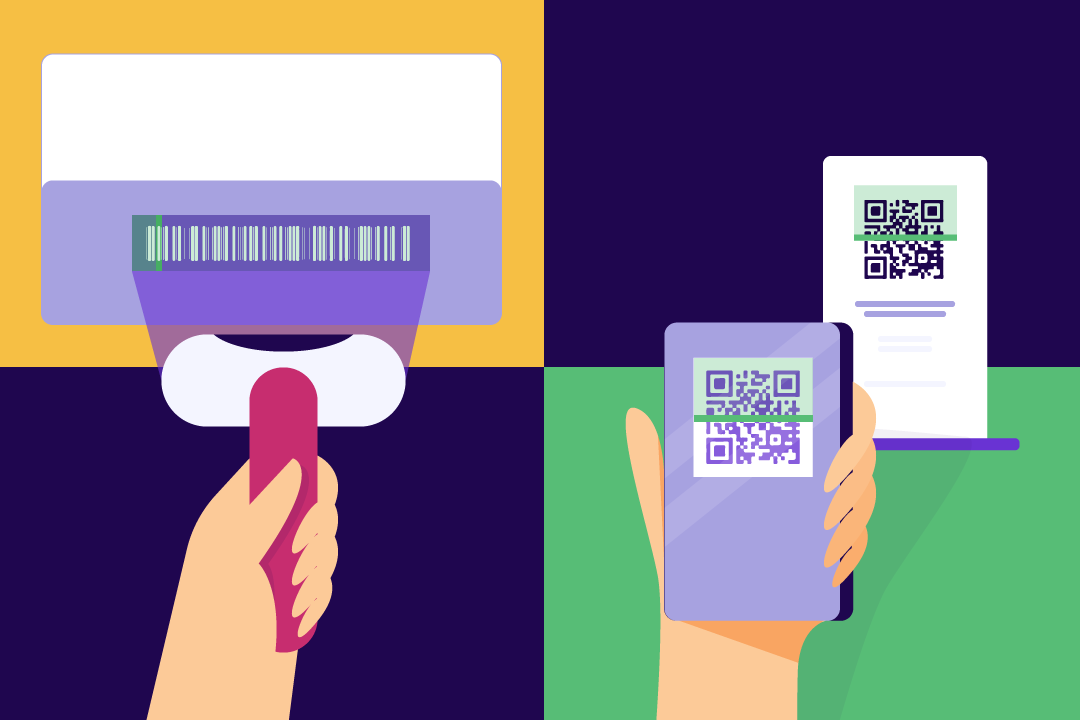
Picture the classic barcode. A row of vertical black lines with varying thickness, sitting quietly on almost every retail product you’ve ever bought.
That’s a 1D barcode.
Simple. Linear. Straightforward.
It works by encoding data in one direction—horizontally. Each line and space represents a number or character. When scanned, it pulls up a reference, usually linked to a database. Think product IDs, pricing, or basic inventory data.
But here’s the catch.
A 1D barcode doesn’t actually store much information. It acts more like a key than a container. You scan it, and it points somewhere else where the real data lives.
That’s fine in controlled environments like retail. Fast checkout lines. Standardized systems. Minimal data needed.
But what happens when you need more?
When One Dimension Isn’t Enough
The attempt to express an entire paragraph through one continuous line of text results in extreme difficulty because the text becomes too condensed and messy until it becomes unmanageable.
The 1D barcode system encounters exactly this restriction. The available space prevents their operation. 2D codes provide the solution to this problem.
The Shift to 2D: More Space, More Possibility
2D codes don’t just expand—they transform the idea entirely.
Instead of storing data in a single line, they use both horizontal and vertical space. Think of it like moving from a straight road to a full grid.
Suddenly, there’s room. A lot more room.
With that extra capacity, 2D codes can hold:
- Detailed product information
- Serial numbers and batch data
- Expiration dates
- Even URLs or small chunks of text
And here’s where it gets interesting—they don’t always need a database to function.
Unlike 1D barcodes, a 2D code can carry meaningful data within itself. Scan it, and the information is right there.
No lookup required.
That alone opens up new possibilities across industries. Manufacturing, healthcare, logistics—anywhere traceability and detailed data matter.
But among all 2D codes, one type has clearly taken center stage.
QR Codes: The One You Actually Interact With
Let’s be honest—you’ve probably scanned a QR code recently.
Maybe to check the menu. Maybe to make a payment. Maybe just out of curiosity.
QR codes are a specific type of 2D code, but they’ve become something bigger: a bridge between the physical and digital world.
And they’re built for speed.
Originally designed for the automotive industry, QR codes were meant to be scanned quickly and accurately, even when partially damaged. That’s why they have those distinctive square patterns in the corners—they help scanners detect orientation instantly.
But what really sets them apart isn’t just structure. It’s usable.
You don’t need specialized equipment anymore. Your phone does the job.
That changes everything.
So… What’s the Real Difference?
At this point, you might be thinking: Okay, they all store data. They all get scanned. Why does the distinction matter?
Fair question.
Here’s the real difference, stripped down:
1D Barcodes
- Store minimal data
- Require a database lookup
- Need line-of-sight scanning
- Best for simple, high-speed tasks like retail checkout
2D Codes (General)
- Store much more data
- Can work independently of a database
- More compact and versatile
- Ideal for tracking, traceability, and compliance
QR Codes
- A type of 2D code
- Optimized for fast scanning and mobile use
- Widely used for consumer interaction
- Perfect for linking physical items to digital experiences
But beyond specs and features, the real difference shows up in how they’re used.
Use Case Changes Everything
Visualize a storage facility. A 1D barcode provides efficient product identification when you require rapid product identification. The system operates with high speed and dependable performance because people already know how to use it.
When you need to monitor all aspects of a product's movement through its complete history, you require complete information about its origin and production time, batch identification, and expiration date. A 1D barcode starts to feel… limited.
Businesses use 2D codes because they provide better information, which enables product tracking while decreasing their need for outside systems. The next step requires you to transition into a situation that directly involves customers. You need a person to scan a code for immediate access to website content, application downloads, and product information.
QR codes provide their best performance in this particular situation because they offer users straightforward access to information about their product in a manner that feels natural to use.
People require various solutions to meet their distinct requirements.
The Bigger Picture
The codes serve two functions because they handle data storage and establish connections between systems, people, and information. The 1D barcode establishes a link between a product and its corresponding database. A 2D code connects data directly to the asset itself.
The QR code establishes a link between the physical world and digital experiences. The situation shows a significant transformation.
Companies that adopt intelligent operations, which include real-time tracking, automation, and data-driven decision making, need to select between these codes because it has become a strategic matter.
The choice between these codes has evolved into a strategic decision because organizations now require immediate solutions that use automated systems and data analysis tools.
So, Which One Should You Use?
It depends.
- Need speed and simplicity? Go with 1D.
- Need depth and traceability? 2D is your answer.
- Need interaction and accessibility? QR codes are hard to beat.
But here’s the real takeaway.
Don’t just choose a code—choose what it enables.
Because at the end of the day, it’s not about lines or squares. It’s about what happens after the scan. Contact Lowry Solutions.
FAQs
What is a 1D barcode used for?
The system handles retail operations that involve pricing and inventory management through database connections.
How are 2D codes different from 1D?
The two-dimensional system provides more storage capacity, which allows operations without needing database access.
Are QR codes the same as 2D codes?
QR codes represent a specific type of 2D code that enables quick scanning abilities.
Why are QR codes popular?
The system provides users with simple smartphone scanning capabilities, which lead to instant access to online materials.
Which code should I use?
The system should use 1D codes when users need basic functionality and 2D codes for complex data and QR codes to enhance user interactions.
الأقسام
إقرأ المزيد
Cricket betting has become increasingly popular due to the excitement and fast-paced nature of the game. However, many users make avoidable mistakes that reduce their chances of success. Whether you are a beginner or an experienced user of Mahadev Book , understanding these common errors can help you make smarter decisions. With easy access through your Mahadev Book ID and...

The professional football environment changes so quickly, and teams must constantly search for talented players to stay competitive. As discussions around the upcoming Pittsburgh Steelers Vs New Orleans Saints matchup continue, team management remains focused on the draft board to identify promising talent. Buy your Pittsburgh Steelers Vs New Orleans Saints Tickets today and...

Signs of ADHD in Adults: A Complete Guide to Symptoms, Causes, and Solutions | Happy Lab Have you ever felt like your mind is constantly racing, jumping from one thought to another like a browser with too many tabs open? You start tasks but rarely finish them, forget things easily, or struggle to stay focused even on important work. If this sounds familiar, you might be...
Before starting acne scar treatment, patients are advised to follow certain pre-treatment guidelines to ensure better results. These may include avoiding direct sun exposure, stopping harsh skincare products, and informing the specialist about any medications being used. Following these guidelines helps prepare the skin, reduces sensitivity, and allows acne scars treatment in Islamabad to work...

Introduction As for the internet sports, cricket still reigns supreme in the Indian sports arena and IPL is the biggest attraction amongst millions of fans every year. With the return of IPL 2026, users are turning to platforms that provide extensive coverage of cricket with organized sports sections, and seamless mobile viewing experience. If it comes to the search engine, Dafabet has been...