


Real-Time Retailing: Leveraging Streaming Data for Instant Marketing Action
The retail landscape has moved beyond daily or hourly updates. In 2026, success depends on what happens in the next second. Customers expect brands to react to their behavior instantly. If a user abandons a cart, they want a relevant nudge immediately. If a product trends on social media, inventory must shift in real-time. This shift requires a move from batch processing to streaming data. Modern Marketing Data Analytics now focuses on high-velocity data pipelines. Companies use Marketing Data Analytics Services to build these reactive systems.
The Shift from Batch to Streaming Data
Traditionally, marketers relied on batch processing. They collected data throughout the day. They processed it overnight. They saw the results the next morning. This delay is now a major competitive disadvantage.
Real-time retailing uses streaming data architecture. It processes events as they occur. This includes website clicks, sensor data, and mobile app interactions.
-
Event-Driven Architecture: The system reacts to specific "events" like a page view.
-
Low Latency: Data moves from the user to the analytics engine in milliseconds.
-
Continuous Integration: The marketing stack updates its user profiles constantly.
Technical Pillars of Real-Time Marketing
Building a real-time system requires specialized tools. You cannot use a standard SQL database for high-velocity streams. Marketing Data Analytics Services help firms select and implement the right stack.
1. Message Brokers and Stream Processing
The core of the system is a message broker like Apache Kafka or Google Pub/Sub. These tools act as a buffer. They collect millions of events from different sources. Next, a stream processing engine like Apache Flink or Spark Streaming analyzes the data. These engines perform "Windowed Calculations." For example, they can calculate the average spend of a user over the last five minutes. This allows for immediate action based on recent behavior.
2. In-Memory Databases for Instant Retrieval
Speed is the priority. Traditional hard drives are too slow. Real-time systems use in-memory databases like Redis or Aerospike. These tools store "Hot Data" for instant access.
-
User State: What did the customer just look at?
-
Session Context: Is the user on a mobile device or a desktop?
-
Inventory Levels: Is the item still in stock?
3. Edge Computing for Faster Response
In 2026, many brands move processing closer to the user. Edge computing runs analytics on local servers or even the user's device. This reduces "Round-Trip Time" (RTT). It allows for instant UI changes without waiting for a central cloud response.
Leveraging Marketing Data Analytics Services
Scaling these technologies is difficult for internal teams. Most retailers hire Marketing Data Analytics Services to manage the complexity. These experts provide the engineering talent to build "Live Data Pipelines."
1. Identity Resolution in Real-Time
A customer might browse on a phone and buy on a laptop. A real-time system must link these actions instantly. This is "Identity Resolution." Consultants build "Identity Graphs" that update in milliseconds. When a user logs in, the system merges their guest behavior with their permanent profile. This ensures the marketing message stays consistent across all devices.
2. Privacy-First Analytics Implementation
Modern laws like GDPR and CCPA require strict data handling. Streaming data makes this harder. You must filter out private data before it reaches the analytics engine. Technical services implement "Privacy Sidecars." These are automated filters that remove PII (Personally Identifiable Information) in the stream. This allows marketers to see trends without seeing private details. Statistics show that privacy-compliant brands see 20% higher customer trust scores.
Instant Marketing Actions and Use Cases
Once the data is flowing, what do you do with it? Real-time retailing enables several high-value actions.
1. Dynamic Pricing Engines
Prices no longer stay static for months. Retailers use AI to adjust prices based on live demand.
-
Scarcity Signals: If only two items remain, the system might remove a discount.
-
Competitor Monitoring: If a rival drops their price, the system reacts in minutes.
-
Inventory Balancing: High-stock items get instant "Flash Discounts" to move them quickly.
2. Behavioral Retargeting
Traditional retargeting takes hours or days. Real-time retargeting happens while the user is still on the site. If a user looks at a pair of shoes three times, the system triggers a "Social Proof" notification. It might say, "50 people bought these in the last hour." This creates urgency and increases conversion rates.
3. Hyper-Personalized Recommendations
Standard recommendation engines look at what you bought last month. Real-time engines look at what you are doing now. If a user adds a tent to their cart, the system instantly suggests sleeping bags and lanterns. It does not wait for the next session. This "Next-Best-Offer" logic drives a 15% to 25% increase in Average Order Value (AOV).
The Role of AI in Real-Time Analytics
AI is the brain of the real-time retail engine. You cannot write manual rules for every customer action. You need machine learning to handle the scale.
Automated Anomaly Detection
Streaming data often contains errors or bots. AI models monitor the stream for "Anomalies."
-
Bot Detection: Identifying non-human traffic to save ad spend.
-
Fraud Prevention: Flagging suspicious transaction patterns instantly.
-
Error Tracking: Noticing if a checkout button stops working in a specific region.
Real-Time Sentiment Analysis
In 2026, brands track social media sentiment in the stream. If a product launch receives negative comments on X (Twitter), the system alerts the marketing team. It can even pause ad campaigns automatically to prevent wasting budget on a failing product.
Financial Impact and Performance Stats
The shift to real-time data is a financial decision. The ROI (Return on Investment) comes from higher efficiency and faster sales.
1. Key Performance Indicators (KPIs)
-
Conversion Rate: Real-time personalization increases conversion by an average of 12%.
-
Bounce Rate: Faster, more relevant pages reduce bounce rates by 18%.
-
Customer Lifetime Value (CLV): Better experiences lead to higher loyalty over time.
2. Revenue Growth Statistics
According to industry reports from 2025:
-
Real-time adopters: These firms see a 10% higher revenue growth than batch processors.
-
Ad Spend Efficiency: Targeted streaming ads reduce "Wasted Impressions" by 30%.
-
Operational Savings: Automated streaming pipelines reduce manual reporting hours by 45%.
Challenges to Real-Time Implementation
Real-time retailing is powerful but difficult to build. Technical teams face three main hurdles.
1. Data Integrity and "Out-of-Order" Events
In a stream, events do not always arrive in the correct order. A "Purchase" event might arrive before the "Add to Cart" event due to network lag. Engineers use "Watermarking" techniques. This allows the system to wait a few milliseconds for late data. It ensures the Marketing Data Analytics remain accurate even with messy network conditions.
2. Infrastructure Costs
Storing and processing millions of events per second is expensive. High-speed memory costs more than standard storage. Marketing Data Analytics Services help optimize these costs. They use "Tiered Storage." They keep the last 24 hours of data in fast memory. They move older data to cheaper cloud storage. This balances speed with budget.
3. Technical Skill Gaps
Most marketing teams do not have "Stream Engineers." They have data analysts. The gap between these roles is large. This is why professional services are vital. They provide the "Platform Engineering" that allows analysts to do their jobs. They create a simple interface on top of a complex streaming engine.
Future Trends: The 2027 Vision
By 2027, real-time retailing will move into the physical world through "Spatial Analytics."
1. Augmented Reality (AR) Shopping
Imagine a customer walking through a store with AR glasses. As they look at a shelf, the system fetches their data profile. It shows them a personalized price or a digital coupon on their glasses. This requires sub-100ms latency between the glasses and the Marketing Data Analytics hub.
2. Predictive Logistics Syncing
Marketing and logistics will merge. If an ad campaign is highly successful in Chicago, the system will see the spike in the data stream. It will automatically reroute shipping trucks to Chicago before the inventory runs out. This "Predictive Fulfillment" is the ultimate goal of real-time retailing.
Conclusion
The window for marketing action is shrinking. Consumers no longer have patience for generic messages or delayed responses. They want brands that move at the speed of their own thoughts.
Real-time retailing is the only way to meet this expectation. It requires a fundamental shift in how you handle data. By utilizing Marketing Data Analytics Services, you can build a stack that reacts in milliseconds.
Streaming data turns your marketing from a passive reporter into an active participant. It saves money, increases sales, and builds lasting trust. The technical transition is hard, but the rewards are clear. The future belongs to those who can see, analyze, and act in real-time.
Категории
Больше
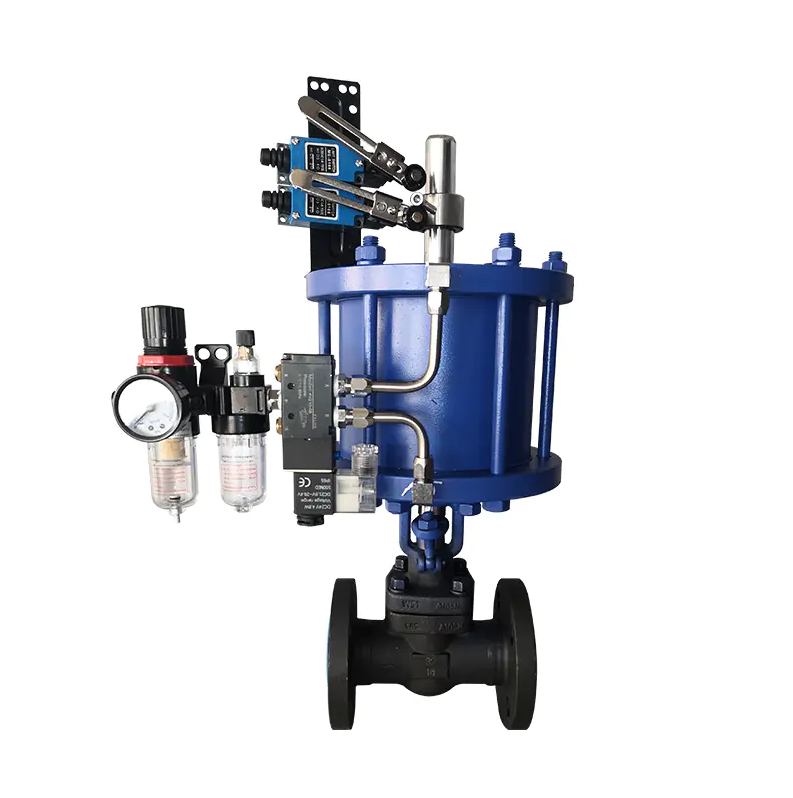
A Pneumatic Stop Valve is an essential component in systems that use compressed air or gas to control fluid flow. Designed to regulate, start, or stop flow in a pipeline, these valves play a critical role in industrial, manufacturing, and process automation environments. Understanding the design, operation, and applications of a Pneumatic Stop Valve highlights its contribution to safety,...
The global Amyotrophic Lateral Sclerosis (ALS) treatment market is witnessing steady growth as healthcare providers, researchers, and pharmaceutical companies intensify efforts to address one of the most challenging neurodegenerative diseases. Valued at US$ 594.1 million in 2022, the market is projected to expand at a CAGR of 5.5% from 2023 to 2031 and surpass US$ 958.2 million by the end of...

CHENNAI, INDIA — MH Cognition, a leading innovator in enterprise software architectures, has officially launched its advanced, next-generation Learning Management System (LMS). Designed specifically to meet the high-capacity needs of modern universities, autonomous colleges, and training institutions, this cloud-native platform aims to eliminate campus administrative silos, secure...

According to the latest report published by Data Bridge Market Research, the Manufacturing Execution System (MES) Market CAGR Value The global manufacturing execution system (MES) market size was valued at USD 25.16 billion in 2025 and is expected to reach USD 62.53 billion by 2033, at a CAGR of 12.05% during the forecast period A top notch...

The success of a dental clinic depends not only on professional expertise but also on the quality of equipment used every day. From patient consultations to advanced procedures, having the right setup improves efficiency, comfort, and treatment outcomes. Among all clinic investments, a dental chair remains one of the most important because it serves as the foundation of nearly every dental...
