


Master Edge Finishing with a Chamfer Tool | CNC Guide 2026
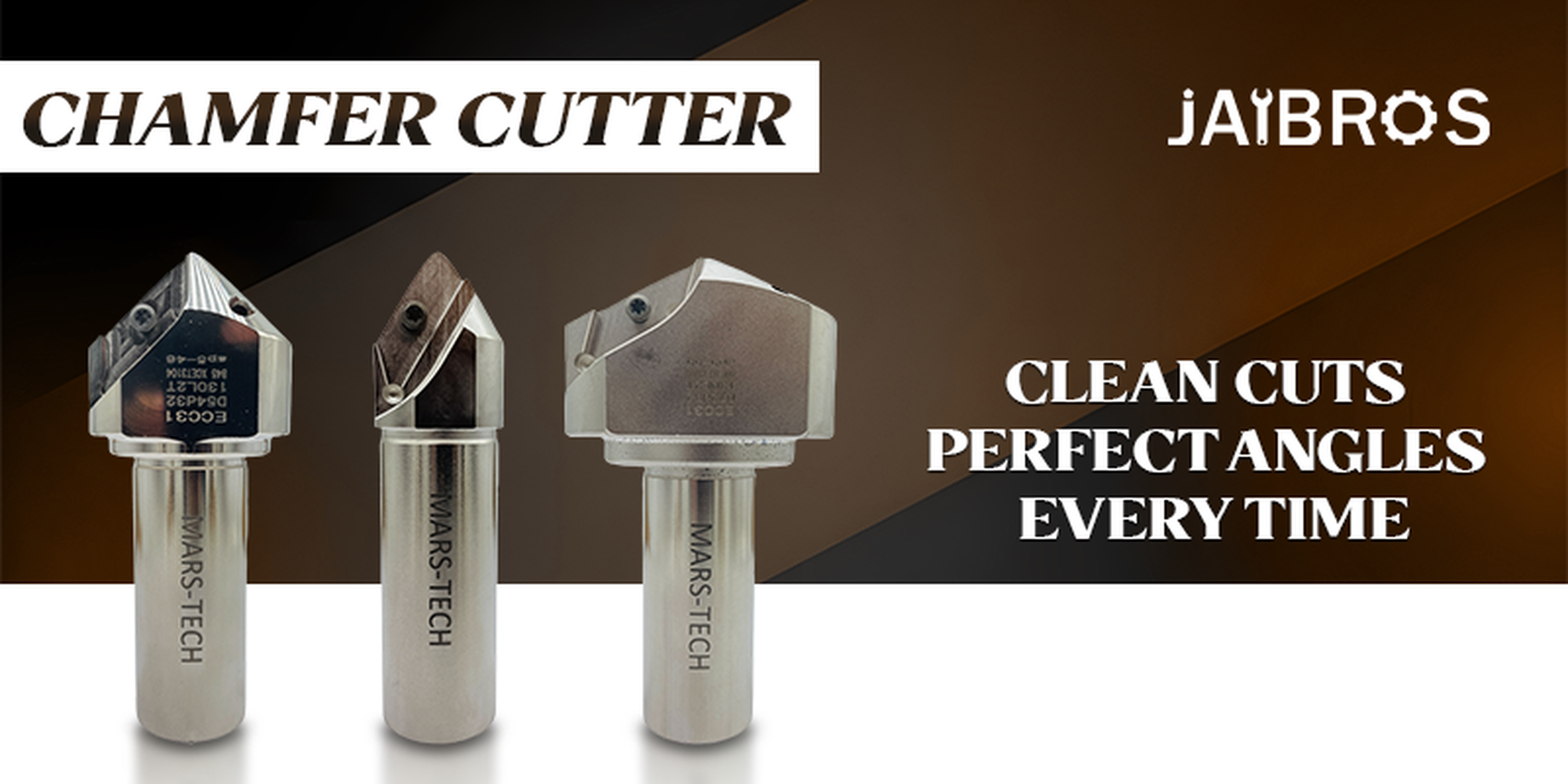
Get Smooth and Precise Edges with a Chamfer Tool
In today’s machining and metalworking industry, achieving clean and precise edges is essential for both quality and performance. Whether you are working in a small workshop or using advanced CNC machinery, proper edge finishing plays a crucial role in the final outcome of any component. Using the right technique and tool makes a significant difference in achieving accurate and consistent results.
Chamfer tool: Perfect edges are not only about appearance—they help reduce stress concentration, enhance product safety, and improve overall functionality. With the right approach and tools, you can achieve smooth, flawless edges that meet industrial standards. In this blog, we will explore effective techniques and best practices to help you achieve high-quality edge finishing in every project.
What Is Edge Chamfering?
Edge chamfering is a machining process used to create an angled edge where two surfaces meet. Instead of leaving a sharp 90-degree corner, the edge is typically cut at a 45-degree angle to improve the overall finish and usability of the component. This angled cut helps ensure smoother operation and better part performance.
Chamfering is widely used in industries such as automotive, aerospace, and manufacturing, where precision and durability are critical. It helps reduce wear and tear, improves safety by removing sharp edges, and enhances the overall quality and functionality of the final product.
Importance of Using the Right CNC Tool
However, when it comes to perfect edges, the choice of a proper CNC tool plays a vital part. Not all tools are meant for chamfering, and if a wrong tool is used, edges might not be smooth.
A quality chamfer cutting tool helps in the following ways:
-
Smooth edge finishing
-
Less burrs formed during machining
-
Tool life is extended
-
Better machining efficiency
In a complex setup, especially in a vertical machining center, a chamfer tool for VMC helps in precision machining.
Types of Chamfering Tools
Different applications require different tools. Understanding this can help you choose the best tool for your application.
1. Standard Chamfer Cutting Tool
This is the most commonly used tool for simple chamfering applications. It is best for general-purpose edge cutting and finishing, both for manual and CNC machines.
2. Back Chamfer Tool
The back chamfer tool is best for cutting and finishing areas that are hard to reach, especially areas such as the inside edge or the backside of a material. It is highly recommended for use in complex cutting applications where other tools are not sufficiently able to reach.
3. Carbide Chamfer Tools
The carbide chamfer tools are made of carbide, a material known for its high durability and resistance to high temperatures. It is best for cutting and finishing hard materials such as stainless steel.
Step-by-Step Process to Get Perfect Edges
However, it is worth noting that achieving flawless edge cuts involves a combination of having the right tool, setting it correctly, and using the right cutting techniques.
Step 1: Selecting the Right Tool
Selecting the right tool for edge cutting involves various considerations, for instance:
-
Using a carbide tool for hard materials
-
Using a back chamfer tool for internal edge cuts
Step 2: Setting the Angle
The standard edge cut is done at an angle of 45 degrees. However, this can be different based on the application. It is always important to set your machine at the right angle.
Step 3: Cutting Speed and Feed Rate
It is crucial to avoid damaging your tool and achieving an undesirable finish. It is always recommended to set your machine at a standard cutting speed and feed rate for your work material.
Step 4: Clamping the Material
It is crucial to ensure your work material is clamped correctly to avoid vibrations. These vibrations can cause undesirable edge cuts.
Step 5: Test Cut
Before you start your work, it is always crucial to perform a test cut.
Step 6: Edge Inspection
It is crucial to inspect your edge cut to determine whether it is smooth.
Best Practices for Perfect Edge Finishing
To ensure that you get high-quality results every time, you need to follow these best practices:
-
Use sharp and well-maintained cutting tools
-
Avoid high cutting speeds
-
Use a coolant to reduce tool wear
-
Inspect the cutting tools regularly for signs of wear and tear
Ensure proper alignment of the CNC tool
By following these best practices, you are not only ensuring a high-quality edge, but also increasing your productivity and reducing errors.
Common Mistakes to Avoid
There are a number of mistakes that even an experienced machinist may make while chamfering a material. The following are some common mistakes that you need to avoid:
-
Using the wrong tool for the job
-
Incorrect angle setting
-
Incorrect clamping
-
Not checking the tool for wear and tear
-
Not doing a test cut
By avoiding these mistakes, you can ensure that you get professional results.
Applications of Chamfering in Industry
Chamfering is commonly employed in different industries due to its importance.
-
Automotive Industry: For smooth assembly of Engine Parts
-
Aerospace Industry: For reducing stress concentration in parts
-
Manufacturing Industry: For quality and safety improvement
-
CNC Machining Industry: For finishing edges in complex parts
About Jaibros
Jaibros is a renowned name in the industrial tools and machining industry in India. The company specializes in providing a variety of quality CNC tools, ensuring precision and reliability in its products, from chamfer cutting tools to other machining tools, which are reliable and fulfill industrial requirements.
Conclusion
Having perfect edges in your machined parts is a vital part of any machining process. With proper tools, proper machining techniques, and proper finishing, you can definitely improve the quality and reliability of your machined parts. Whether you are a professional or a DIY enthusiast, mastering edge finishing can give you a professional edge.
With proper tools and proper machining conditions, you can always attain perfect edges and smooth finishes in your machined parts, ensuring quality and reliability in every part.
FAQs
1. What is the purpose of chamfering edges?
Chamfering edges helps in ensuring safety and facilitates easy assembly.
2. Which tool can be used for internal chamfering?
The back chamfer tool can be used for internal chamfering.
3. Is chamfering applicable to all materials?
Yes, chamfering can be carried out on all materials, including metals and plastics, using a suitable chamfering tool.
4. What is the standard chamfering angle?
The standard chamfering angle is 45 degrees.
5. Why is a suitable tool important in chamfering?
The use of a suitable tool helps in achieving a smooth finish and extends its life.
Categorie
Leggi tutto
Family Car Market The Family Car Market is experiencing steady growth due to increasing demand for comfortable, safe, and fuel-efficient vehicles designed for household and long-distance travel needs. Family cars typically include sedans, SUVs, hatchbacks, and MPVs that prioritize safety, space, convenience, and affordability for daily commuting and family-oriented usage. Rising urbanization,...

In today’s competitive digital market, every business needs a strong online identity to attract customers and build credibility. A professionally designed website is no longer just an optional marketing tool. It acts as the first impression for potential clients who want to understand a company’s services, values, and reliability. Businesses that invest in a user-friendly website...

A developer can now connect an application to intelligence without building a model from scratch. That shift has made API-based AI development practical for startups, enterprises, and independent builders. The open ai api concept illustrates how applications can send structured requests to hosted models and receive useful responses for conversations, content generation, coding, analysis,...
Fitraflex Germany:-If you're searching for a natural joint support supplement in Germany, Fitraflex Germany has become one of the products attracting...

Global Demand Outlook for Executive Summary Emergency Lighting Market Size and Share Introduction The Emergency Lighting Market size is expected to reach US$ 15.23 Billion by 2033 from US$ 8.14 Billion in 2025. The market is estimated to record a CAGR of 8.15% from 2026 to 2033. The global Emergency Lighting Market is experiencing significant growth due to rising concerns...