GetCito vs. AthenaHQ (2026 Review): Which GEO Tool is Best for You?
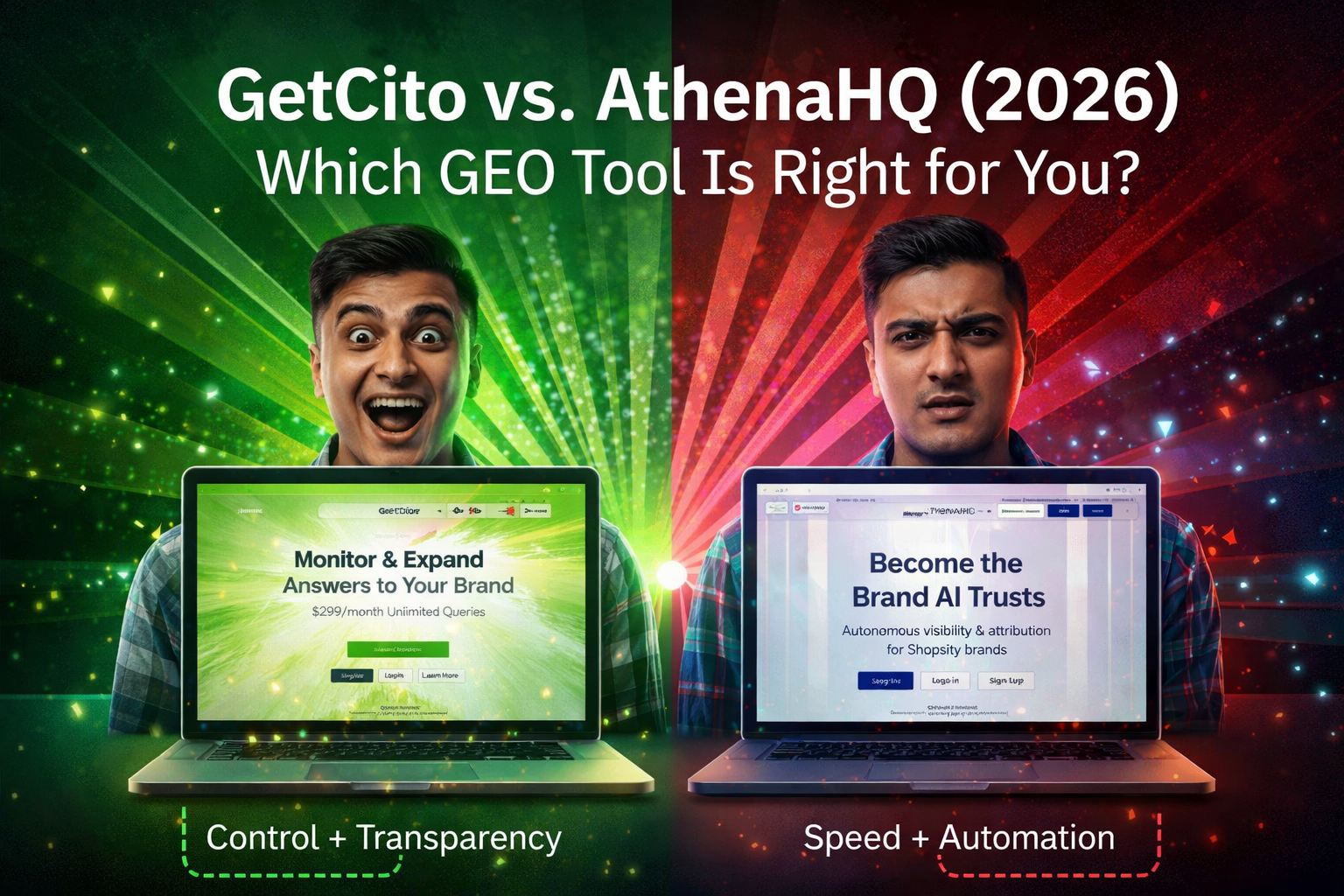
The way we approach digital visibility is undergoing a fundamental shift. Traditional SEO, once dominated by blue links and keyword rankings, is giving way to a new paradigm: Generative Engine Optimization (GEO).
In 2026, visibility is no longer about ranking on search engines—it’s about being mentioned, cited, and trusted by AI systems like ChatGPT, Gemini, and other large language models.
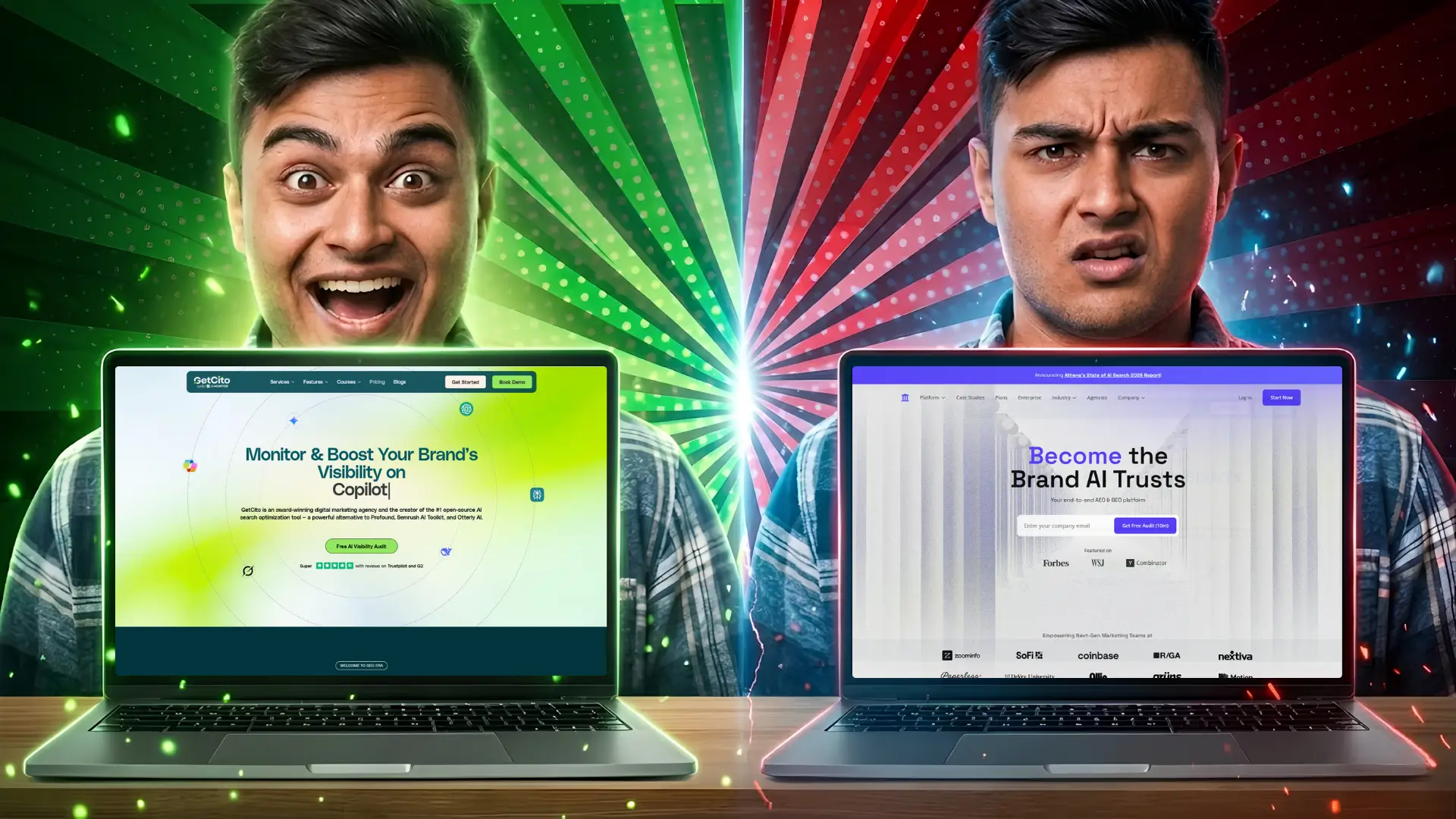
This shift has introduced a new category of tools designed to optimize how brands appear in AI-generated responses. Among the leading platforms in this space are GetCito and AthenaHQ—two tools with radically different philosophies.
So, which one is right for you?
Let’s break it down.
The Big Shift: From SEO Rankings to AI Visibility
The document highlights a striking reality: 83% of users now prefer AI-generated answers over traditional search results. This means that your brand’s visibility depends less on rankings and more on how AI systems interpret and reference your content.
This is where GEO tools come in. They help brands:
- Track mentions across AI platforms
- Improve citation visibility
- Build authority in knowledge graphs
- Optimize how AI understands their brand
In fact, GEO tools can increase citation visibility by up to 40%, making them a critical part of modern marketing infrastructure.
The Core Difference: Strategy vs Execution
At the heart of the comparison lies a simple but powerful distinction:
GetCito is strategic. AthenaHQ is operational.
GetCito: Control and Long-Term Authority
GetCito is built for teams that want to understand the system, not just use it. It provides:
- Unlimited query tracking
- Open-source architecture
- Deep diagnostic insights
- Entity-based SEO analysis
It focuses on answering the question: “Why is my brand visible (or not) in AI responses?”
AthenaHQ: Speed and Automation
AthenaHQ, on the other hand, is designed for teams that prioritize execution. It offers:
- AI agents that automate tasks
- Pre-built workflows
- Daily monitoring
- Actionable recommendations
Instead of asking “why,” AthenaHQ answers: “What should you do next?”
Feature Comparison at a Glance
The document provides a detailed comparison across multiple dimensions:
1. Usage Model
- GetCito: Unlimited queries → encourages experimentation
- AthenaHQ: Credit-based → restricts heavy usage
This difference has major implications. With GetCito, you can test hundreds of prompts without worrying about cost. With AthenaHQ, every query has a price, which can limit exploration.
2. Data Philosophy
GetCito provides raw, transparent data:
- Exact prompts triggering mentions
- Full AI responses
- Context and entity relationships
AthenaHQ abstracts this complexity:
- Summarizes insights
- Provides recommendations
- Suggests actions automatically
In short:
- GetCito = diagnostic intelligence
- AthenaHQ = decision automation
3. AI Platform Coverage
- GetCito: Covers 11+ major platforms
- AthenaHQ: Covers 27+ platforms, including specific model versions
AthenaHQ has broader coverage, making it attractive for enterprises needing wide visibility tracking.
4. Open Source vs Proprietary
- GetCito: Open-source, self-hostable → full control
- AthenaHQ: Proprietary → managed experience
This reflects a deeper philosophical divide:
- Ownership vs convenience
- Transparency vs abstraction
Brand Visibility: Two Different Approaches
One of the most insightful parts of the document is how each tool approaches brand mention tracking.
GetCito: Understanding the “Why”
GetCito uses a Real Query Database, allowing you to see:
- What triggered the mention
- How your brand is positioned
- What entity relationships exist
It helps diagnose issues like:
- Weak knowledge graph presence
- Missing category associations
- Inconsistent brand data
This makes it ideal for teams that want to build authority from the ground up.
AthenaHQ: Acting on the “What”
AthenaHQ focuses on execution:
- Identifies citation opportunities
- Flags outdated or incorrect sources
- Suggests content updates
- Prioritizes actions by impact
It essentially acts like a GEO assistant, telling you exactly what to do next.
Execution Style: Manual vs Automated
This is where the difference becomes most visible.
GetCito
- Provides dashboards and raw insights
- Requires manual interpretation
- Gives full control over strategy
AthenaHQ
- Automates analysis and execution
- Generates content drafts
- Suggests schema markup and updates
This creates a clear trade-off:
GetCito gives you control. AthenaHQ saves you time.
Pricing and Cost Structure
Pricing reveals another critical difference.
GetCito Pricing
- Free self-hosted option
- Flat-rate plans starting at $299/month
- No usage limits
Advantages:
- Predictable costs
- No overage charges
- Ideal for agencies and experimentation
AthenaHQ Pricing
- Starts at $295/month
- Includes limited credits (e.g., 3,600/month)
- Additional credits cost extra
Challenges:
- Costs scale with usage
- High-volume teams may face unpredictability
- Credit exhaustion can become a bottleneck
The Hidden Trade-Off
The document highlights an important insight:
The real trade-off isn’t features—it’s control vs convenience.
With GetCito:
- You retain full control
- But need expertise to use it effectively
With AthenaHQ:
- You get instant results
- But sacrifice visibility into the system
Over time, this can impact outcomes:
- GetCito builds compounding authority
- AthenaHQ delivers short-term wins
Measuring Success in the GEO Era
Traditional SEO metrics like traffic and clicks are no longer enough.
The document introduces new GEO metrics:
Primary Metrics:
- AI Share of Voice: How often AI mentions your brand
- Citation Rate: How frequently your site is referenced
- Entity Accuracy: How well AI understands your brand
- Response Rank: Where your brand appears in answers
Secondary Metrics:
- AI-assisted leads
- Competitor displacement
- Knowledge graph growth
These metrics emphasize authority and trust, not just visibility.
Who Should Use Which Tool?
The document provides a clear decision framework.
Choose GetCito if you:
- Want full control over your GEO strategy
- Need unlimited experimentation
- Have technical expertise or developers
- Manage multiple clients or brands
- Care about long-term authority
Best for:
- Startups and SMBs
- Technical marketing teams
- Agencies and developers
Choose AthenaHQ if you:
- Need fast results
- Prefer automation over manual analysis
- Lack technical GEO expertise
- Require enterprise compliance
- Value convenience and speed
Best for:
- Enterprises
- Non-technical teams
- High-speed agencies
- Content-driven brands
Strategic vs Operational Thinking
One of the most powerful insights from the document is this:
GetCito is a strategic tool. AthenaHQ is an operational tool.
- GetCito helps you build the foundation
- AthenaHQ helps you execute quickly
In many cases, the choice isn’t about which tool is better—it’s about which aligns with your organization’s mindset.
Final Verdict: It Depends on Your DNA
So, who wins in 2026?
The answer is simple:
It depends on your operational DNA.
If you value:
- Control
- Transparency
- Long-term authority
→ Choose GetCito
If you prioritize:
- Speed
- Automation
- Ease of use
→ Choose AthenaHQ
Conclusion
The rise of AI search has fundamentally changed how brands achieve visibility. GEO is no longer optional—it’s becoming the backbone of digital strategy.
GetCito and AthenaHQ represent two distinct paths:
- One builds deep, lasting authority
- The other delivers fast, actionable results
The real question isn’t which tool is better.
It’s this:
Do you want to understand the system—or just win in it?
Your answer will determine the right choice.
Categorias
Leia Mais
Milliman has added the Minnesota Cement Masons Defined Contribution Retirement Fund as a new retirement services client, strengthening its work in defined contribution plan administration and supporting the union’s effort to help members save for retirement with professional plan management and participant services. The Minnesota Cement Masons Defined Contribution Retirement Fund,...

"Detailed Analysis of Executive Summary North America Plant-Based Milk Market Size and Share North America plant-based milk market is expected to grow significantly in the forecast period of 2023 to 2030. Data Bridge Market Research analyses that the market is growing with a CAGR of 12.0% in the forecast period of 2023 to 2030 and is expected to reach USD 10,821.40 Million by...

ESG targets look strong in presentations. Net-zero pledges, carbon reduction percentages, sustainability commitments, they signal ambition. But in commercial real estate, ambition does not equal performance. What ultimately matters is how a building performs every day. For property teams, asset managers, landlords, and FM professionals, the real question is not: “What are our ESG...

Polaris Market Research has published a brand-new report titled Lemon Oil and Lemon Extracts Market Share, Size, Trends, Industry Analysis Report, By Type (Lemon Oil and Lemon Extracts); By Category; By Application; By Region; Segment Forecast, 2023 - 2032 that includes extensive information and analysis of the industry dynamics. The opportunities and challenges in the report's dynamical...

The landscape of modern infantry operations is rapidly changing as defense forces shift toward integrated, digitally connected solutions.Central to this evolution is the global soldier system, a comprehensive suite of equipment designed to enhance the lethality, survivability, and situational awareness of individual combatants.By transforming a single soldier into a networked...