


Edge Finder Tool: What It Is & How It Works in CNC
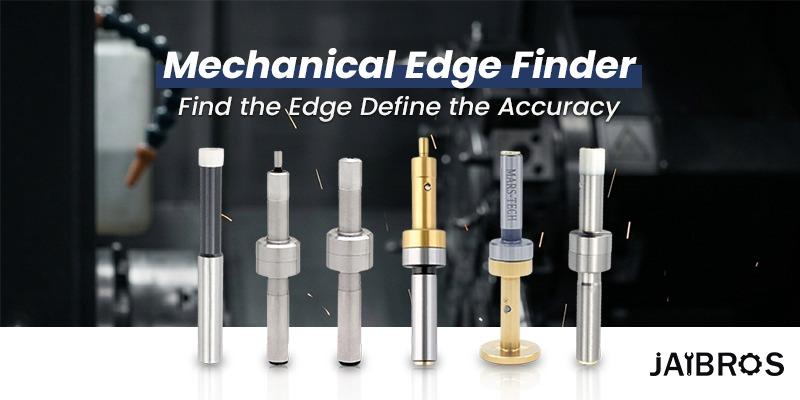
What is an edge finder tool, and how does it work?
In the world of precision machining, accuracy is key. Whether you are working with small parts or large industrial pieces, even an error in positioning can create defects. This is where an edge finder tool can become very useful. It is an efficient tool for any CNC machine, allowing for accurate identification of the edges of any workpiece.
With advancements in CNC machine technology, tools like an edge finder are often utilized with advanced tool holders such as BT40 for maximum accuracy and stability. Understanding how this tool is utilized can greatly improve results.
What is an Edge Finder?
An edge finder tool is a mechanical or electronic device used to find the precise location of a workpiece edge. It assists machinists in establishing reference points, or zero points, on a CNC machine tool. After finding the edge position, machining operations can be performed with high accuracy.
This device is normally used for milling operations and is regarded as one of the most accurate methods for edge finding. This device can be used when a BT40 setup is required, as it is one of the most accurate methods for edge finding.
Types of Edge Finders
There are different types of edge finders, and they are used for different purposes:
1. Mechanical Edge Finder
This is the most commonly used edge. It has a cylindrical body with a spring-loaded tip. When the tip comes into contact with the edge of the workpiece, it moves slightly.
2. Electronic Edge Finder
This finder tool uses the properties of electricity as it comes into contact with the edge of the workpiece.
3. Optical Edge Finder
This is less commonly used but is highly accurate.
The best edge finder for you will depend on your machining requirements and the machine tool you are using.
How Does an Edge Finder Work?
The working principle of a finder tool is quite simple yet useful. It is used to locate the exact position of the edge of the material being machined.
Here is the step-by-step process of using a finder tool:
-
The finder tool is fixed in the spindle, usually with the help of a BT40 tool holder.
-
The spindle is rotated at a moderate speed.
-
The tool is moved towards the material at a slow speed.
-
As the tool comes in contact with the material’s edge, it slightly bends.
-
The position is noted by the machinist.
This process ensures that the cutting tool is placed in the correct position.
Importance in CNC Machining
While working on CNC machines, the positioning of the reference point is important. Otherwise, the entire machining operation can be affected. Here, the finder tool plays an important part in ensuring the operation is started at the right position.
While using the finder tool in conjunction with the BT40 holder, the entire setup can be made stiffer. This is commonly used in industries where high precision is required.
Applications of Edge Finders
Finder tools have applications in different machining operations. Some of the applications are as follows:
-
Location of edges on flat surfaces
-
Setting zero points while performing milling operations
-
Aligning the workpiece on the CNC machine tool
-
Ensuring accurate positioning while performing repetitive operations
The use of an edge finder on a VMC (Vertical Machining Center) is important because consistent results can be achieved while working at high speeds.
Advantages of Using an Edge
There are certain advantages in using the finder tool:
1. High Accuracy
The tool is accurate in finding the edges, which reduces the chances of errors.
2. Easy to Use
Anyone can easily learn the usage of the tool in CNC programming.
3. Cost-Effective
The tool is more reliable compared to the advanced devices used in the process.
4. Versatility
The tool can be used with different machines; it can be used with the BT40 tool holders.
5. Improved Productivity
Best Practices for Using an Edge
The best practices for attaining the best results include:
-
Making sure the tool is correctly mounted in the spindle
-
Using the correct spindle speed for accurate detection
-
Cleaning the surface of the workpiece before using it
-
Not applying too much force in touching the edge
-
Checking the tool for wear and damage
The tool mounted in a BT40 will improve the tool’s stability and enhance its performance.
Common Mistakes to Avoid
When using the edge finder tool, there are some mistakes you might make, which will influence the accuracy of the tool’s results:
-
Using the wrong spindle speed
-
Applying too much force
-
Not aligning the tool properly
-
Not checking the tool for damage
-
Not calibrating the tool
Avoiding these mistakes will help you attain the best from your CNC tool.
Future of Edge Finding in CNC Technology
With the advancements in CNC technology, edge-finding techniques are also changing. New machines are incorporating sensors for better accuracy.
But traditional tools like the edge tool will always be important because of their simplicity. These tools, in conjunction with advanced technology and stable holders like BT40, provide the best combination of precision and practicality.
About Our Company
Jaibros is a renowned supplier of industrial tools and CNC products throughout India. It is recognized for providing reliable and performance-driven products. Jaibros provides a range of CNC tool solutions that cater to the requirements of precise machine cutting and other industrial needs. From measuring tools like finders to high-end tool holders, the emphasis is always on reliability and performance.
FAQs
1. What is an edge finder used for?
It is used to find the exact edge of a workpiece and to set reference points in CNC machining.
2. Can an edge finder be used in all types of CNC machines?
Yes, it can be used in most types of CNC machine tool setup.
3. What is the main difference between mechanical and electronic types of edge?
Mechanical types make use of physical movement, whereas electronic types make use of electrical signals for more accurate results.
4. How accurate is an edge?
It is highly accurate and can be used for most machining operations if employed correctly.
5. Why is it essential to make use of a stable tool holder for edge finding?
A stable tool holder, such as a BT40 tool holder, is essential for more accurate results.
الأقسام
إقرأ المزيد
Are you looking for the best escort services in Dubai? Book your perfect companion. Our escorts are friendly and professional and are available 24/7. They will contact you only after your booking is confirmed. We personally know most of our escorts and can recommend the best one for you. We are the best escort services in Dubai. We have elegant escorts and transgender escorts. You will find the...

"North America Oligonucleotides Synthesis Market Summary: According to the latest report published by Data Bridge Market Research, the North America Oligonucleotides Synthesis Market The North America Oligonucleotides Synthesis Market size was valued at USD 1.36 billion in 2025 and is expected to reach USD 3.44 billion by 2033, at a CAGR of 12.30% during the forecast period With the...

The United States real estate market is one of the most competitive in the world. Buyers and investors have access to countless property listings, making it difficult for agencies, brokers, and developers to stand out online. While having an attractive website is important, it is not enough to consistently attract serious buyers. Businesses need targeted digital marketing that reaches potential...

"Future of Executive Summary Asia Pacific Pharmacogenetics Testing in Psychiatry/Depression Market: Size and Share Dynamics CAGR Value Data Bridge Market Research analyzes that the Asia Pacific pharmacogenetics testing in psychiatry/depression market is expected to reach the value of USD 375.42 million by 2029, at a CAGR of 10.6% during the forecast period A DBMR team of experts and...

Polaris Market Research has introduced the latest market research report titled Patient Support Technology Market Size, Share, Trends, Industry Analysis Report: By Type (Standalone and Integrated) and Region (North America, Europe, Asia Pacific, Latin America, and Middle East & Africa) – Market Forecast, 2025–2034 that highlights the major revenue stream for the...