Edge Finder Tool Basics: How It Improves CNC Accuracy
How Does an Edge Finder Tool Work in CNC?
In precision machining, accuracy is essential for achieving high-quality results. Whether working on small components or large industrial parts, even a slight positioning error can lead to defects. This is where an edge finder becomes highly valuable. It is a reliable CNC tool used to accurately locate the edges of a workpiece, ensuring proper alignment before machining begins.
With the advancement of CNC machine technology, edge finders are commonly used alongside advanced tool holders like BT40 to enhance stability and precision. Understanding how this tool works and how to use it effectively can significantly improve machining performance and overall productivity.
What is an Edge Finder?
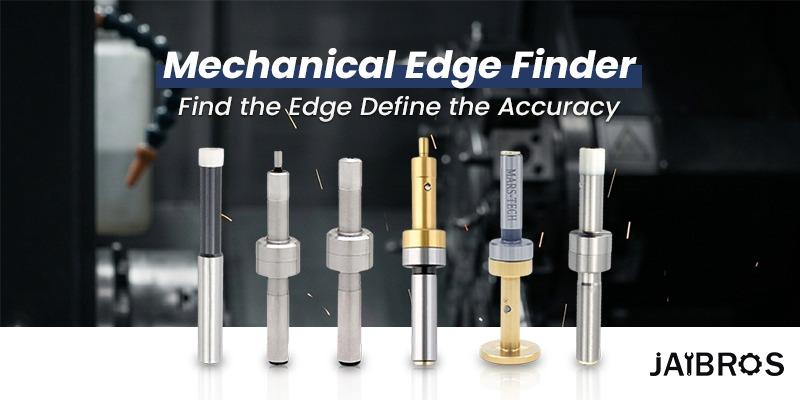
An edge finder is a mechanical or electronic device used to locate the exact edge of a workpiece. It helps machinists set accurate reference points, also known as zero points, on a CNC machine tool. Once the edge is identified, machining operations can be carried out with greater precision and consistency.
This tool is widely used in milling operations and is considered one of the most reliable methods for edge detection. It works efficiently with advanced setups, including those using BT40 tool holders, ensuring improved stability and accuracy in machining processes.
Types of Edge Finders
There are different types of edge finders, and they are used for different purposes:
1. Mechanical Edge Finder
This is the most commonly used edge. It has a cylindrical body with a spring-loaded tip. When the tip comes into contact with the edge of the workpiece, it moves slightly.
2. Electronic Edge Finder
This finder tool uses the properties of electricity as it comes into contact with the edge of the workpiece.
3. Optical Edge Finder
This is less commonly used but is highly accurate.
The best edge finder for you will depend on your machining requirements and the machine tool you are using.
How Does an Edge Finder Work?
The working principle of a finder tool is quite simple yet useful. It is used to locate the exact position of the edge of the material being machined.
Here is the step-by-step process of using a finder tool:
-
The finder tool is fixed in the spindle, usually with the help of a BT40 tool holder.
-
The spindle is rotated at a moderate speed.
-
The tool is moved towards the material at a slow speed.
-
As the tool comes in contact with the material’s edge, it slightly bends.
-
The position is noted by the machinist.
This process ensures that the cutting tool is placed in the correct position.
Importance in CNC Machining
While working on CNC machines, the positioning of the reference point is important. Otherwise, the entire machining operation can be affected. Here, the finder tool plays an important part in ensuring the operation is started at the right position.
While using the finder tool in conjunction with the BT40 holder, the entire setup can be made stiffer. This is commonly used in industries where high precision is required.
Applications of Edge Finders
Finder tools have applications in different machining operations. Some of the applications are as follows:
-
Location of edges on flat surfaces
-
Setting zero points while performing milling operations
-
Aligning the workpiece on the CNC machine tool
-
Ensuring accurate positioning while performing repetitive operations
The use of an edge finder on a VMC (Vertical Machining Center) is important because consistent results can be achieved while working at high speeds.
Advantages of Using an Edge
There are certain advantages in using the finder tool:
1. High Accuracy
The tool is accurate in finding the edges, which reduces the chances of errors.
2. Easy to Use
Anyone can easily learn the usage of the tool in CNC programming.
3. Cost-Effective
The tool is more reliable compared to the advanced devices used in the process.
4. Versatility
The tool can be used with different machines; it can be used with the BT40 tool holders.
5. Improved Productivity
Accurate positioning reduces rework and saves time.
Best Practices for Using an Edge
The best practices for attaining the best results include:
-
Making sure the tool is correctly mounted in the spindle
-
Using the correct spindle speed for accurate detection
-
Cleaning the surface of the workpiece before using it
-
Not applying too much force in touching the edge
-
Checking the tool for wear and damage
The tool mounted in a BT40 will improve the tool’s stability and enhance its performance.
Common Mistakes to Avoid
When using the edge finder tool, there are some mistakes you might make, which will influence the accuracy of the tool’s results:
-
Using the wrong spindle speed
-
Applying too much force
-
Not aligning the tool properly
-
Not checking the tool for damage
-
Not calibrating the tool
Avoiding these mistakes will help you attain the best from your CNC tool.
Future of Edge Finding in CNC Technology
With the advancements in CNC technology, edge-finding techniques are also changing. New machines are incorporating sensors for better accuracy.
But traditional tools like the edge tool will always be important because of their simplicity. These tools, in conjunction with advanced technology and stable holders like BT40, provide the best combination of precision and practicality.
About Our Company
Jaibros is a renowned supplier of industrial tools and CNC products throughout India. It is recognized for providing reliable and performance-driven products. Jaibros provides a range of CNC tool solutions that cater to the requirements of precise machine cutting and other industrial needs. From measuring tools like finders to high-end tool holders, the emphasis is always on reliability and performance.
FAQs
1. What is an edge finder used for?
It is used to find the exact edge of a workpiece and to set reference points in CNC machining.
2. Can an edge finder be used in all types of CNC machines?
Yes, it can be used in most types of CNC machine tool setup.
3. What is the main difference between mechanical and electronic types of edge?
Mechanical types make use of physical movement, whereas electronic types make use of electrical signals for more accurate results.
4. How accurate is an edge?
It is highly accurate and can be used for most machining operations if employed correctly.
5. Why is it essential to make use of a stable tool holder for edge finding?
A stable tool holder, such as a BT40 tool holder, is essential for more accurate results.
Categorii
Citeste mai mult
The highly anticipated Los Angeles Rams Vs San Francisco 49ers matchup will be decided by the fierce battle up front. Heavy pressure from the edge positions can disrupt any modern offensive game plan instantly. Stopping the outside zone run requires absolute discipline from the interior defensive tackles. Elite defensive ends must hold their ground on every single down. Grab your Los Angeles...

Why Choose Terna Hospital for Cardiac Vascular Thoracic Surgery in Navi Mumbai? There are several reasons why patients trust Terna Speciality Hospital & Research Centre, Navi Mumbai for advanced heart and thoracic care: Experienced Cardiothoracic Surgeons Modern Surgical Technologies Advanced ICU & Emergency Care Minimally Invasive Surgery Options Comprehensive Multispecialty...

Many beginners feel confused when they use online gaming platforms for the first time. Some users face registration problems, while others struggle with password errors, OTP verification delays, internet connection issues, or account recovery methods. Because of these common situations, users often search for a complete and simple guide written in easy language. This article is specially...

Discover Walnuts Insecticide Free from Wasteless Pantry Bassendean for fresh, natural and healthy snacking. Perfect for baking, breakfast, salads and everyday wholesome eating. Healthy snacking has become an important part of everyday living, and more Australians are choosing natural foods that fit into a balanced lifestyle. At Wasteless Pantry Bassendean, Walnuts Insecticide Free offers a...

According to the latest market analysis by Future Market Insights, the global Dolomite Market is forecast to expand from USD 4.8 billion in 2026 to USD 7.3 billion by 2036, registering a 4.3% CAGR during the forecast period. Demand remains firmly supported by steel manufacturing, construction, mining, environmental treatment, agriculture, and industrial processing industries that require...